Losing a front tooth can affect both your smile and confidence. A dental implant replaces the natural root to support a lifelike restoration with optimal function and aesthetics. In Montreal, advanced 3D planning and oral surgery expertise ensure precise results in the esthetic zone while preserving bone, gum tissue, and facial harmony.
TL;DR – In Summary
- Dental implants in the esthetic zone require precise planning and a personalized approach.
- Implant positioning directly affects aesthetics and the final crown’s emergence profile.
- Preserving bone and gum tissue is critical, but immediate loading is not suitable for every case.
- Clinical outcomes depend heavily on surgical expertise and proper case selection.
- Consulting a specialized oral surgeon in Montreal helps protect long-term treatment success from the start.
Why Is the Esthetic Zone More Complex?
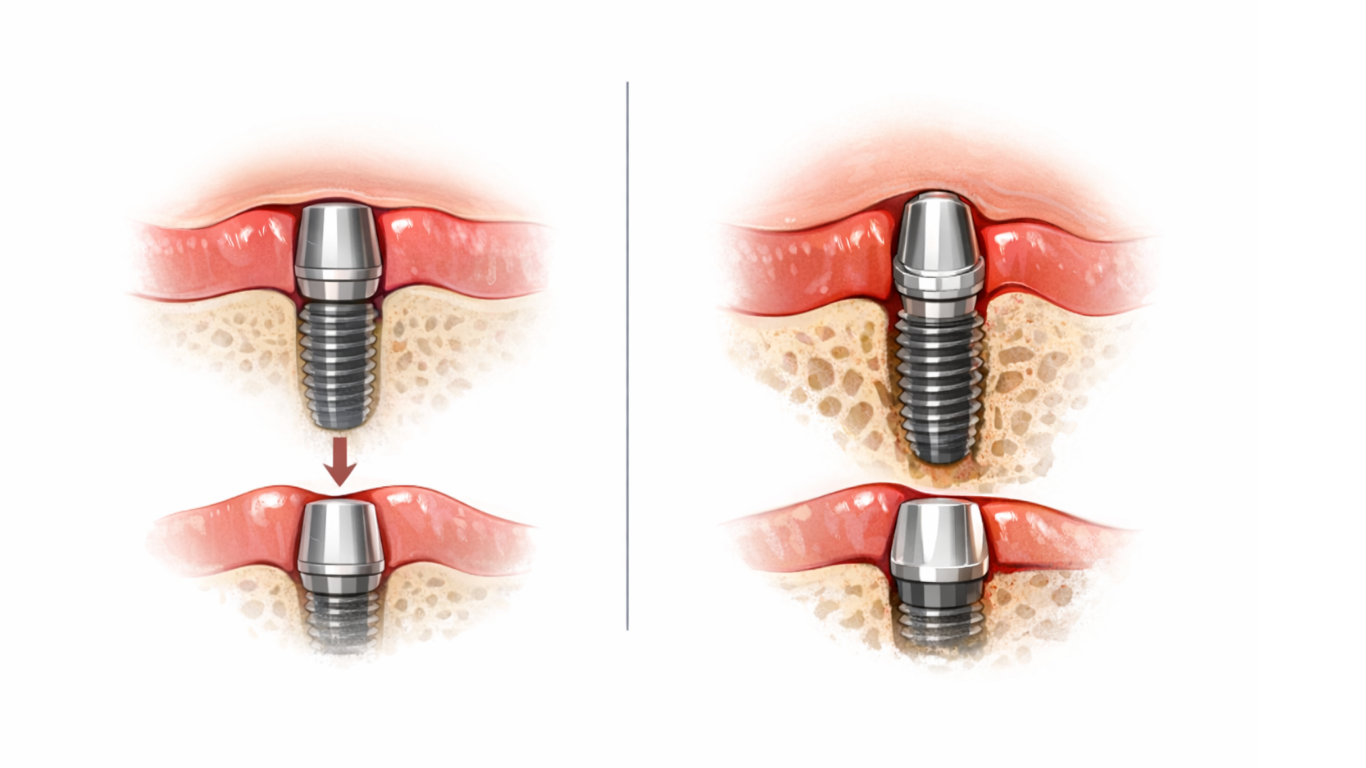
The esthetic zone (front teeth, including incisors and canines) presents unique challenges because it combines function, aesthetics, and appearance-related confidence. The gum tissue in this area is often thinner and more delicate, increasing the risk of recession after tooth extraction or dental implant placement.
Research published in the Journal of Periodontology shows that patients with a thin gingival biotype are more prone to tissue recession, which can expose implant margins and compromise aesthetics
.
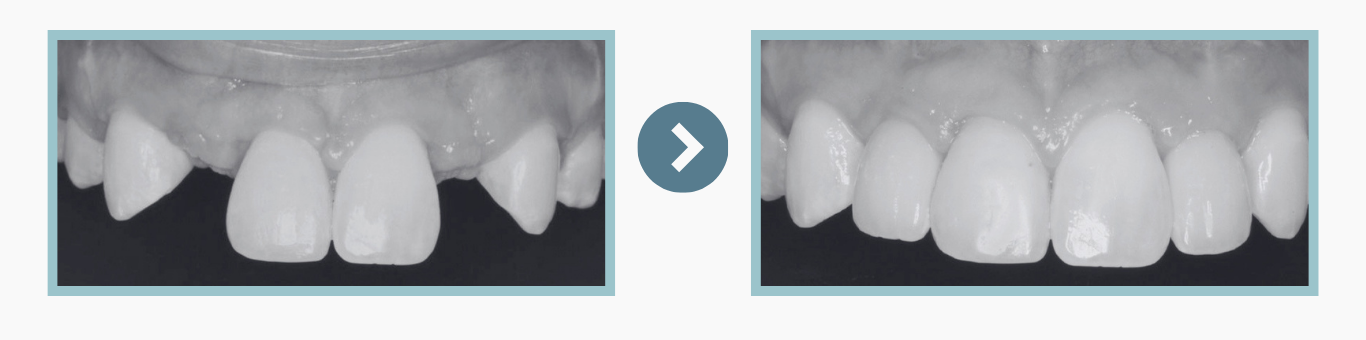
Because this area is highly visible, even minor irregularities—such as asymmetry, shadowing, or contour differences—can affect the overall smile. Achieving natural-looking results requires precise alignment with neighbouring teeth, proper papilla (gum) shape, and harmony between the gums and teeth (often called “pink and white aesthetics”).
In the esthetic zone, dental implant treatment goes beyond tooth replacement—it involves meticulous tissue management, where every millimetre impacts the final outcome. This level of precision requires advanced training and expertise in implantology to ensure optimal, long-lasting results.
Dental Implants in Montreal: Specific Challenges for Anterior Teeth
Placing a dental implant in the esthetic zone requires precise three-dimensional positioning, including depth, angulation, and bucco-lingual placement. Research in Clinical Oral Implants Research shows that implants placed too far buccally (toward the lip) increase the risk of bone loss and gum recession, compromising aesthetics.
In Montreal, patients often have high expectations for their smile, including tooth shape, shade, and seamless integration with natural teeth. Treatment planning must carefully design the emergence profile—the way the implant-supported crown appears to emerge naturally from the gum.
Achieving this level of precision requires close collaboration between the oral surgeon and the restorative dentist. The surgeon establishes a stable foundation (bone, gum tissue, implant position), while the restorative dentist designs the final crown for optimal aesthetics and function.
For some patients—especially those missing multiple front teeth—treatment may involve more advanced approaches tailored to preserve bone and ensure consistent, natural-looking results. A comprehensive evaluation by an oral surgeon is essential to determine the safest and most predictable treatment plan.
Importance of Bone and Gum Preservation
After a tooth extraction, bone loss can occur quickly—especially within the first few months. This early volume loss can compromise aesthetics, as reduced bone support leads to gum collapse and makes reconstruction more challenging.
To preserve natural contours, bone grafting (using allograft, xenograft, or synthetic materials) may be recommended. Guided bone reconstruction can improve site stability and reduce aesthetic complications when properly planned. In more complex cases—such as severe upper jaw bone loss—advanced solutions like zygomatic implants may be considered in Montreal.
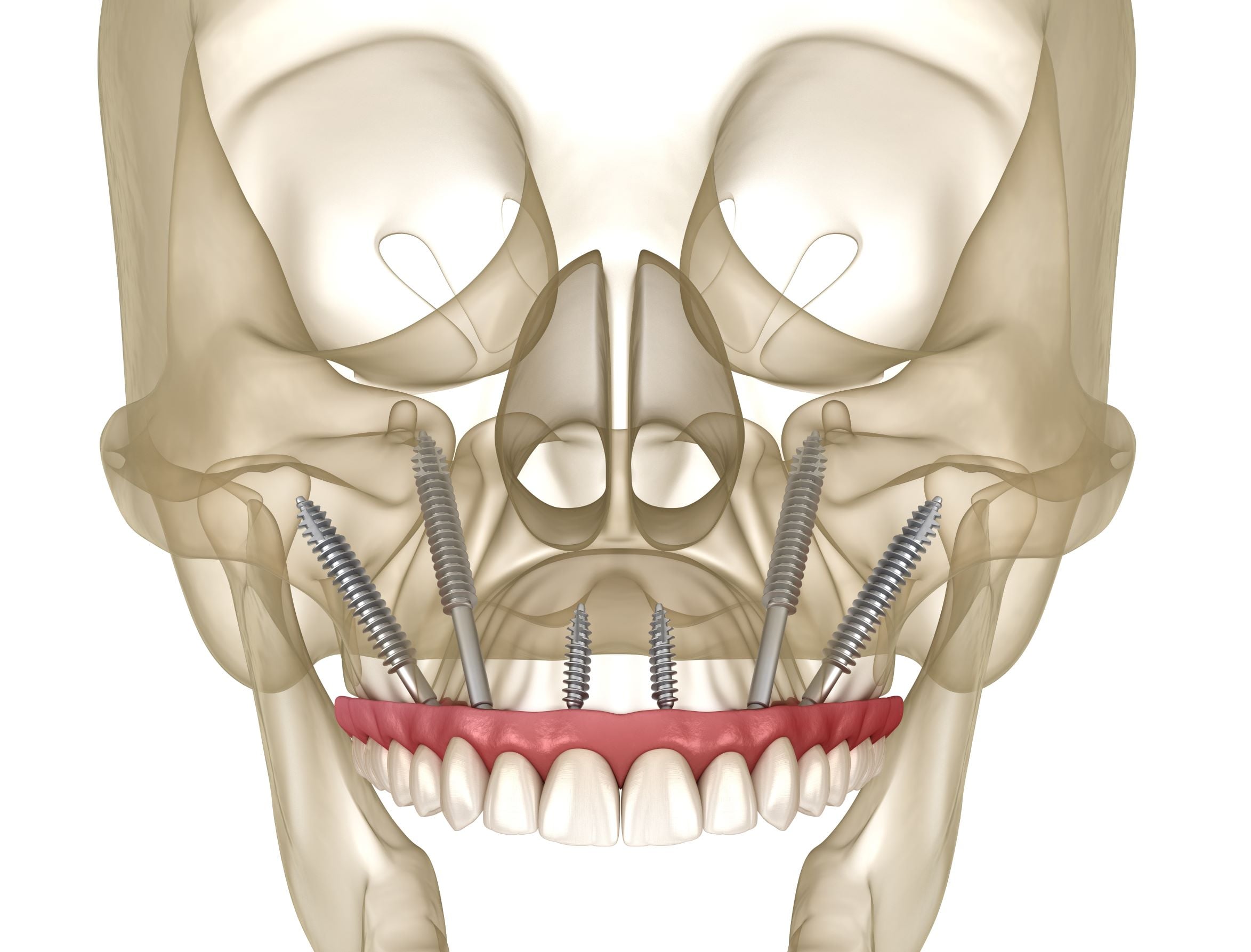
When gum tissue is thin, a gingival (gum) graft can help increase tissue thickness and support long-term aesthetic results. However, these procedures may involve additional healing time and complexity.
Early consultation is key. Seeking care soon after tooth loss helps preserve bone and gum tissue, often allowing for simpler, more predictable dental implant treatment.
Immediate Dental Implants in the Esthetic Zone: Is It Possible?
“Immediate dental implant” is a common search term, but it can refer to two different concepts: placing the implant on the same day as extraction (immediate placement) and/or adding a temporary tooth shortly after (immediate loading). While these options are possible, they are not suitable for every case—especially in the esthetic zone.
Careful planning, case selection, and close follow-up with an oral surgeon in Montreal are essential to ensure long-term success.
Immediate Placement After Extraction
Immediate placement involves inserting the dental implant directly into the extraction socket. This approach requires specific conditions, including:
- No active infection
- Intact bone (especially the buccal wall)
- Strong primary implant stability
- Well-defined restorative plan
Immediate placement can reduce the number of procedures and help preserve bone volume, but it requires precise execution—particularly for front teeth.
Immediate Loading in the Esthetic Zone
Immediate loading means placing a temporary crown soon after implant placement. In the esthetic zone, this temporary tooth is typically kept out of biting contact (non-functional) to prevent movement that could disrupt healing.
Primary stability and careful bite control are critical to reducing failure risk.
When It Is Better to Wait
In some situations—such as infection, bone loss, or thin gum tissue—a staged approach is recommended. This may include:
- Tooth extraction
- Bone or gum preservation (grafting)
- Healing period
- Implant placement
- Healing period (osseointegration)
- Prosthesis placement
Although this process takes longer, it can improve predictability and supports better long-term aesthetics.
Digital Planning and 3D Imaging in Montreal
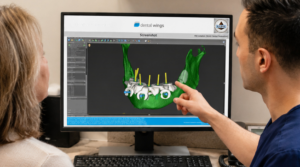
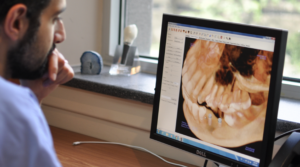
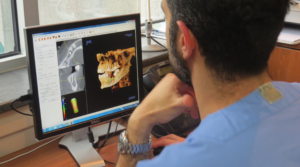
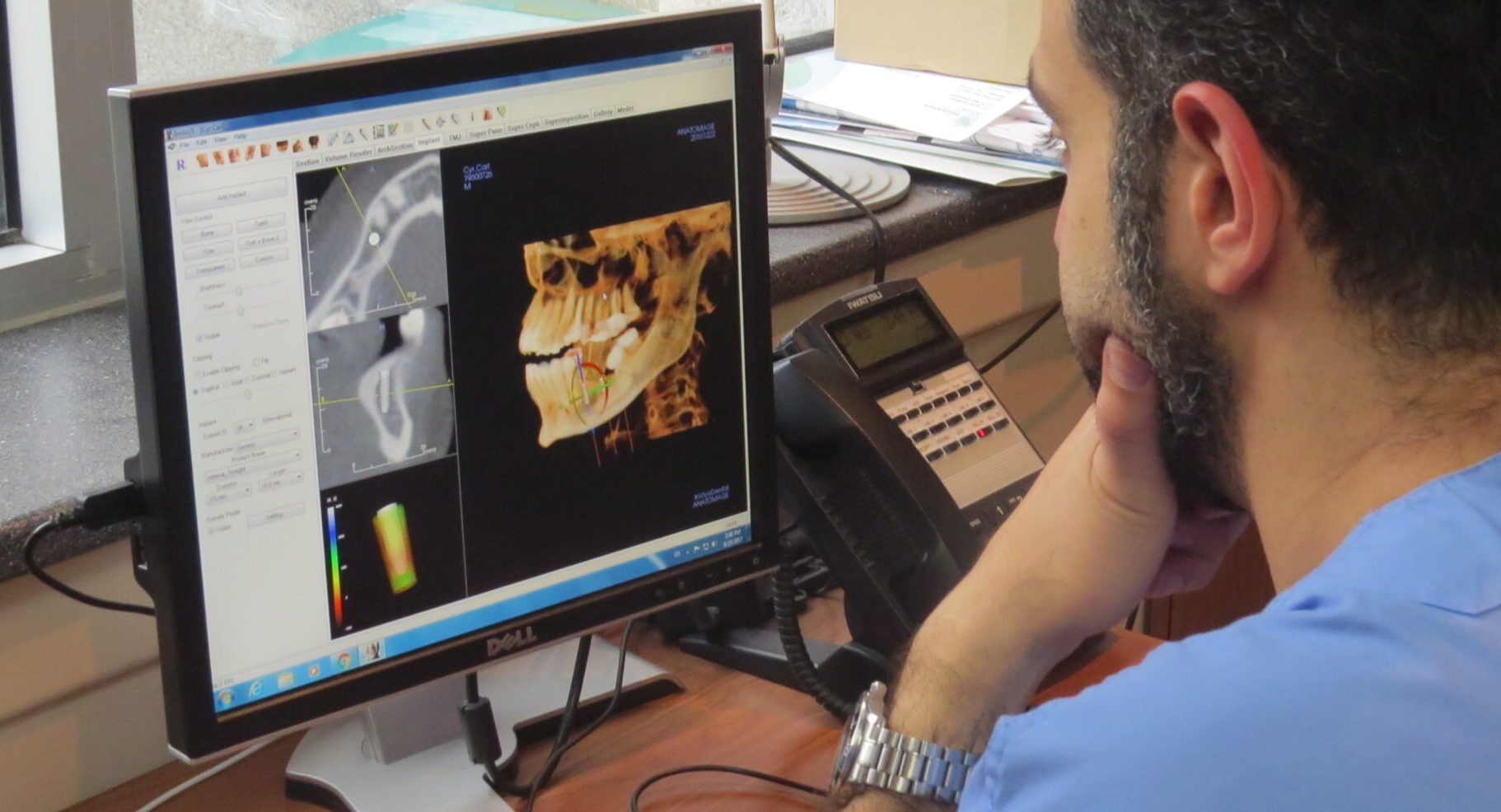
Digital technology plays a central role in modern dental implant treatment. In Montreal, CBCT (cone beam computed tomography) imaging allows precise evaluation of bone volume, adjacent tooth roots, and available space for the implant.
3D planning improves both safety and accuracy—especially in the esthetic zone, where even minor deviations can affect the final result.
Surgical guides, created from digital plans, help transfer this precision to the procedure by ensuring accurate implant positioning. In addition, digital smile and prosthetic simulations allow clinicians to plan the final crown and emergence profile in advance, supporting natural-looking aesthetics and optimal gum contours.
In implant dentistry, this level of millimetric precision is essential to achieving predictable, long-term results.
Factors Influencing Esthetic Outcomes
Successful dental implants in the esthetic zone depend on a combination of biological and mechanical factors. These include bone quality, gum thickness, and patient habits. For example, smoking can impair healing by reducing blood flow, while bruxism (teeth grinding) places excessive stress on the implant.
Esthetic outcomes rely not only on healthy bone and gum tissue, but also on precise implant positioning and prosthetic design.
Material selection also plays a key role. In the anterior region, zirconia abutments or crowns may be recommended to enhance colour and translucency—especially in patients with thin gum tissue—helping prevent a greyish appearance and maintain a natural-looking smile.
Healing and Tissue Maturation
The first few months after a dental implant are critical for healing. During this phase, the bone stabilizes, the gums adapt, and the final gingival contour begins to form.
Proper aftercare plays a key role in treatment success. Patients are typically advised to follow a gentle oral hygiene routine, including appropriate brushing techniques and specialized floss or cleaning tools to protect the implant site.
Well-managed healing supports long-term stability, comfort, and aesthetics—helping protect your investment in dental implant treatment.
Frequently Asked Questions
Can a front tooth always be replaced with a dental implant immediately?
No. It depends on factors such as bone quality, gum tissue, and the absence of infection. Each case requires an individualized assessment.
Are dental implants riskier in the esthetic zone?
Not necessarily riskier, but more demanding. Because this area is highly visible, issues like gum recession or asymmetry are more noticeable.
How long does it take to receive the final crown?
In most cases, a few months are needed to allow for healing and osseointegration (fusion of the implant with the bone).
Will the implant look exactly like my natural tooth?
The goal is seamless, natural-looking aesthetics. However, factors like bone structure and gum thickness can influence the final result.
What if I have thin gum tissue?
A soft tissue (gum) graft may be recommended to increase thickness and improve long-term esthetic stability.
Key Points to Remember
- Dental implants in the esthetic zone require a high level of precision and careful planning.
- 3D imaging and surgical expertise are essential to achieve predictable, natural-looking results.
- Preserving bone and gum tissue is critical for long-term esthetic success.
- Early consultation in Montreal helps maintain treatment options and improve outcomes.
If you have lost a front tooth or require an extraction, the team at Seaforth Oral Surgery in Montreal can help. Our oral and maxillofacial surgeons will assess your situation and determine whether an esthetic dental implant—including immediate options when appropriate—is right for you, then design a precise, safe, and durable treatment plan.
Losing a front tooth can affect both your smile and confidence. A dental implant replaces the natural root to support a lifelike restoration with optimal function and aesthetics. In Montreal, advanced 3D planning and oral surgery expertise ensure precise results in the esthetic zone while preserving bone, gum tissue, and facial harmony.
TL;DR – In Summary
- Dental implants in the esthetic zone require precise planning and a personalized approach.
- Implant positioning directly affects aesthetics and the final crown’s emergence profile.
- Preserving bone and gum tissue is critical, but immediate loading is not suitable for every case.
- Clinical outcomes depend heavily on surgical expertise and proper case selection.
- Consulting a specialized oral surgeon in Montreal helps protect long-term treatment success from the start.
Why Is the Esthetic Zone More Complex?
The esthetic zone (front teeth, including incisors and canines) presents unique challenges because it combines function, aesthetics, and appearance-related confidence. The gum tissue in this area is often thinner and more delicate, increasing the risk of recession after tooth extraction or dental implant placement.
Research published in the Journal of Periodontology shows that patients with a thin gingival biotype are more prone to tissue recession, which can expose implant margins and compromise aesthetics
.
Because this area is highly visible, even minor irregularities—such as asymmetry, shadowing, or contour differences—can affect the overall smile. Achieving natural-looking results requires precise alignment with neighbouring teeth, proper papilla (gum) shape, and harmony between the gums and teeth (often called “pink and white aesthetics”).
In the esthetic zone, dental implant treatment goes beyond tooth replacement—it involves meticulous tissue management, where every millimetre impacts the final outcome. This level of precision requires advanced training and expertise in implantology to ensure optimal, long-lasting results.
Dental Implants in Montreal: Specific Challenges for Anterior Teeth
Placing a dental implant in the esthetic zone requires precise three-dimensional positioning, including depth, angulation, and bucco-lingual placement. Research in Clinical Oral Implants Research shows that implants placed too far buccally (toward the lip) increase the risk of bone loss and gum recession, compromising aesthetics.
In Montreal, patients often have high expectations for their smile, including tooth shape, shade, and seamless integration with natural teeth. Treatment planning must carefully design the emergence profile—the way the implant-supported crown appears to emerge naturally from the gum.
Achieving this level of precision requires close collaboration between the oral surgeon and the restorative dentist. The surgeon establishes a stable foundation (bone, gum tissue, implant position), while the restorative dentist designs the final crown for optimal aesthetics and function.
For some patients—especially those missing multiple front teeth—treatment may involve more advanced approaches tailored to preserve bone and ensure consistent, natural-looking results. A comprehensive evaluation by an oral surgeon is essential to determine the safest and most predictable treatment plan.
Importance of Bone and Gum Preservation
After a tooth extraction, bone loss can occur quickly—especially within the first few months. This early volume loss can compromise aesthetics, as reduced bone support leads to gum collapse and makes reconstruction more challenging.
To preserve natural contours, bone grafting (using allograft, xenograft, or synthetic materials) may be recommended. Guided bone reconstruction can improve site stability and reduce aesthetic complications when properly planned. In more complex cases—such as severe upper jaw bone loss—advanced solutions like zygomatic implants may be considered in Montreal.
When gum tissue is thin, a gingival (gum) graft can help increase tissue thickness and support long-term aesthetic results. However, these procedures may involve additional healing time and complexity.
Early consultation is key. Seeking care soon after tooth loss helps preserve bone and gum tissue, often allowing for simpler, more predictable dental implant treatment.
Immediate Dental Implants in the Esthetic Zone: Is It Possible?
“Immediate dental implant” is a common search term, but it can refer to two different concepts: placing the implant on the same day as extraction (immediate placement) and/or adding a temporary tooth shortly after (immediate loading). While these options are possible, they are not suitable for every case—especially in the esthetic zone.
Careful planning, case selection, and close follow-up with an oral surgeon in Montreal are essential to ensure long-term success.
Immediate Placement After Extraction
Immediate placement involves inserting the dental implant directly into the extraction socket. This approach requires specific conditions, including:
- No active infection
- Intact bone (especially the buccal wall)
- Strong primary implant stability
- Well-defined restorative plan
Immediate placement can reduce the number of procedures and help preserve bone volume, but it requires precise execution—particularly for front teeth.
Immediate Loading in the Esthetic Zone
Immediate loading means placing a temporary crown soon after implant placement. In the esthetic zone, this temporary tooth is typically kept out of biting contact (non-functional) to prevent movement that could disrupt healing.
Primary stability and careful bite control are critical to reducing failure risk.
When It Is Better to Wait
In some situations—such as infection, bone loss, or thin gum tissue—a staged approach is recommended. This may include:
- Tooth extraction
- Bone or gum preservation (grafting)
- Healing period
- Implant placement
- Healing period (osseointegration)
- Prosthesis placement
Although this process takes longer, it can improve predictability and supports better long-term aesthetics.
Digital Planning and 3D Imaging in Montreal
Digital technology plays a central role in modern dental implant treatment. In Montreal, CBCT (cone beam computed tomography) imaging allows precise evaluation of bone volume, adjacent tooth roots, and available space for the implant.
3D planning improves both safety and accuracy—especially in the esthetic zone, where even minor deviations can affect the final result.
Surgical guides, created from digital plans, help transfer this precision to the procedure by ensuring accurate implant positioning. In addition, digital smile and prosthetic simulations allow clinicians to plan the final crown and emergence profile in advance, supporting natural-looking aesthetics and optimal gum contours.
In implant dentistry, this level of millimetric precision is essential to achieving predictable, long-term results.
Factors Influencing Esthetic Outcomes
Successful dental implants in the esthetic zone depend on a combination of biological and mechanical factors. These include bone quality, gum thickness, and patient habits. For example, smoking can impair healing by reducing blood flow, while bruxism (teeth grinding) places excessive stress on the implant.
Esthetic outcomes rely not only on healthy bone and gum tissue, but also on precise implant positioning and prosthetic design.
Material selection also plays a key role. In the anterior region, zirconia abutments or crowns may be recommended to enhance colour and translucency—especially in patients with thin gum tissue—helping prevent a greyish appearance and maintain a natural-looking smile.
Healing and Tissue Maturation
The first few months after a dental implant are critical for healing. During this phase, the bone stabilizes, the gums adapt, and the final gingival contour begins to form.
Proper aftercare plays a key role in treatment success. Patients are typically advised to follow a gentle oral hygiene routine, including appropriate brushing techniques and specialized floss or cleaning tools to protect the implant site.
Well-managed healing supports long-term stability, comfort, and aesthetics—helping protect your investment in dental implant treatment.
Frequently Asked Questions
Can a front tooth always be replaced with a dental implant immediately?
No. It depends on factors such as bone quality, gum tissue, and the absence of infection. Each case requires an individualized assessment.
Are dental implants riskier in the esthetic zone?
Not necessarily riskier, but more demanding. Because this area is highly visible, issues like gum recession or asymmetry are more noticeable.
How long does it take to receive the final crown?
In most cases, a few months are needed to allow for healing and osseointegration (fusion of the implant with the bone).
Will the implant look exactly like my natural tooth?
The goal is seamless, natural-looking aesthetics. However, factors like bone structure and gum thickness can influence the final result.
What if I have thin gum tissue?
A soft tissue (gum) graft may be recommended to increase thickness and improve long-term esthetic stability.
Key Points to Remember
- Dental implants in the esthetic zone require a high level of precision and careful planning.
- 3D imaging and surgical expertise are essential to achieve predictable, natural-looking results.
- Preserving bone and gum tissue is critical for long-term esthetic success.
- Early consultation in Montreal helps maintain treatment options and improve outcomes.
If you have lost a front tooth or require an extraction, the team at Seaforth Oral Surgery in Montreal can help. Our oral and maxillofacial surgeons will assess your situation and determine whether an esthetic dental implant—including immediate options when appropriate—is right for you, then design a precise, safe, and durable treatment plan.