Introduction
In Montreal, dental implants are now considered one of the most reliable solutions for replacing one or more missing teeth. They help restore comfortable chewing, improve the stability of dental prostheses, and provide a natural-looking smile.
However, beyond the marketing promises often associated with dental implants Montreal, it is important to understand that implant placement is a surgical procedure that must be carefully planned to minimize complications.
At Seaforth Oral Surgery, we believe that a successful dental implant depends just as much on risk prevention and proper planning as on surgical technique. This practical guide explains the most common complications—and, more importantly, how they can be avoided.
TL;DR — Key Takeaways
- Dental implants in Montreal have a very high success rate (>95%) when properly planned
- Most implant-related complications are predictable and preventable
- A thorough pre-surgical evaluation (bone, gums, general health) is essential
- Post-operative care and patient hygiene play a critical role
- Choosing a board-certified oral and maxillofacial surgeon significantly reduces risks

Possible Complications Before Dental Implant Placement
Contrary to popular belief, not every missing tooth can be replaced immediately with a dental implant. Certain biological conditions must be met.
Insufficient Jawbone Volume
After tooth loss, the jawbone will gradually shrink due to lack of stimulation. This is especially common:
- in the back of the upper jaw (near the sinuses),
- in patients missing teeth for many years,
- in long-term denture wearers.
Why is this a risk?
Insufficient bone volume can compromise implant stability and significantly increase the risk of failure.
Possible solutions: bone grafting or zygomatic implants
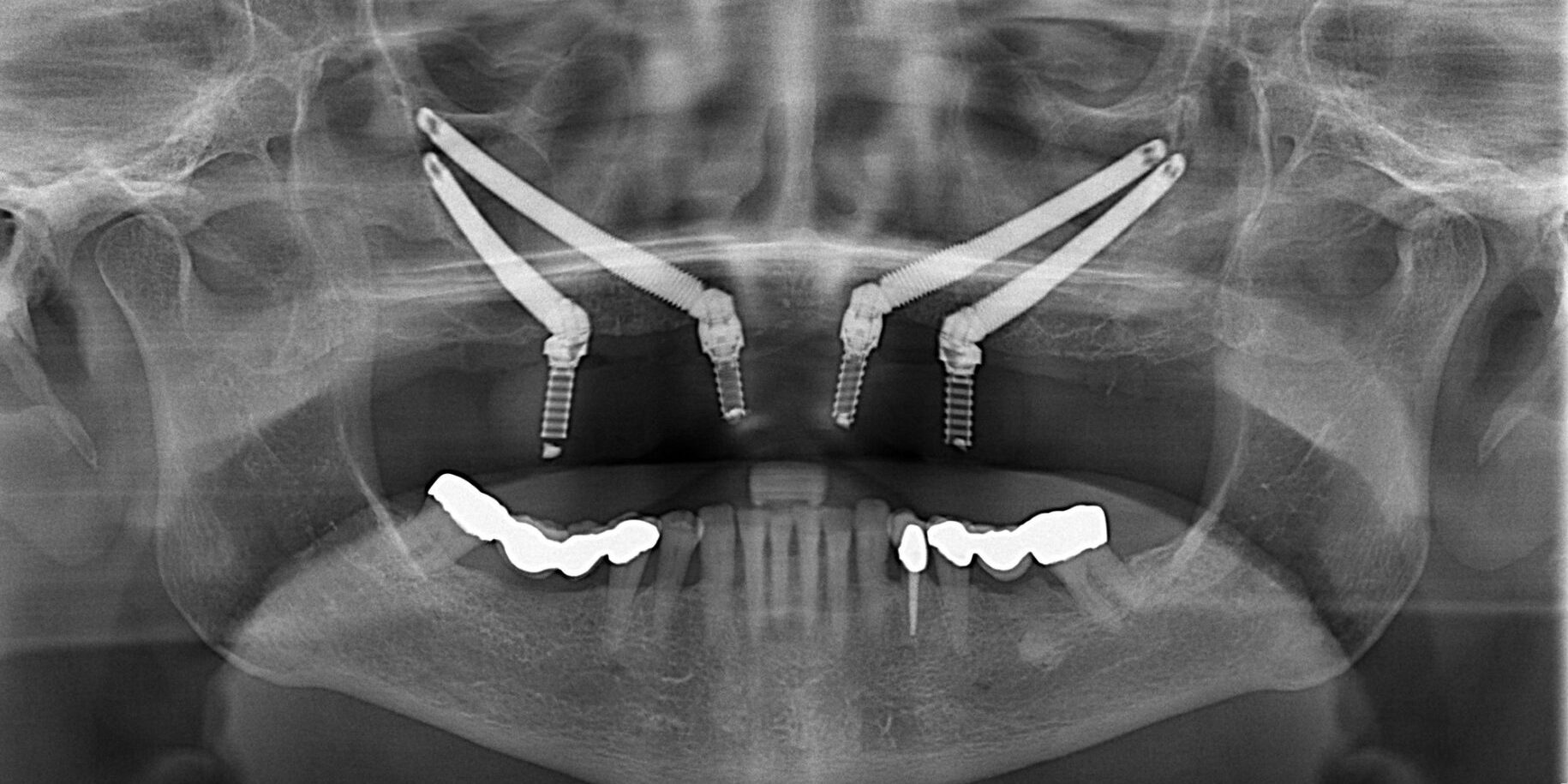 When there is not enough bone to properly support a dental implant, bone grafting is often recommended to rebuild adequate bone volume before or during implant placement.
In more complex cases—particularly in patients with severe bone loss in the upper jaw—an advanced alternative may be considered: zygomatic implants. These implants are anchored in the zygomatic bone (cheekbone), which is naturally dense and stable, and may allow treatment without extensive or prolonged bone grafting.
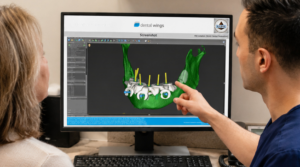
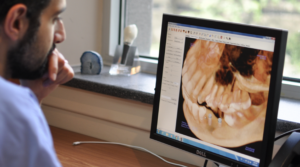
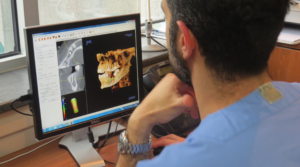
The choice between bone grafting and zygomatic implants depends on a specialized surgical evaluation, including 3D imaging and an assessment of the patient’s functional and aesthetic needs.
Inflamed Gums or Active Gum Disease
Even though a dental implant is anchored in bone, the gums act as the primary biological barrier against bacteria.
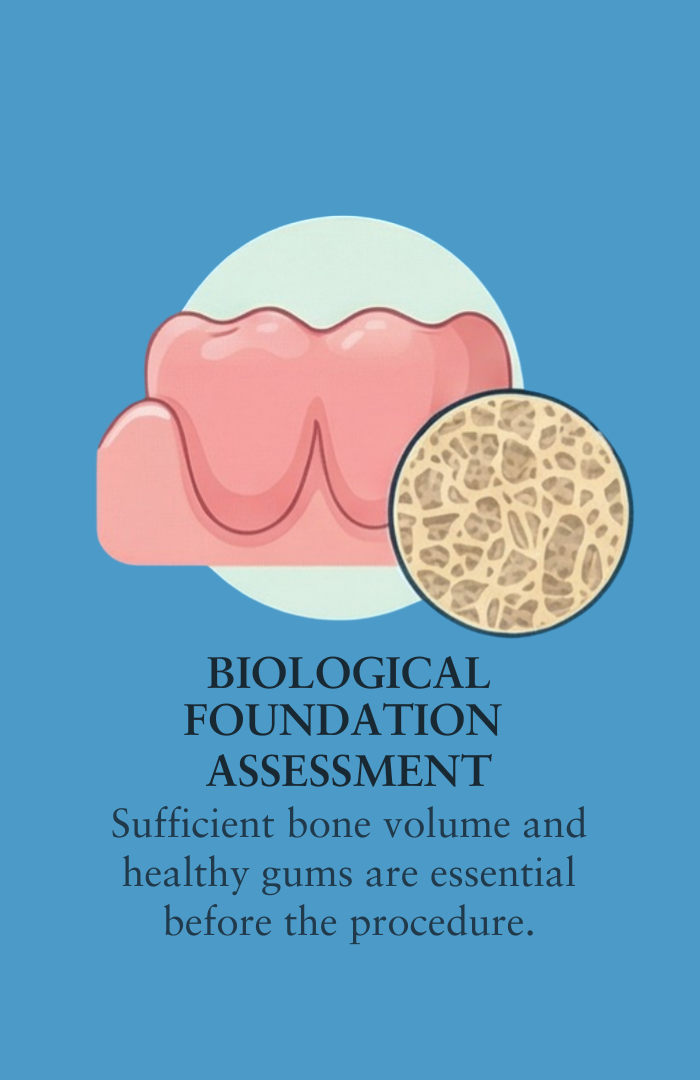 Active gingivitis or periodontitis increases the risk of:
- infection,
- bone loss around the implant,
- long-term implant complications.
Periodontal treatment is often required before implant surgery.
Uncontrolled Medical Conditions
Certain medical conditions can impair healing, including:
- uncontrolled diabetes,
- immune suppression,
- bleeding disorders,
- specific medications.
A comprehensive medical assessment allows the surgical plan to be adapted and risks to be reduced.
Complications During Dental Implant Surgery
Dental implant surgery in Montreal is generally very safe, but it requires precise digital planning to protect sensitive anatomical structures.
Maxillary Sinuses (Upper Jaw)
In the upper molar region, bone height may be limited by the proximity of the sinuses. Without proper planning, this may lead to:
- sinus communication,
- sinus infection,
- implant failure.
Lower Jaw Nerves
In the lower jaw, the inferior alveolar nerve must be carefully identified. Improper implant placement may cause:
- numbness,
tingling (paresthesia), - persistent pain.
Primary Implant Stability
Primary stability refers to the immediate mechanical fixation of the implant in the bone. It depends on:
- bone quality,
- surgical technique,
- implant design.
Without sufficient stability, the implant may fail to integrate with the bone.
Complications After Dental Implant Surgery
Peri-Implant Infection
Infection after implant placement is a serious condition. Warning signs include:
- increasing pain,
- persistent swelling,
- discharge or unpleasant taste,
- redness,
- fever.
Early intervention often allows the implant to be saved.
Prolonged Bleeding
Minor bleeding is normal. Persistent bleeding may be related to:
- early physical exertion,
- certain medications,
- irritation of the surgical site.
Tip: If bleeding does not subside after 30–60 minutes of controlled pressure, contact your clinic.
Unusual or Delayed Pain
Post-operative pain should gradually decrease. Severe or late-onset pain may indicate:
- infection,
- excessive inflammation,
- a localized complication.
Failure of Osseointegration
True “rejection” of dental implants is extremely rare. Failure is more commonly associated with:
- smoking,
- infection,
- instability,
- insufficient bone.
How Risks Are Prevented in Specialized Oral Surgery
An oral and maxillofacial surgeon does far more than simply place implants. They manage anatomical, biological, and medical risks comprehensively.
 Advanced Digital Planning
- 3D imaging (CBCT),
- computer-guided planning,
- precise implant positioning.
Strict Surgical Protocols
- sterile surgical environment,
- infection control measures,
- evidence-based surgical techniques.
Personalized Medication Management
- antibiotics only when indicated,
- tailored pain and inflammation control.
What Patients Can Do to Promote Healing
The success of dental implants in Montreal also depends on the patient.
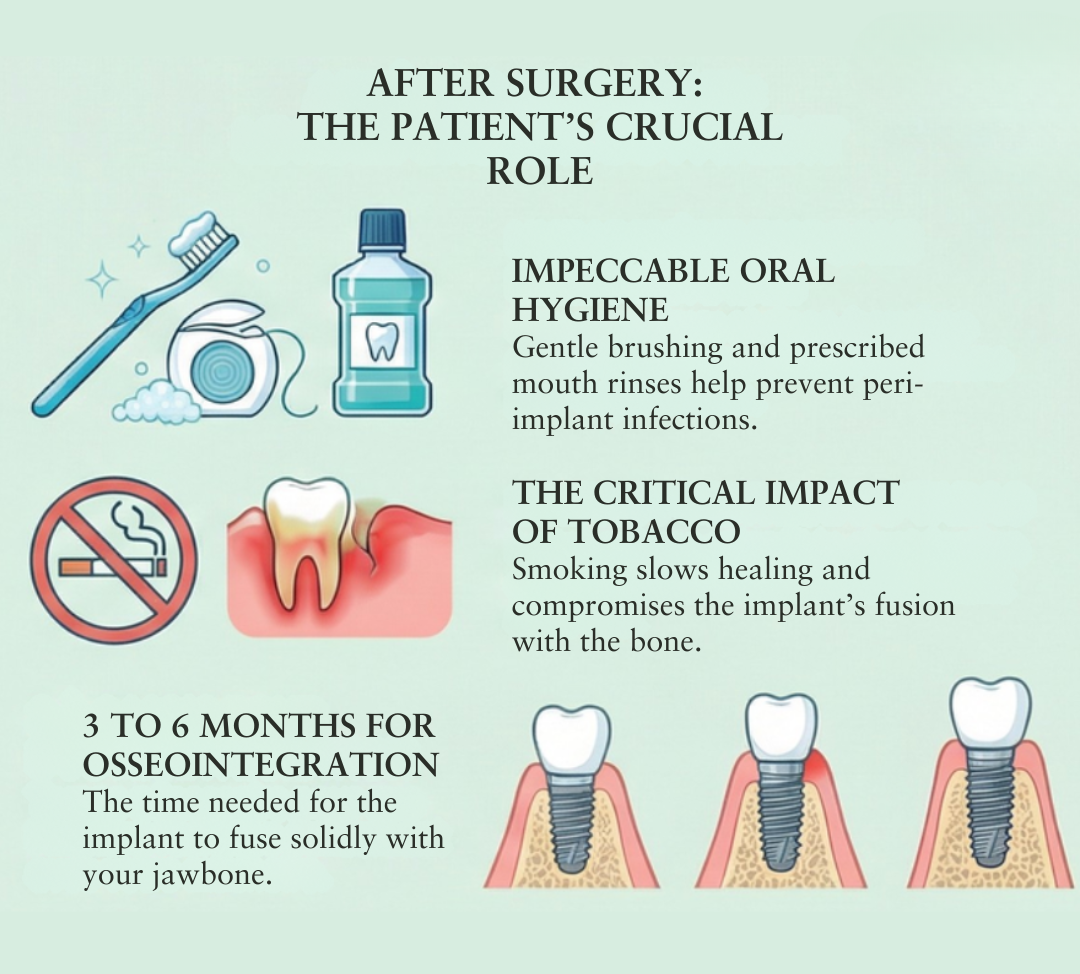
Oral Hygiene
- gentle brushing of adjacent teeth,
- avoid disturbing the surgical site,
- prescribed mouth rinse if indicated.
Appropriate Diet
During the first few days:
- soft foods,
- lukewarm temperature,
- avoid alcohol, hard or spicy foods.
Avoid Smoking
Smoking:
- slows healing,
- increases infection risk,
- compromises osseointegration.
Post-Operative Follow-Up
Follow-up appointments allow your surgeon to:
- monitor healing,
- detect complications early,
- ensure long-term success.
Frequently Asked Questions (FAQ)
Are complications common with dental implants?
No. Success rates typically exceed 90–95% when planning and follow-up are appropriate.
When can I return to work?
Many patients return to light work within 24–48 hours. More time off may be recommended depending on the procedure.
How long does complete healing take?
- gums: 1–2 weeks
- osseointegration: 3–6 months
- final restoration after full integration
Conclusion: Safe Dental Implants Through Prevention
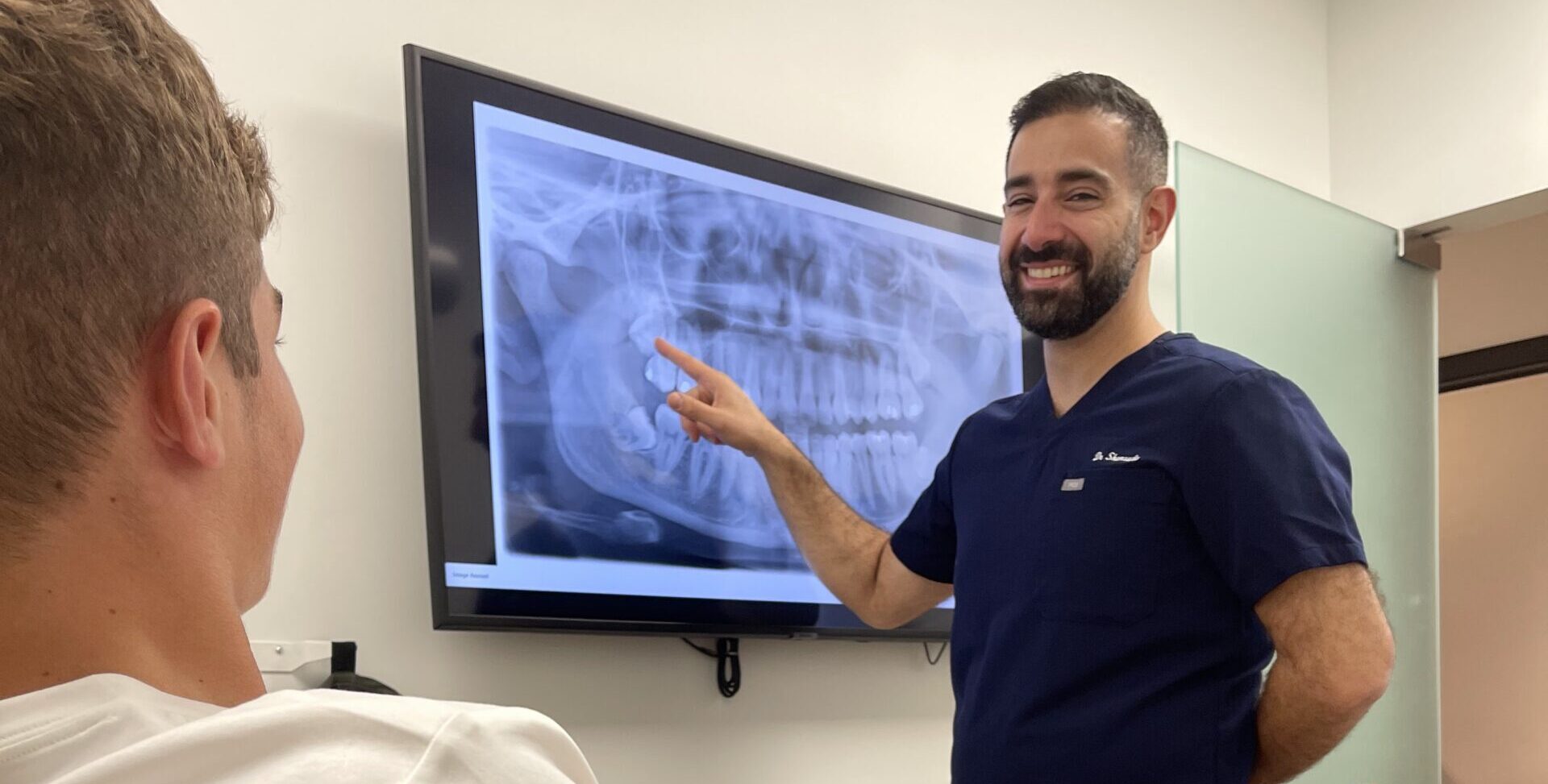
Complications related to dental implants in Montreal are not inevitable. With proper evaluation, precise planning, and attentive follow-up, long-lasting, safe, and aesthetic results can be achieved.
At Seaforth Oral Surgery, we combine surgical expertise, advanced technology, and a compassionate approach to deliver personalized, reliable implant care.
Contact us today for a comprehensive dental implant consultation in Montreal.
Introduction
In Montreal, dental implants are now considered one of the most reliable solutions for replacing one or more missing teeth. They help restore comfortable chewing, improve the stability of dental prostheses, and provide a natural-looking smile.
However, beyond the marketing promises often associated with dental implants Montreal, it is important to understand that implant placement is a surgical procedure that must be carefully planned to minimize complications.
At Seaforth Oral Surgery, we believe that a successful dental implant depends just as much on risk prevention and proper planning as on surgical technique. This practical guide explains the most common complications—and, more importantly, how they can be avoided.
TL;DR — Key Takeaways
- Dental implants in Montreal have a very high success rate (>95%) when properly planned
- Most implant-related complications are predictable and preventable
- A thorough pre-surgical evaluation (bone, gums, general health) is essential
- Post-operative care and patient hygiene play a critical role
- Choosing a board-certified oral and maxillofacial surgeon significantly reduces risks
Possible Complications Before Dental Implant Placement
Contrary to popular belief, not every missing tooth can be replaced immediately with a dental implant. Certain biological conditions must be met.
Insufficient Jawbone Volume
After tooth loss, the jawbone will gradually shrink due to lack of stimulation. This is especially common:
- in the back of the upper jaw (near the sinuses),
- in patients missing teeth for many years,
- in long-term denture wearers.
Why is this a risk?
Insufficient bone volume can compromise implant stability and significantly increase the risk of failure.
Possible solutions: bone grafting or zygomatic implants
When there is not enough bone to properly support a dental implant, bone grafting is often recommended to rebuild adequate bone volume before or during implant placement.
In more complex cases—particularly in patients with severe bone loss in the upper jaw—an advanced alternative may be considered: zygomatic implants. These implants are anchored in the zygomatic bone (cheekbone), which is naturally dense and stable, and may allow treatment without extensive or prolonged bone grafting.
The choice between bone grafting and zygomatic implants depends on a specialized surgical evaluation, including 3D imaging and an assessment of the patient’s functional and aesthetic needs.
Inflamed Gums or Active Gum Disease
Even though a dental implant is anchored in bone, the gums act as the primary biological barrier against bacteria.
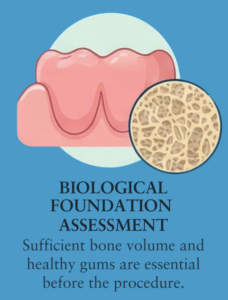
Active gingivitis or periodontitis increases the risk of:
- infection,
- bone loss around the implant,
- long-term implant complications.
Periodontal treatment is often required before implant surgery.
Uncontrolled Medical Conditions
Certain medical conditions can impair healing, including:
- uncontrolled diabetes,
- immune suppression,
- bleeding disorders,
- specific medications.
A comprehensive medical assessment allows the surgical plan to be adapted and risks to be reduced.
Complications During Dental Implant Surgery
Dental implant surgery in Montreal is generally very safe, but it requires precise digital planning to protect sensitive anatomical structures.
Maxillary Sinuses (Upper Jaw)
In the upper molar region, bone height may be limited by the proximity of the sinuses. Without proper planning, this may lead to:
- sinus communication,
- sinus infection,
- implant failure.
Lower Jaw Nerves
In the lower jaw, the inferior alveolar nerve must be carefully identified. Improper implant placement may cause:
- numbness,
tingling (paresthesia), - persistent pain.
Primary Implant Stability
Primary stability refers to the immediate mechanical fixation of the implant in the bone. It depends on:
- bone quality,
- surgical technique,
- implant design.
Without sufficient stability, the implant may fail to integrate with the bone.
Complications After Dental Implant Surgery
Peri-Implant Infection
Infection after implant placement is a serious condition. Warning signs include:
- increasing pain,
- persistent swelling,
- discharge or unpleasant taste,
- redness,
- fever.
Early intervention often allows the implant to be saved.
Prolonged Bleeding
Minor bleeding is normal. Persistent bleeding may be related to:
- early physical exertion,
- certain medications,
- irritation of the surgical site.
Tip: If bleeding does not subside after 30–60 minutes of controlled pressure, contact your clinic.
Unusual or Delayed Pain
Post-operative pain should gradually decrease. Severe or late-onset pain may indicate:
- infection,
- excessive inflammation,
- a localized complication.
Failure of Osseointegration
True “rejection” of dental implants is extremely rare. Failure is more commonly associated with:
- smoking,
- infection,
- instability,
- insufficient bone.
How Risks Are Prevented in Specialized Oral Surgery
An oral and maxillofacial surgeon does far more than simply place implants. They manage anatomical, biological, and medical risks comprehensively.
Advanced Digital Planning
- 3D imaging (CBCT),
- computer-guided planning,
- precise implant positioning.
Strict Surgical Protocols
- sterile surgical environment,
- infection control measures,
- evidence-based surgical techniques.
Personalized Medication Management
- antibiotics only when indicated,
- tailored pain and inflammation control.
What Patients Can Do to Promote Healing
The success of dental implants in Montreal also depends on the patient.
Oral Hygiene
- gentle brushing of adjacent teeth,
- avoid disturbing the surgical site,
- prescribed mouth rinse if indicated.
Appropriate Diet
During the first few days:
- soft foods,
- lukewarm temperature,
- avoid alcohol, hard or spicy foods.
Avoid Smoking
Smoking:
- slows healing,
- increases infection risk,
- compromises osseointegration.
Post-Operative Follow-Up
Follow-up appointments allow your surgeon to:
- monitor healing,
- detect complications early,
- ensure long-term success.
Frequently Asked Questions (FAQ)
Are complications common with dental implants?
No. Success rates typically exceed 90–95% when planning and follow-up are appropriate.
When can I return to work?
Many patients return to light work within 24–48 hours. More time off may be recommended depending on the procedure.
How long does complete healing take?
- gums: 1–2 weeks
- osseointegration: 3–6 months
- final restoration after full integration
Conclusion: Safe Dental Implants Through Prevention
Complications related to dental implants in Montreal are not inevitable. With proper evaluation, precise planning, and attentive follow-up, long-lasting, safe, and aesthetic results can be achieved.
At Seaforth Oral Surgery, we combine surgical expertise, advanced technology, and a compassionate approach to deliver personalized, reliable implant care.
Contact us today for a comprehensive dental implant consultation in Montreal.