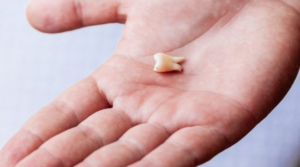
Losing a molar may go unnoticed at first. However, this loss can quickly affect chewing, jaw balance, and everyday comfort. It is not uncommon for some people to start chewing on only one side without even realizing it.
In this context, a dental implant in Montreal is not just an aesthetic solution. It is a functional procedure aimed at restoring chewing ability, stabilizing the bite, and preserving long-term oral health.
TL;DR
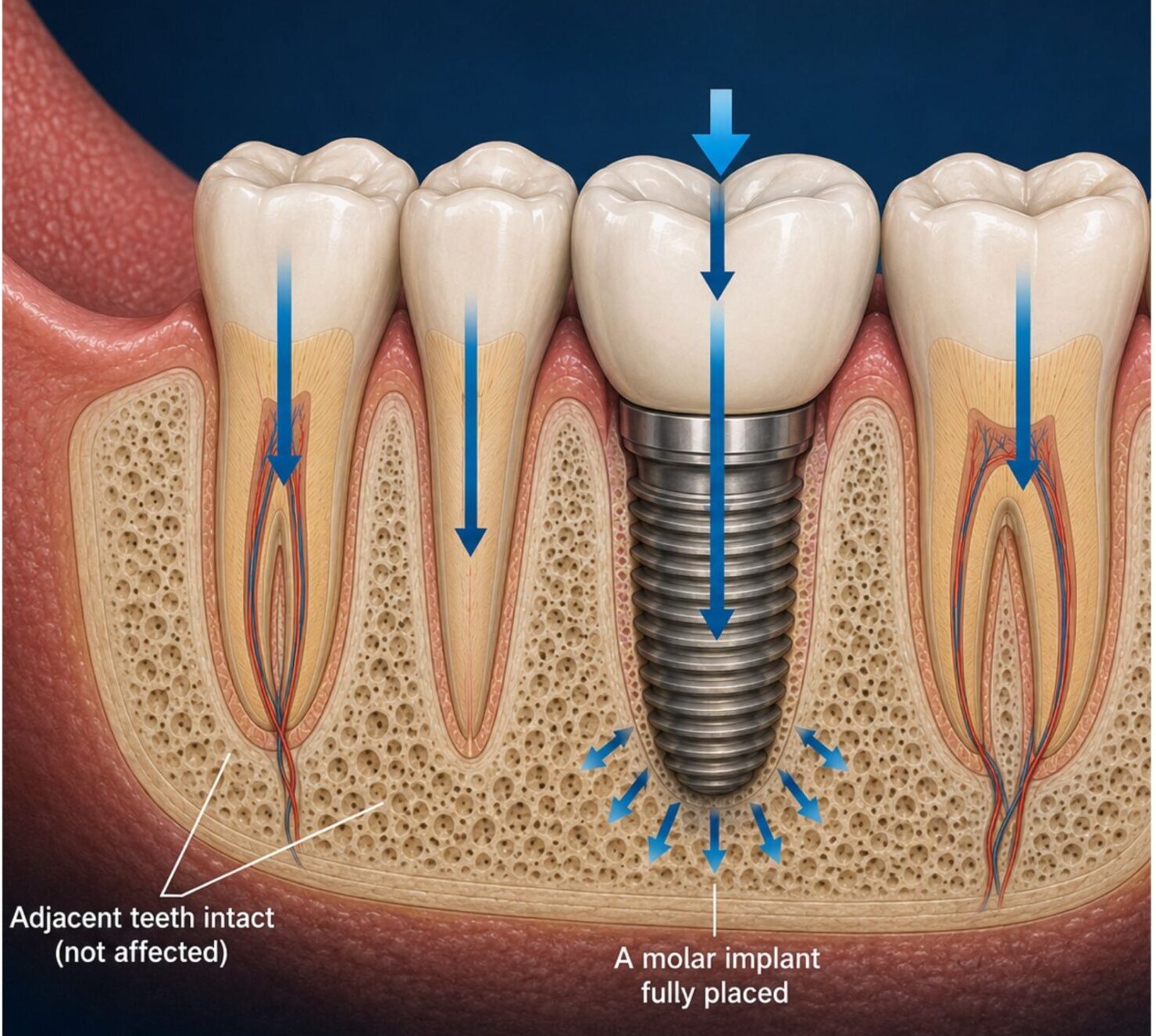
Molars bear most of the chewing forces and play a central role in bite stability. Placing a dental implant in Montreal allows for replacement of both the root and the crown, helping maintain dental balance and limit bone loss.
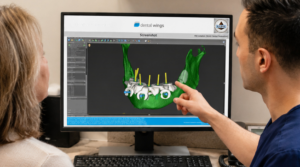
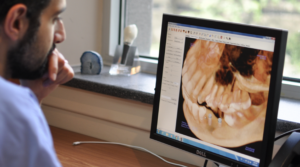
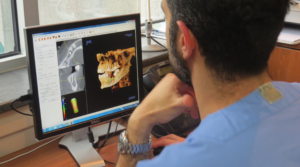
In the posterior region, planning is often more complex due to access, variable bone quality, and proximity to anatomical structures such as the maxillary sinus or the mandibular canal. The use of 3D imaging (CBCT) improves diagnostic and planning accuracy.
Specialized care in oral and maxillofacial surgery helps optimize procedural safety, placement precision, and long-term results.
Why Replacing a Molar Is Crucial
When a molar is lost, the impact goes beyond an empty space.
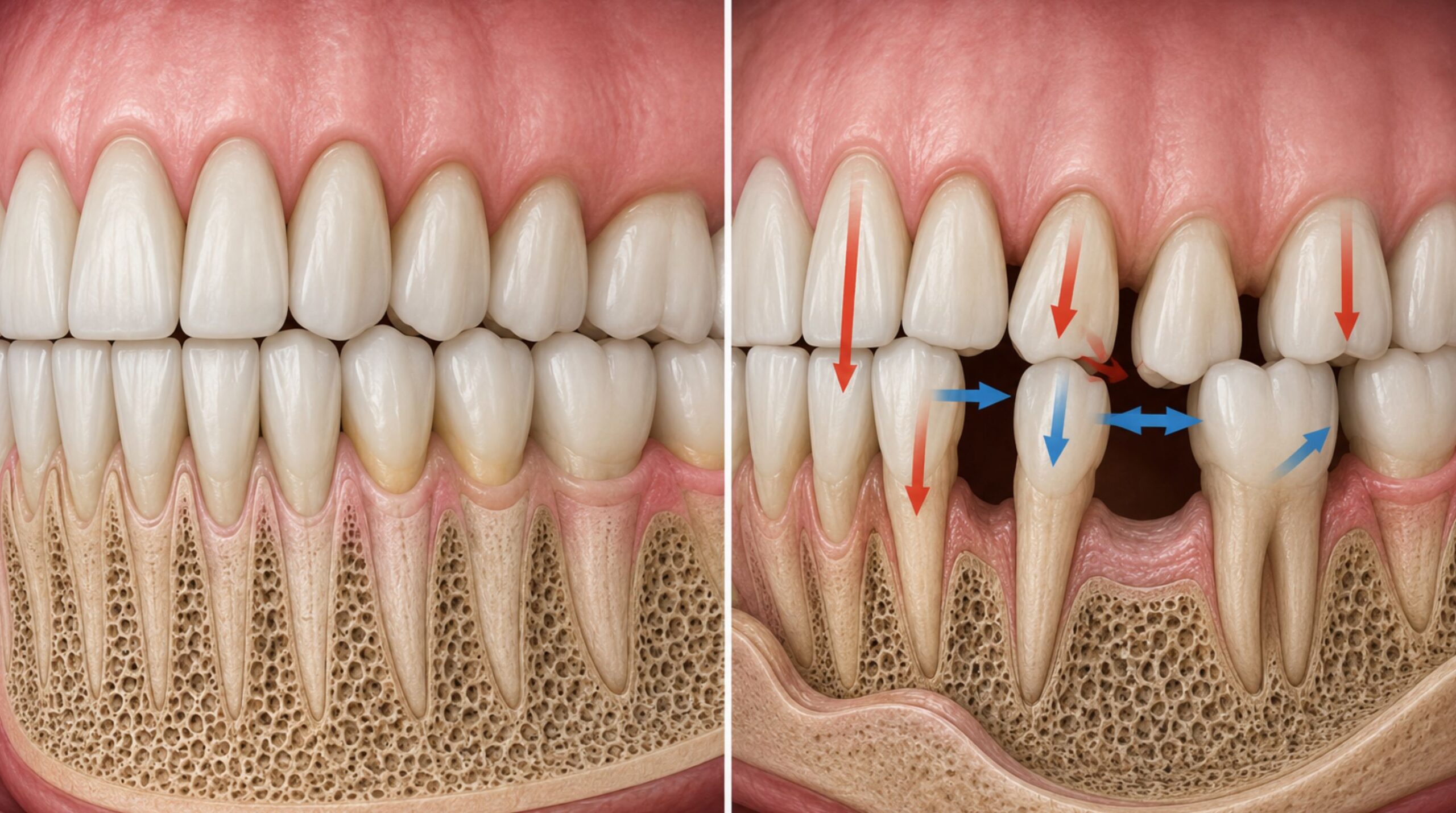
Molars absorb a large portion of chewing forces and actively contribute to bite stability.
In their absence, the remaining teeth must compensate. This compensation can lead to overload, change chewing habits, and, over time, create functional imbalances.
From an implantology perspective, replacing a molar means rebuilding a key support point. A dental implant in Montreal restores the missing root and supports a crown adapted to chewing forces.
What sets implants apart from other solutions is their ability to replicate the functional role of a natural tooth while helping preserve bone and the integrity of adjacent teeth.
What Happens If You Do Not Replace a Molar
When a molar is not replaced, adjacent teeth may drift into the empty space, while the opposing tooth may gradually over-erupt. This lack of stable contact leads to progressive bite disorganization.
Bone loss is also expected. Without stimulation from the root, the alveolar bone begins to resorb, often significantly within the first few months after extraction.
Over the long term, chewing on one side can contribute to muscle tension and temporomandibular joint (TMJ) disorders.
What Makes a Molar Implant More Complex?
A molar implant is generally more demanding than an anterior implant. The posterior region is harder to access, visibility is reduced, and working angulation is less favourable.
In addition, bone quality may vary depending on the jaw, and the proximity of important anatomical structures requires careful planning.
In this context, the success of a dental implant in Montreal relies on a methodical approach supported by precise digital tools and expertise in oral and maxillofacial surgery.
High Chewing Forces
Molars are subjected to greater chewing forces than anterior teeth. This high occlusal load can be a challenge for an implant that is poorly positioned or inadequately sized.
Planning must therefore consider not only the available space but also long-term mechanical constraints. The choice of implant diameter, placement depth, and crown morphology directly influences restoration durability.
Proximity to the Sinus or Mandibular Nerve
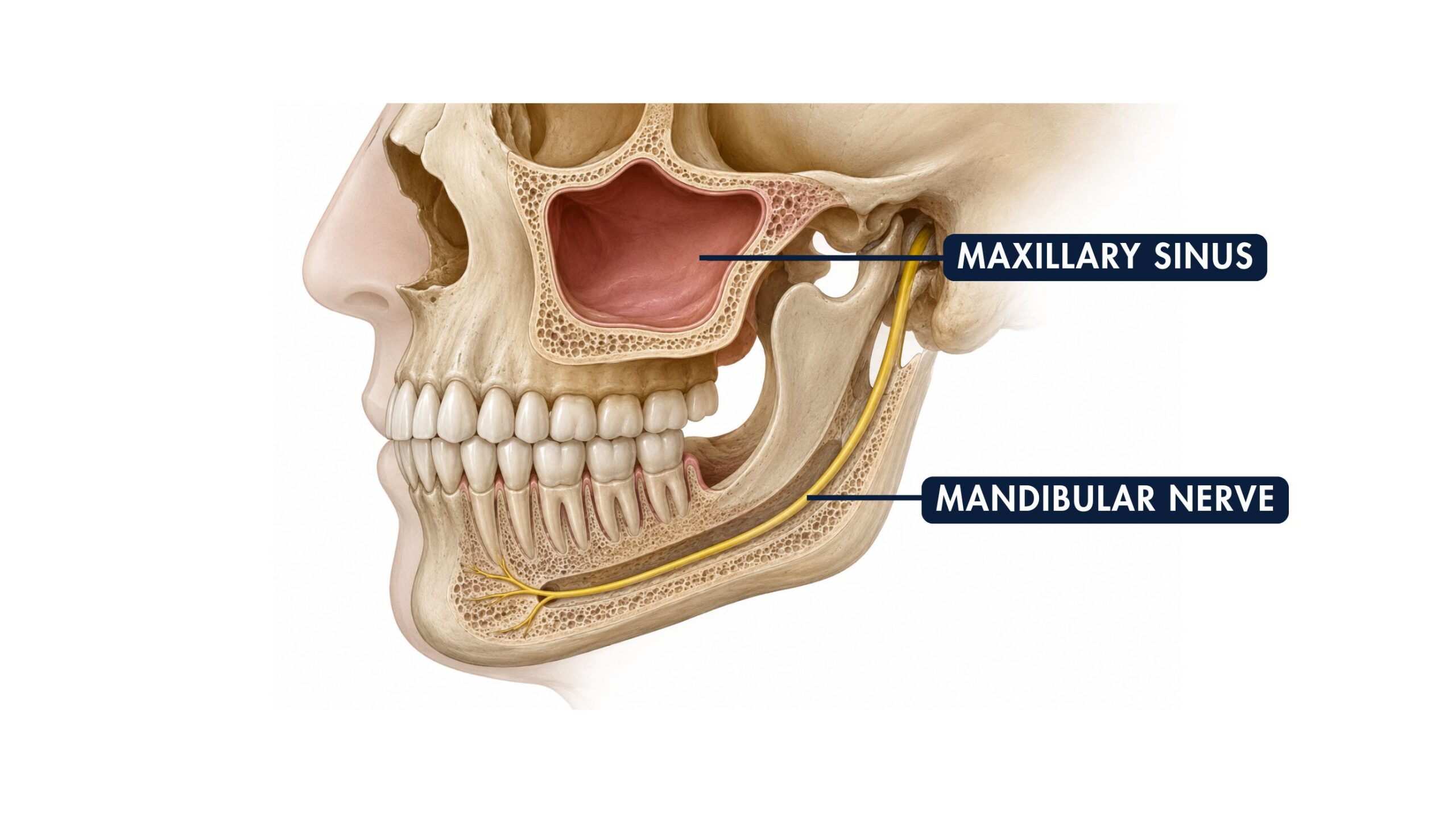
In the upper jaw, the proximity of the maxillary sinus may limit available bone height. In the lower jaw, the inferior alveolar nerve requires a safety margin.
3D imaging (CBCT) is essential for safely planning a dental implant in Montreal, allowing precise visualization of anatomical structures and helping avoid complications.
Treatment Steps for a Molar Implant in Montreal
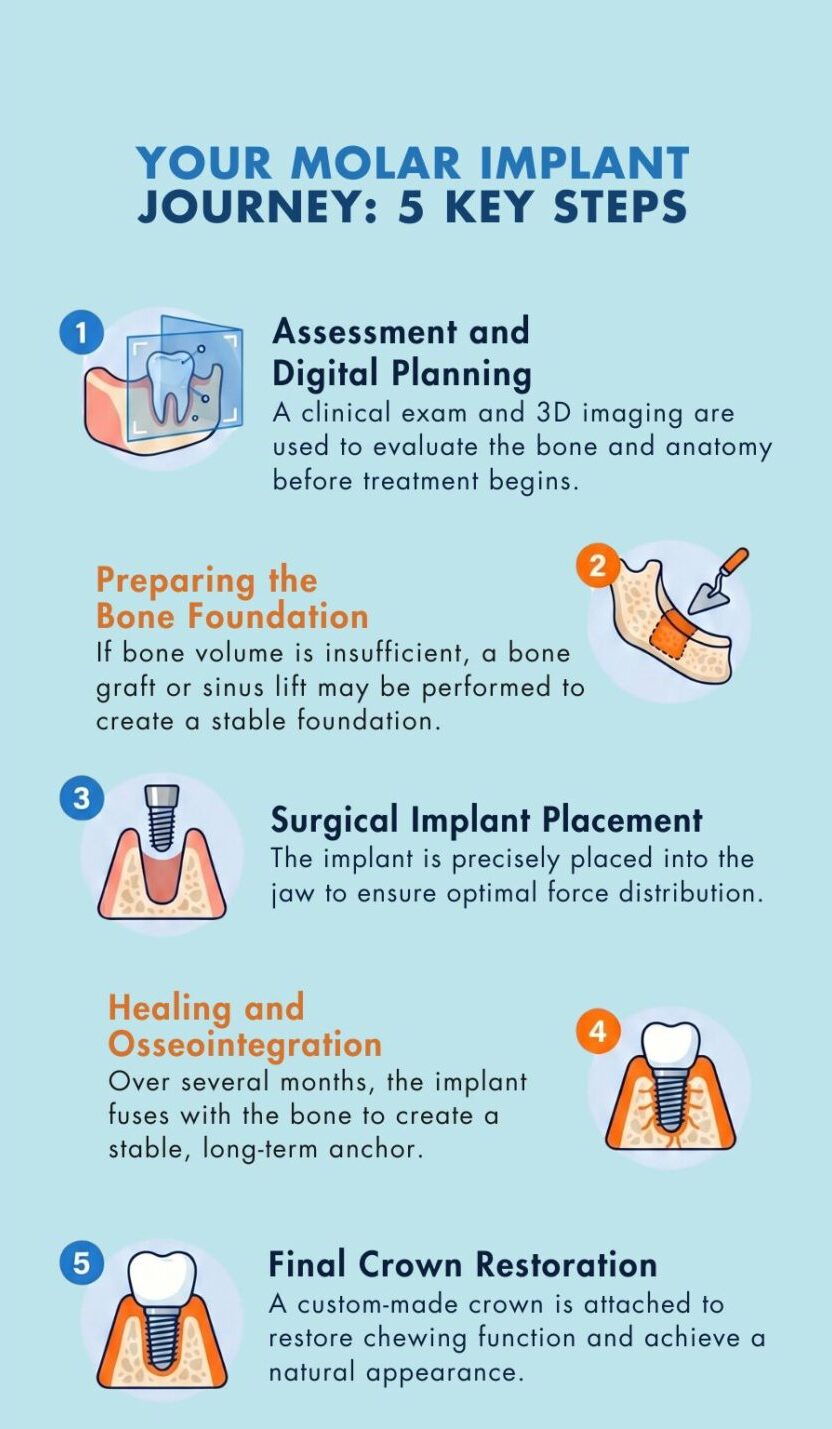
Evaluation and planning
Treatment begins with a comprehensive consultation, including a clinical exam and 3D imaging. This step evaluates bone quality, tissue condition, and anatomical constraints.
Bone graft or sinus lift (if needed)
When bone volume is insufficient, a graft or sinus lift may be required to create a stable foundation for the implant.
Implant placement
The implant is inserted into the jawbone according to precise planning. The goal is to ensure optimal stability and proper force distribution.
Healing and osseointegration
Over several months, the implant integrates with the bone through osseointegration, ensuring long-term stability.
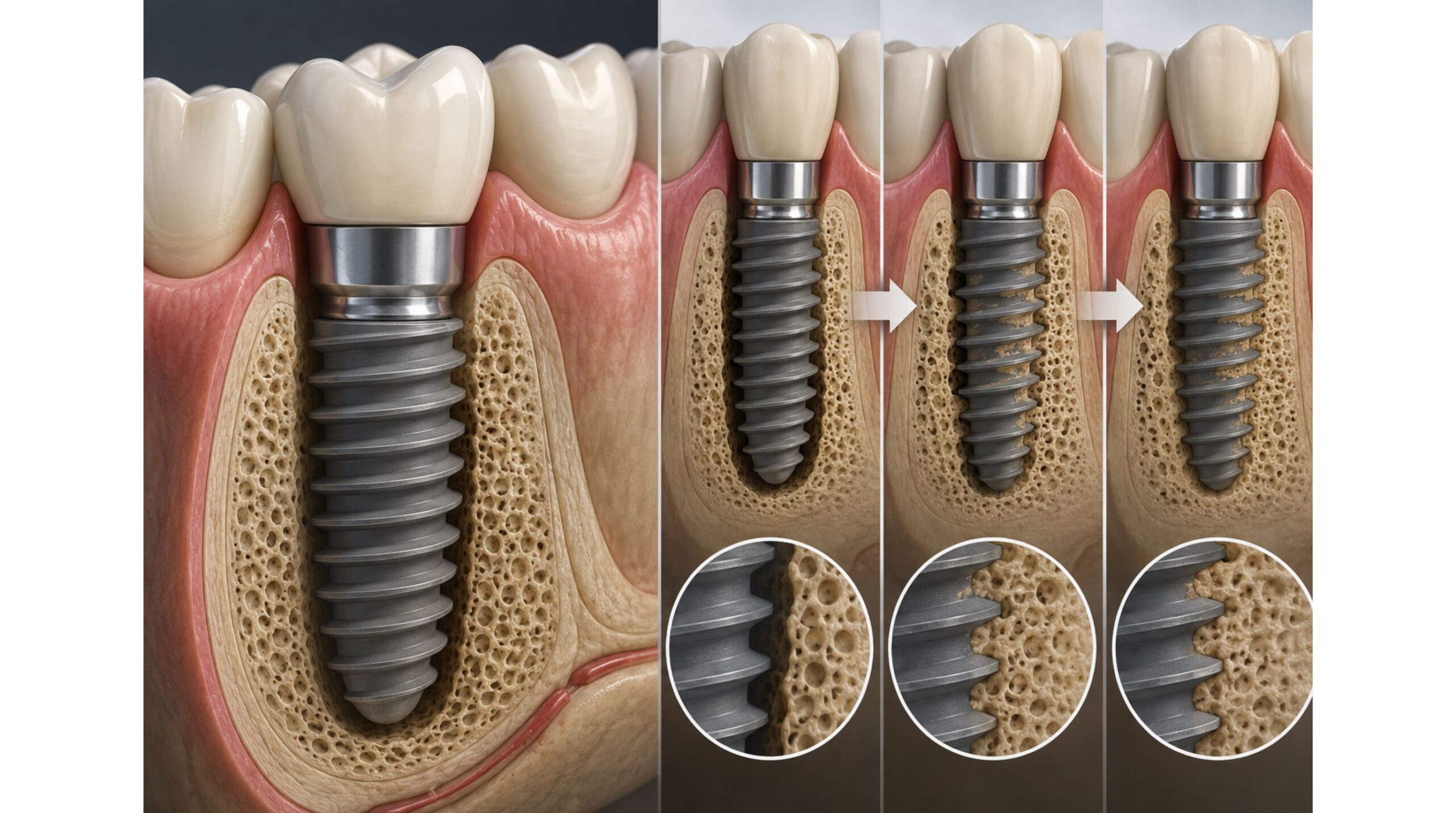
Crown placement
A custom crown is then installed to restore chewing function and aesthetics.
Returning to Normal Chewing After a Molar Implant
Returning to normal chewing is gradual. It includes a healing phase, progressive loading, and full adaptation after final restoration.
Most patients gradually resume a normal diet once the surgeon confirms implant stability.
Which Foods Should Be Avoided During Healing?
Hard, sticky, or very crunchy foods should be avoided on the treated side.
Nuts, sticky candies, ice, and hard crusts can place excessive pressure.
A soft diet is recommended at first, followed by gradual reintroduction. This approach protects the implant and supports osseointegration.
Risks and Considerations Specific to Posterior Implants
Posterior implants involve certain risks: overload, sinus complications, and nerve proximity.
Poor planning can lead to failure, highlighting the importance of specialized care.
How an Oral Surgeon Reduces These Risks
An oral surgeon reduces risks through:
- 3D imaging
- precise planning
- rigorous execution
This approach improves safety and predictability.
Why Consult an Oral Surgery Specialist in Montreal?
A specialist provides a comprehensive evaluation of anatomical and biomechanical constraints.
In complex cases, this expertise improves safety and outcomes.
FAQ – Molar Implant
Is a molar implant more difficult to place?
Yes, often. Access to the posterior region is more difficult, chewing forces are higher, and the proximity of anatomical structures such as the sinus or mandibular nerve requires more advanced planning.
How long before I can chew normally?
Several months are generally required between surgery, bone healing, and placement of the final restoration. The return to normal chewing is gradual, depending on implant stability and the surgeon’s recommendations.
Can an implant handle hard foods?
Yes. Once well integrated into the bone and properly restored, a molar implant can handle normal chewing, provided the bite is well balanced and maintenance is adequate.
What happens if I chew on one side for too long?
Chewing on one side can overload certain teeth, disrupt the bite, and contribute to muscle tension or temporomandibular joint disorders.
Is it possible to get a molar implant with limited bone?
Yes, in many cases. With proper planning, bone grafting, or a sinus lift, many patients may still be eligible for a molar implant.
Key Takeaways
Molars are essential for effective chewing, bite stability, and overall jaw balance.
Posterior implants require advanced planning, as the molar region is more complex anatomically, surgically, and biomechanically.
Specialized care in oral and maxillofacial surgery improves precision, comfort, safety, and long-term outcomes.
Book an appointment at Seaforth Oral Surgery in Montreal for a personalized evaluation.
Losing a molar may go unnoticed at first. However, this loss can quickly affect chewing, jaw balance, and everyday comfort. It is not uncommon for some people to start chewing on only one side without even realizing it.
In this context, a dental implant in Montreal is not just an aesthetic solution. It is a functional procedure aimed at restoring chewing ability, stabilizing the bite, and preserving long-term oral health.
TL;DR
Molars bear most of the chewing forces and play a central role in bite stability. Placing a dental implant in Montreal allows for replacement of both the root and the crown, helping maintain dental balance and limit bone loss.
In the posterior region, planning is often more complex due to access, variable bone quality, and proximity to anatomical structures such as the maxillary sinus or the mandibular canal. The use of 3D imaging (CBCT) improves diagnostic and planning accuracy.
Specialized care in oral and maxillofacial surgery helps optimize procedural safety, placement precision, and long-term results.
Why Replacing a Molar Is Crucial
When a molar is lost, the impact goes beyond an empty space.
Molars absorb a large portion of chewing forces and actively contribute to bite stability.
In their absence, the remaining teeth must compensate. This compensation can lead to overload, change chewing habits, and, over time, create functional imbalances.
From an implantology perspective, replacing a molar means rebuilding a key support point. A dental implant in Montreal restores the missing root and supports a crown adapted to chewing forces.
What sets implants apart from other solutions is their ability to replicate the functional role of a natural tooth while helping preserve bone and the integrity of adjacent teeth.
What Happens If You Do Not Replace a Molar
When a molar is not replaced, adjacent teeth may drift into the empty space, while the opposing tooth may gradually over-erupt. This lack of stable contact leads to progressive bite disorganization.
Bone loss is also expected. Without stimulation from the root, the alveolar bone begins to resorb, often significantly within the first few months after extraction.
Over the long term, chewing on one side can contribute to muscle tension and temporomandibular joint (TMJ) disorders.
What Makes a Molar Implant More Complex?
A molar implant is generally more demanding than an anterior implant. The posterior region is harder to access, visibility is reduced, and working angulation is less favourable.
In addition, bone quality may vary depending on the jaw, and the proximity of important anatomical structures requires careful planning.
In this context, the success of a dental implant in Montreal relies on a methodical approach supported by precise digital tools and expertise in oral and maxillofacial surgery.
High Chewing Forces
Molars are subjected to greater chewing forces than anterior teeth. This high occlusal load can be a challenge for an implant that is poorly positioned or inadequately sized.
Planning must therefore consider not only the available space but also long-term mechanical constraints. The choice of implant diameter, placement depth, and crown morphology directly influences restoration durability.
Proximity to the Sinus or Mandibular Nerve
In the upper jaw, the proximity of the maxillary sinus may limit available bone height. In the lower jaw, the inferior alveolar nerve requires a safety margin.
3D imaging (CBCT) is essential for safely planning a dental implant in Montreal, allowing precise visualization of anatomical structures and helping avoid complications.
Treatment Steps for a Molar Implant in Montreal
Evaluation and planning
Treatment begins with a comprehensive consultation, including a clinical exam and 3D imaging. This step evaluates bone quality, tissue condition, and anatomical constraints.
Bone graft or sinus lift (if needed)
When bone volume is insufficient, a graft or sinus lift may be required to create a stable foundation for the implant.
Implant placement
The implant is inserted into the jawbone according to precise planning. The goal is to ensure optimal stability and proper force distribution.
Healing and osseointegration
Over several months, the implant integrates with the bone through osseointegration, ensuring long-term stability.
Crown placement
A custom crown is then installed to restore chewing function and aesthetics.
Returning to Normal Chewing After a Molar Implant
Returning to normal chewing is gradual. It includes a healing phase, progressive loading, and full adaptation after final restoration.
Most patients gradually resume a normal diet once the surgeon confirms implant stability.
Which Foods Should Be Avoided During Healing?
Hard, sticky, or very crunchy foods should be avoided on the treated side.
Nuts, sticky candies, ice, and hard crusts can place excessive pressure.
A soft diet is recommended at first, followed by gradual reintroduction. This approach protects the implant and supports osseointegration.
Risks and Considerations Specific to Posterior Implants
Posterior implants involve certain risks: overload, sinus complications, and nerve proximity.
Poor planning can lead to failure, highlighting the importance of specialized care.
How an Oral Surgeon Reduces These Risks
An oral surgeon reduces risks through:
- 3D imaging
- precise planning
- rigorous execution
This approach improves safety and predictability.
Why Consult an Oral Surgery Specialist in Montreal?
A specialist provides a comprehensive evaluation of anatomical and biomechanical constraints.
In complex cases, this expertise improves safety and outcomes.
FAQ – Molar Implant
Is a molar implant more difficult to place?
Yes, often. Access to the posterior region is more difficult, chewing forces are higher, and the proximity of anatomical structures such as the sinus or mandibular nerve requires more advanced planning.
How long before I can chew normally?
Several months are generally required between surgery, bone healing, and placement of the final restoration. The return to normal chewing is gradual, depending on implant stability and the surgeon’s recommendations.
Can an implant handle hard foods?
Yes. Once well integrated into the bone and properly restored, a molar implant can handle normal chewing, provided the bite is well balanced and maintenance is adequate.
What happens if I chew on one side for too long?
Chewing on one side can overload certain teeth, disrupt the bite, and contribute to muscle tension or temporomandibular joint disorders.
Is it possible to get a molar implant with limited bone?
Yes, in many cases. With proper planning, bone grafting, or a sinus lift, many patients may still be eligible for a molar implant.
Key Takeaways
Molars are essential for effective chewing, bite stability, and overall jaw balance.
Posterior implants require advanced planning, as the molar region is more complex anatomically, surgically, and biomechanically.
Specialized care in oral and maxillofacial surgery improves precision, comfort, safety, and long-term outcomes.
Book an appointment at Seaforth Oral Surgery in Montreal for a personalized evaluation.