Losing or extracting a tooth can feel urgent—especially when it affects your smile, comfort, or ability to chew. Many patients in Montreal ask: Should I replace the tooth immediately, or wait? A same-day dental implant may be an option in certain cases—but timing and proper evaluation are critical.
TL;DR — At a Glance
- Most bone loss after extraction occurs within the first 3–6 months.
- A same-day dental implant in Montreal can preserve bone and gum structure—but not everyone is a candidate.
- Immediate placement and immediate loading are different clinical decisions.
- Early consultation preserves options and may reduce the need for bone grafting.
- Success rates exceed 95% when cases are properly selected.
Why Is Timing So Important After Tooth Extraction?
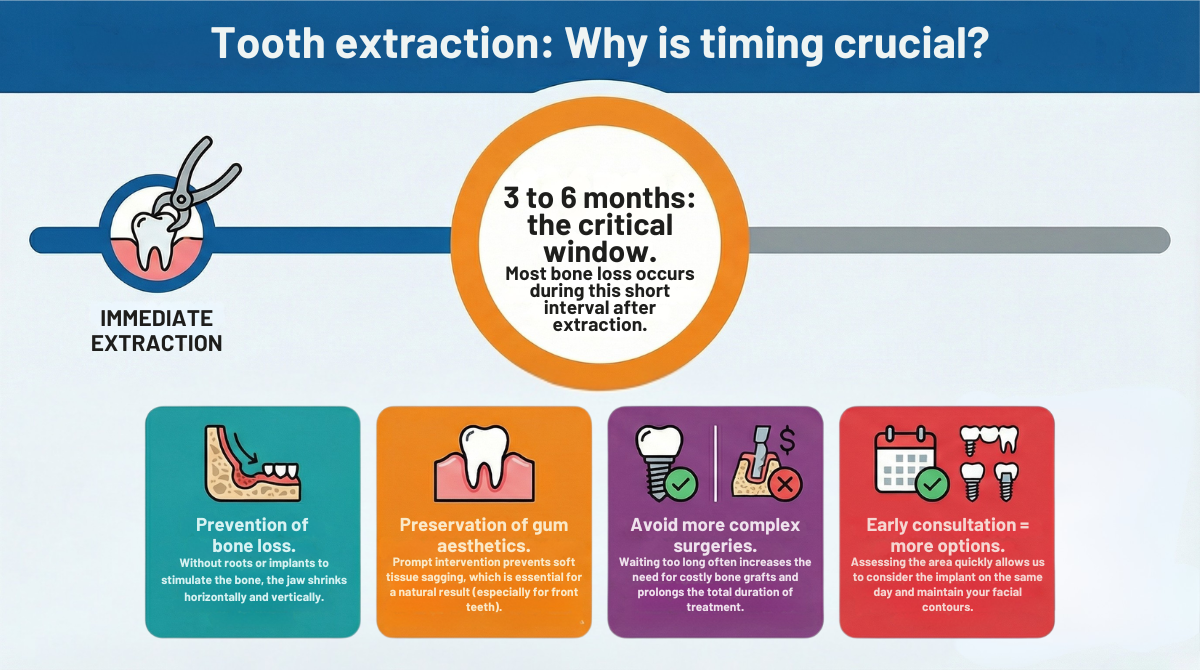
After a tooth is removed, the jawbone begins to remodel. Without stimulation from chewing forces transmitted through the tooth root, the bone gradually resorbs (shrinks).
Research shows that:
- Bone loss is most significant in the first 3 to 6 months
- Horizontal bone shrinkage is more pronounced than vertical loss
- Early intervention can help preserve bone volume
Gum tissue (gingiva) also changes after extraction. According to findings published in the Journal of Periodontology, soft tissue collapse can impact aesthetic outcomes—particularly in the anterior (front) teeth.
In practical terms: waiting too long may increase the need for bone grafting or soft tissue procedures before placing a dental implant in Montreal.
Dental Implant in Montreal: Act Early or Wait?
Choosing when to place a dental implant in Montreal depends on several factors:
- Bone density and volume
- Presence or absence of infection
- Gum health
- Overall medical condition
- Aesthetic demands (front vs. back teeth)
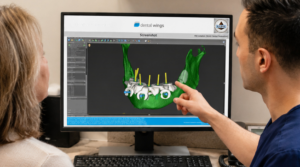
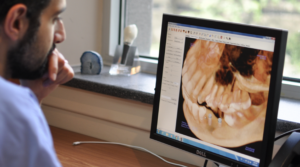
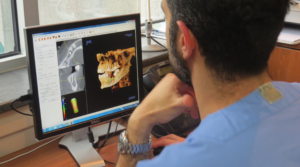
At Seaforth Oral Surgery, 3D cone beam imaging allows precise assessment of:
- Bone quality
- Anatomical structures
- Implant positioning for optimal function and aesthetics
Importantly, acting early does not necessarily mean surgery the same day. It means preserving your options before bone resorption progresses.
When Should Same-Day Dental Implants Be Considered?
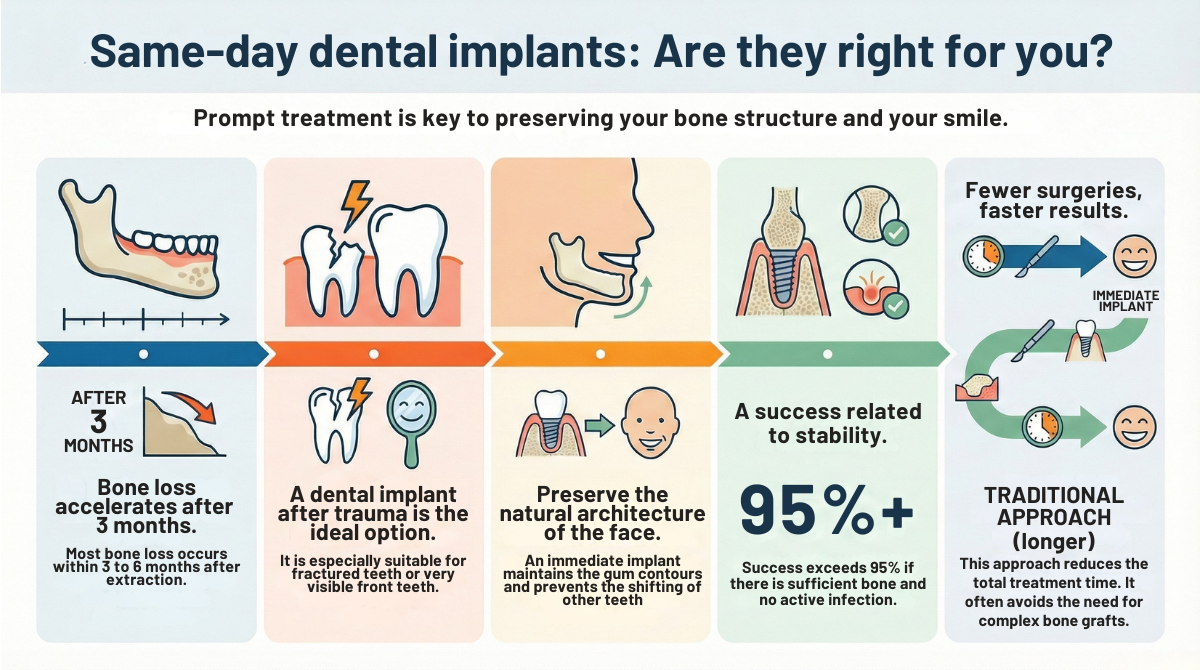
A same-day dental implant (immediate placement) may be considered in cases such as:
- A fractured tooth beyond repair
- Severe decay requiring extraction
- Dental trauma
- Non-restorable root damage
- Highly visible front teeth
- Patients wishing to avoid a removable temporary prosthesis
In these scenarios, immediate implant placement may:
- Preserve bone architecture
- Reduce total treatment time
- Maintain natural gum contours
- Avoid prolonged tooth absence
Immediate placement can achieve survival rates comparable to delayed implants when proper case selection is followed.
Immediate Placement vs. Immediate Loading
These two terms are often confused but represent distinct decisions.
Immediate Placement
The implant is inserted on the same day as extraction.
Requirements:
- No active infection
- Adequate bone for primary stability
- Controlled surgical conditions
Studies show comparable long-term outcomes to delayed placement when criteria are met.
Immediate Loading
A temporary tooth is attached within 24–48 hours of implant placement.
This option:
- Maintains appearance
- Improves patient confidence
- Provides early function (with limited biting force)
Immediate loading can be successful when mechanical stability is high.
Not all immediately placed implants can or should be immediately loaded.
What Happens If You Wait Too Long?

Delaying evaluation without monitoring may lead to:
- Increased bone resorption
- Greater need for bone grafting [[Link: bone-grafting]]
- Gum recession
- Tooth shifting
- Longer overall treatment time
Bone loss can also subtly alter facial contours over time due to decreased structural support.
Early consultation allows planning—even if surgery is postponed.
Advantages of Early Intervention
When appropriate, early implant placement may:
- Preserve jawbone structure
- Maintain gum aesthetics
- Shorten total treatment time
- Reduce surgical stages
- Avoid removable temporary dentures
Dental implant success rates exceed 95% over 10 years in properly selected cases.
Postoperative care—including antimicrobial rinses, soft diet, and precise oral hygiene—is essential for long-term success.
When an Immediate Implant Is NOT Recommended
A same-day dental implant in Montreal may not be appropriate in cases of:
- Active infection at the extraction site
- Severe bone loss
- Uncontrolled diabetes
- Heavy smoking
- Severe bruxism (teeth grinding)
- Certain systemic medical conditions
Careful case selection—not speed—is the key to predictable outcomes.
Frequently Asked Questions
Is replacing an extracted tooth an emergency?
Not always surgically urgent—but it is often a planning priority, as bone changes begin quickly after extraction.
Can everyone get a same-day dental implant?
No. Candidacy depends on bone quality, infection status, medical health, and stability at placement.
Is immediate implant placement riskier?
When performed under proper conditions, immediate implants can be safe. Some studies show slightly higher early failure rates, which is why specialist evaluation is essential.
Are same-day implants as durable as traditional implants?
Yes. Long-term studies demonstrate comparable survival rates when strict protocols are followed.
Who decides the timing?
Your oral and maxillofacial surgeon determines timing based on clinical examination, 3D imaging, and your personal goals.
Key Takeaways
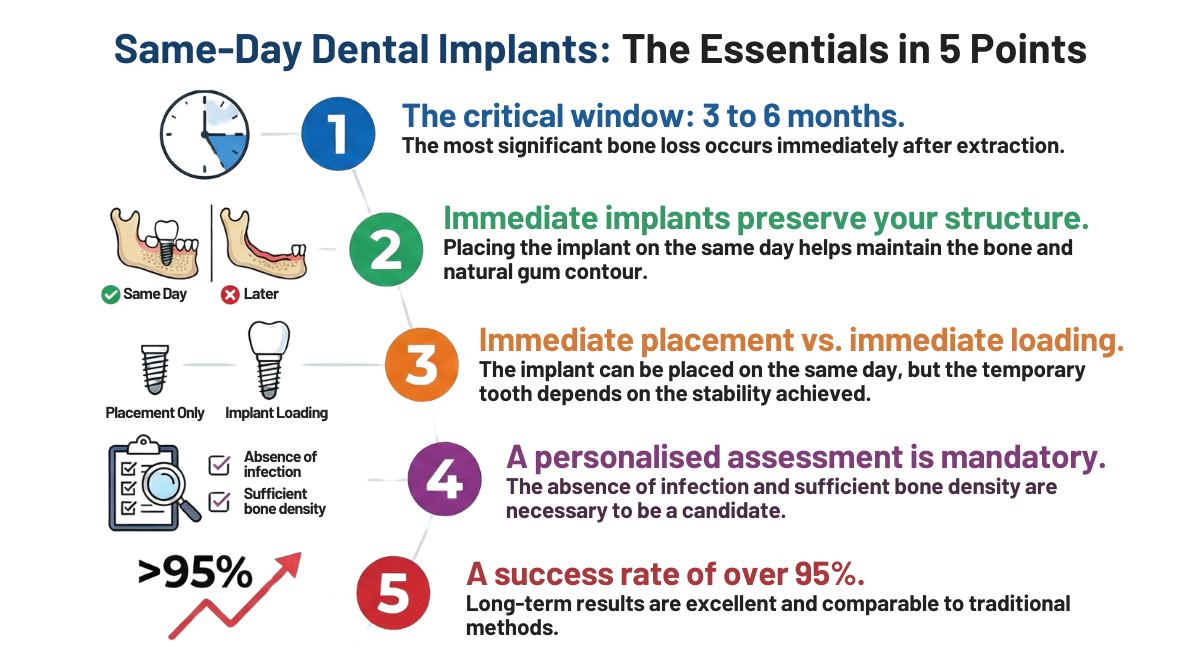
- The first 3–6 months after extraction are critical.
- Same-day dental implants can preserve bone and aesthetics.
- Not all patients qualify—individual assessment is essential.
- Early consultation helps prevent avoidable complications.
- Proper planning ensures long-term implant success.
Ready to Discuss Your Options?
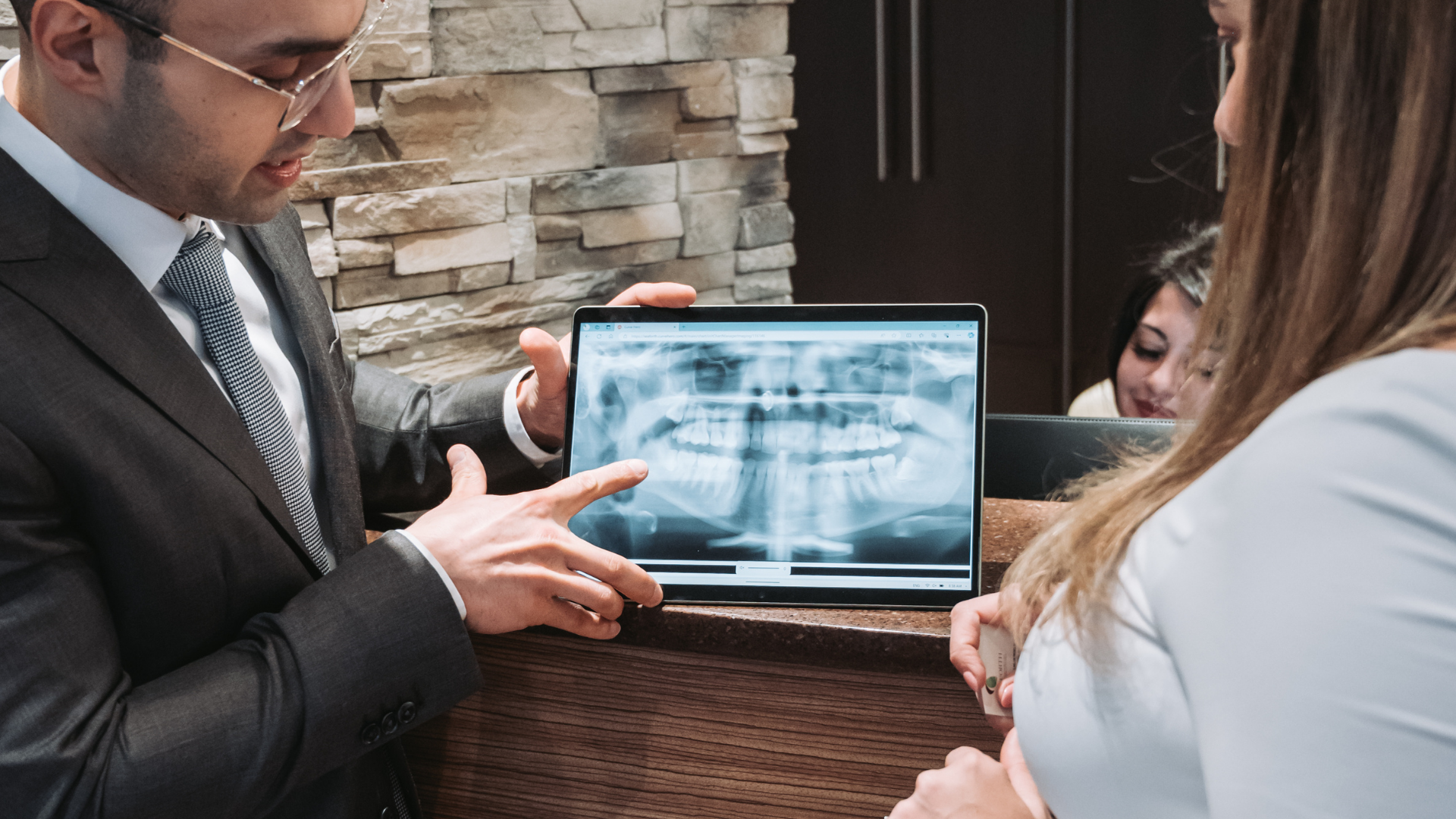
Have you recently lost a tooth or been advised to undergo extraction?
Contact Seaforth Oral Surgery in Montreal to schedule a personalized consultation. Our oral and maxillofacial surgery team will determine whether a same-day dental implant—or a staged approach—is safest and most effective for your smile.
Losing or extracting a tooth can feel urgent—especially when it affects your smile, comfort, or ability to chew. Many patients in Montreal ask: Should I replace the tooth immediately, or wait? A same-day dental implant may be an option in certain cases—but timing and proper evaluation are critical.
TL;DR — At a Glance
- Most bone loss after extraction occurs within the first 3–6 months.
- A same-day dental implant in Montreal can preserve bone and gum structure—but not everyone is a candidate.
- Immediate placement and immediate loading are different clinical decisions.
- Early consultation preserves options and may reduce the need for bone grafting.
- Success rates exceed 95% when cases are properly selected.
Why Is Timing So Important After Tooth Extraction?
After a tooth is removed, the jawbone begins to remodel. Without stimulation from chewing forces transmitted through the tooth root, the bone gradually resorbs (shrinks).
Research shows that:
- Bone loss is most significant in the first 3 to 6 months
- Horizontal bone shrinkage is more pronounced than vertical loss
- Early intervention can help preserve bone volume
Gum tissue (gingiva) also changes after extraction. According to findings published in the Journal of Periodontology, soft tissue collapse can impact aesthetic outcomes—particularly in the anterior (front) teeth.
In practical terms: waiting too long may increase the need for bone grafting or soft tissue procedures before placing a dental implant in Montreal.
Dental Implant in Montreal: Act Early or Wait?
Choosing when to place a dental implant in Montreal depends on several factors:
- Bone density and volume
- Presence or absence of infection
- Gum health
- Overall medical condition
- Aesthetic demands (front vs. back teeth)
At Seaforth Oral Surgery, 3D cone beam imaging allows precise assessment of:
- Bone quality
- Anatomical structures
- Implant positioning for optimal function and aesthetics
Importantly, acting early does not necessarily mean surgery the same day. It means preserving your options before bone resorption progresses.
When Should Same-Day Dental Implants Be Considered?
A same-day dental implant (immediate placement) may be considered in cases such as:
- A fractured tooth beyond repair
- Severe decay requiring extraction
- Dental trauma
- Non-restorable root damage
- Highly visible front teeth
- Patients wishing to avoid a removable temporary prosthesis
In these scenarios, immediate implant placement may:
- Preserve bone architecture
- Reduce total treatment time
- Maintain natural gum contours
- Avoid prolonged tooth absence
Immediate placement can achieve survival rates comparable to delayed implants when proper case selection is followed.
Immediate Placement vs. Immediate Loading
These two terms are often confused but represent distinct decisions.
Immediate Placement
The implant is inserted on the same day as extraction.
Requirements:
- No active infection
- Adequate bone for primary stability
- Controlled surgical conditions
Studies show comparable long-term outcomes to delayed placement when criteria are met.
Immediate Loading
A temporary tooth is attached within 24–48 hours of implant placement.
This option:
- Maintains appearance
- Improves patient confidence
- Provides early function (with limited biting force)
Immediate loading can be successful when mechanical stability is high.
Not all immediately placed implants can or should be immediately loaded.
What Happens If You Wait Too Long?
Delaying evaluation without monitoring may lead to:
- Increased bone resorption
- Greater need for bone grafting [[Link: bone-grafting]]
- Gum recession
- Tooth shifting
- Longer overall treatment time
Bone loss can also subtly alter facial contours over time due to decreased structural support.
Early consultation allows planning—even if surgery is postponed.
Advantages of Early Intervention
When appropriate, early implant placement may:
- Preserve jawbone structure
- Maintain gum aesthetics
- Shorten total treatment time
- Reduce surgical stages
- Avoid removable temporary dentures
Dental implant success rates exceed 95% over 10 years in properly selected cases.
Postoperative care—including antimicrobial rinses, soft diet, and precise oral hygiene—is essential for long-term success.
When an Immediate Implant Is NOT Recommended
A same-day dental implant in Montreal may not be appropriate in cases of:
- Active infection at the extraction site
- Severe bone loss
- Uncontrolled diabetes
- Heavy smoking
- Severe bruxism (teeth grinding)
- Certain systemic medical conditions
Careful case selection—not speed—is the key to predictable outcomes.
Frequently Asked Questions
Is replacing an extracted tooth an emergency?
Not always surgically urgent—but it is often a planning priority, as bone changes begin quickly after extraction.
Can everyone get a same-day dental implant?
No. Candidacy depends on bone quality, infection status, medical health, and stability at placement.
Is immediate implant placement riskier?
When performed under proper conditions, immediate implants can be safe. Some studies show slightly higher early failure rates, which is why specialist evaluation is essential.
Are same-day implants as durable as traditional implants?
Yes. Long-term studies demonstrate comparable survival rates when strict protocols are followed.
Who decides the timing?
Your oral and maxillofacial surgeon determines timing based on clinical examination, 3D imaging, and your personal goals.
Key Takeaways
- The first 3–6 months after extraction are critical.
- Same-day dental implants can preserve bone and aesthetics.
- Not all patients qualify—individual assessment is essential.
- Early consultation helps prevent avoidable complications.
- Proper planning ensures long-term implant success.
Ready to Discuss Your Options?
Have you recently lost a tooth or been advised to undergo extraction?
Contact Seaforth Oral Surgery in Montreal to schedule a personalized consultation. Our oral and maxillofacial surgery team will determine whether a same-day dental implant—or a staged approach—is safest and most effective for your smile.