In Montreal and across Quebec, many patients seek fast, reliable tooth replacement after an extraction or tooth loss. The idea of a “same-day dental implant”—arriving with a missing tooth and leaving that same day with a new smile—is undeniably appealing.
But behind this concept lies a detailed surgical protocol with strict criteria, clinical indications, and predictable limits. In implant dentistry, the real question is not simply “Is it possible?” but rather “Is it safe and appropriate in my case?”
Where Does the One-Day Implant Concept Come From?
The idea grew from major advancements in dental technology, including:
- 3D imaging (CBCT)
- Digital surgical planning
- Guided-surgery templates
- Highly reliable titanium implant systems
According to ITI (International Team for Implantology) consensus, two distinct concepts are often confused:
1. Immediate Implant Placement
The implant is inserted into the fresh extraction socket on the same day the tooth is removed.
2. Immediate Loading
A temporary restoration (crown or prosthesis) is attached to the implant within 24 hours to 1 week, sometimes the same day.
The goal is to shorten the time between extraction, implant surgery, and tooth replacement. For patients missing a visible front tooth, this approach can prevent months without an aesthetic solution.

Potential Advantages of Same-Day Implant Protocols
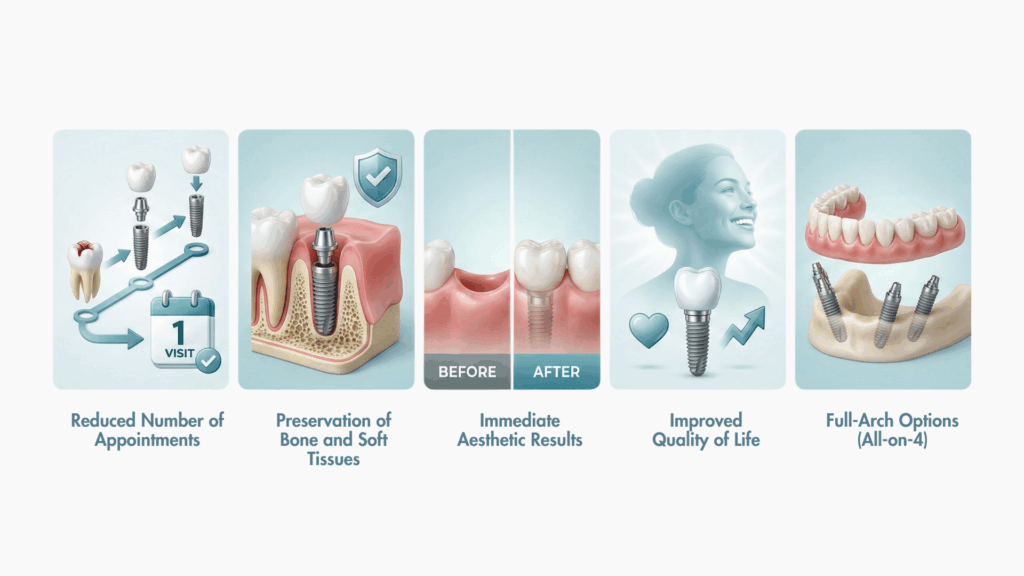
When used appropriately, immediate placement with immediate loading can provide several benefits:
Reduced Number of Appointments
Extraction, implant placement, and temporary restoration happen in one visit—reducing overall treatment time.
Preservation of Bone and Soft Tissues
Clinical studies show that immediate implantation can help maintain bone volume and gum contours, especially in the aesthetic zone.
Immediate Aesthetic Results
Patients leave with a temporary tooth or full-arch provisional prosthesis the same day, eliminating the psychological impact of a toothless period.
Improved Quality of Life
Research on immediate implants shows significant improvements in patient confidence, social well-being, and perceived aesthetics.
Full-Arch Options
In selected All-on-4 cases, fully edentulous patients can regain fixed function and aesthetics the day of surgery.
Limits, Risks, and Precautions
Despite its appeal, the same-day implant approach is not suitable for everyone.
Strict Clinical Requirements
Based on ITI guidelines, immediate placement and immediate loading require:
- Adequate bone volume
- Intact bone walls
- No acute infection
- Thick, healthy soft tissue
- High primary stability (typically ≥35 Ncm)
- No bruxism or significant grinding
When Immediate Loading Is Not Advisable
This protocol is not recommended in cases involving:
- Significant bone loss
- Need for major grafting
- Active periodontal disease
- Poor bone density
- High-risk systemic conditions
Systematic reviews show that immediate loading can be as reliable as conventional protocols—but only with strict case selection and precise technique.
“Fast Results” ≠ “Universal Solution”
For many patients, a staged approach—with healing periods and possible grafting—offers a far better long-term prognosis.
A comprehensive evaluation by an oral and maxillofacial surgeon is essential to assess bone quality, gum health, systemic factors (diabetes, smoking), and individual risk.
Technology and Surgical Expertise: The Foundation of Success
In Montreal, offering true same-day implants depends on a combination of advanced technology and specialized training.

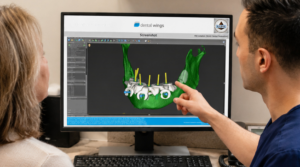
Advanced Digital Tools
Clinics such as Seaforth Oral Surgery rely on:
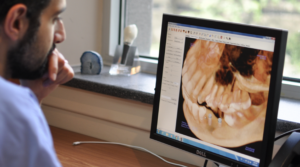
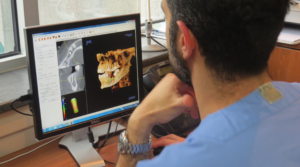
- 3D CBCT imaging
- Digital implant planning
- Guided-surgery templates
These tools help:
- Plan implant depth, angle, and position
- Protect nerves and sinus cavities
- Predict the shape and position of the final prosthesis
- Ensure proper biomechanics for immediate loading
Expertise Matters
According to AAOMS (American Association of Oral and Maxillofacial Surgeons), immediate placement with rapid loading should be performed only by clinicians trained in:
- Complex implant surgery
- Immediate prosthetic management
Teamwork among the surgeon, restorative dentist, and dental laboratory is essential.

Clinical Reality: What Happens During a Same-Day Implant Procedure?
Here is what a one-day implant protocol typically looks like:

1. Pre-Surgery
- Confirm medical and dental history
- Review digital planning and surgical guide
- Prepare a sterile environment
- Administer local anesthesia
2. Tooth Extraction (if needed)
An atraumatic technique preserves bone and soft tissue.
3. Implant Placement
A titanium implant is placed following the digital plan.
4. Temporary Restoration (If Conditions Are Met)
If primary stability is high enough:
- A temporary crown or prosthesis is placed the same day
- It is adjusted to avoid heavy bite forces and protect healing
This is crucial for successful osseointegration.
5. Healing Period
Even in same-day cases, the final prosthesis is delivered 3 to 6 months later once the bone has healed sufficiently.
6. Final Restoration
A custom crown, bridge, or All-on-4 prosthesis is secured for long-term durability.
Practical FAQs
Can you leave with a tooth the same day?
Yes—in carefully selected cases. It depends on bone quality, absence of infection, and ability to achieve stable implant insertion.
What is the difference between a temporary and a permanent tooth?
- Temporary tooth: for aesthetics and comfort; minimal contact; protects the healing implant.
- Permanent tooth: placed after healing; designed for long-term function and appearance.
How long does healing take?
Typically 3–6 months, depending on bone quality, grafting needs, jaw location, and medical factors.
Is it more expensive than a traditional implant?
Often, yes. Immediate loading requires advanced planning, specialized materials, digital guides, and more laboratory work.
What are the risks or contraindications?
Higher risk is associated with:
- Smoking
- Uncontrolled systemic diseases (e.g., diabetes)
- Poor oral hygiene
- Severe bone loss
- Active infection
In such cases, a traditional multi-step protocol is safer.
Conclusion
A same-day dental implant is neither a marketing myth nor a one-size-fits-all solution. It is a well-documented clinical approach enabled by modern technology and advanced surgical expertise—but it requires strict case selection to ensure safe, predictable outcomes.
When properly indicated, it offers rapid tooth replacement, immediate aesthetics, and significant psychological benefits without compromising long-term success.
To find out if you are a candidate, a personalized evaluation is essential.
Contact Seaforth Oral Surgery in Montreal to discuss your implant options—including immediate implants and All-on-4—and create a treatment plan tailored to your needs.
In Montreal and across Quebec, many patients seek fast, reliable tooth replacement after an extraction or tooth loss. The idea of a “same-day dental implant”—arriving with a missing tooth and leaving that same day with a new smile—is undeniably appealing.
But behind this concept lies a detailed surgical protocol with strict criteria, clinical indications, and predictable limits. In implant dentistry, the real question is not simply “Is it possible?” but rather “Is it safe and appropriate in my case?”
Where Does the One-Day Implant Concept Come From?
The idea grew from major advancements in dental technology, including:
- 3D imaging (CBCT)
- Digital surgical planning
- Guided-surgery templates
- Highly reliable titanium implant systems
According to ITI (International Team for Implantology) consensus, two distinct concepts are often confused:
1. Immediate Implant Placement
The implant is inserted into the fresh extraction socket on the same day the tooth is removed.
2. Immediate Loading
A temporary restoration (crown or prosthesis) is attached to the implant within 24 hours to 1 week, sometimes the same day.
The goal is to shorten the time between extraction, implant surgery, and tooth replacement. For patients missing a visible front tooth, this approach can prevent months without an aesthetic solution.
Potential Advantages of Same-Day Implant Protocols
When used appropriately, immediate placement with immediate loading can provide several benefits:
Reduced Number of Appointments
Extraction, implant placement, and temporary restoration happen in one visit—reducing overall treatment time.
Preservation of Bone and Soft Tissues
Clinical studies show that immediate implantation can help maintain bone volume and gum contours, especially in the aesthetic zone.
Immediate Aesthetic Results
Patients leave with a temporary tooth or full-arch provisional prosthesis the same day, eliminating the psychological impact of a toothless period.
Improved Quality of Life
Research on immediate implants shows significant improvements in patient confidence, social well-being, and perceived aesthetics.
Full-Arch Options
In selected All-on-4 cases, fully edentulous patients can regain fixed function and aesthetics the day of surgery.
Limits, Risks, and Precautions
Despite its appeal, the same-day implant approach is not suitable for everyone.
Strict Clinical Requirements
Based on ITI guidelines, immediate placement and immediate loading require:
- Adequate bone volume
- Intact bone walls
- No acute infection
- Thick, healthy soft tissue
- High primary stability (typically ≥35 Ncm)
- No bruxism or significant grinding
When Immediate Loading Is Not Advisable
This protocol is not recommended in cases involving:
- Significant bone loss
- Need for major grafting
- Active periodontal disease
- Poor bone density
- High-risk systemic conditions
Systematic reviews show that immediate loading can be as reliable as conventional protocols—but only with strict case selection and precise technique.
“Fast Results” ≠ “Universal Solution”
For many patients, a staged approach—with healing periods and possible grafting—offers a far better long-term prognosis.
A comprehensive evaluation by an oral and maxillofacial surgeon is essential to assess bone quality, gum health, systemic factors (diabetes, smoking), and individual risk.
Technology and Surgical Expertise: The Foundation of Success
In Montreal, offering true same-day implants depends on a combination of advanced technology and specialized training.
Advanced Digital Tools
Clinics such as Seaforth Oral Surgery rely on:
- 3D CBCT imaging
- Digital implant planning
- Guided-surgery templates
These tools help:
- Plan implant depth, angle, and position
- Protect nerves and sinus cavities
- Predict the shape and position of the final prosthesis
- Ensure proper biomechanics for immediate loading
Expertise Matters
According to AAOMS (American Association of Oral and Maxillofacial Surgeons), immediate placement with rapid loading should be performed only by clinicians trained in:
- Complex implant surgery
- Immediate prosthetic management
Teamwork among the surgeon, restorative dentist, and dental laboratory is essential.
Clinical Reality: What Happens During a Same-Day Implant Procedure?
Here is what a one-day implant protocol typically looks like:
1. Pre-Surgery
- Confirm medical and dental history
- Review digital planning and surgical guide
- Prepare a sterile environment
- Administer local anesthesia
2. Tooth Extraction (if needed)
An atraumatic technique preserves bone and soft tissue.
3. Implant Placement
A titanium implant is placed following the digital plan.
4. Temporary Restoration (If Conditions Are Met)
If primary stability is high enough:
- A temporary crown or prosthesis is placed the same day
- It is adjusted to avoid heavy bite forces and protect healing
This is crucial for successful osseointegration.
5. Healing Period
Even in same-day cases, the final prosthesis is delivered 3 to 6 months later once the bone has healed sufficiently.
6. Final Restoration
A custom crown, bridge, or All-on-4 prosthesis is secured for long-term durability.
Practical FAQs
Can you leave with a tooth the same day?
Yes—in carefully selected cases. It depends on bone quality, absence of infection, and ability to achieve stable implant insertion.
What is the difference between a temporary and a permanent tooth?
- Temporary tooth: for aesthetics and comfort; minimal contact; protects the healing implant.
- Permanent tooth: placed after healing; designed for long-term function and appearance.
How long does healing take?
Typically 3–6 months, depending on bone quality, grafting needs, jaw location, and medical factors.
Is it more expensive than a traditional implant?
Often, yes. Immediate loading requires advanced planning, specialized materials, digital guides, and more laboratory work.
What are the risks or contraindications?
Higher risk is associated with:
- Smoking
- Uncontrolled systemic diseases (e.g., diabetes)
- Poor oral hygiene
- Severe bone loss
- Active infection
In such cases, a traditional multi-step protocol is safer.
Conclusion
A same-day dental implant is neither a marketing myth nor a one-size-fits-all solution. It is a well-documented clinical approach enabled by modern technology and advanced surgical expertise—but it requires strict case selection to ensure safe, predictable outcomes.
When properly indicated, it offers rapid tooth replacement, immediate aesthetics, and significant psychological benefits without compromising long-term success.
To find out if you are a candidate, a personalized evaluation is essential.
Contact Seaforth Oral Surgery in Montreal to discuss your implant options—including immediate implants and All-on-4—and create a treatment plan tailored to your needs.