Traditional dentures can replace missing teeth effectively, but some people find that their dentures become less stable or comfortable over time. Dental implants provide two possible alternatives: stabilizing a denture that remains removable or supporting a fixed full-arch restoration.
The main difference is anchorage. A conventional denture rests on the gums, while an implant-supported prosthesis connects to implants placed in the jawbone. This can improve stability, chewing and comfort. However, treatment involves surgery, diligent maintenance and an individualized assessment.
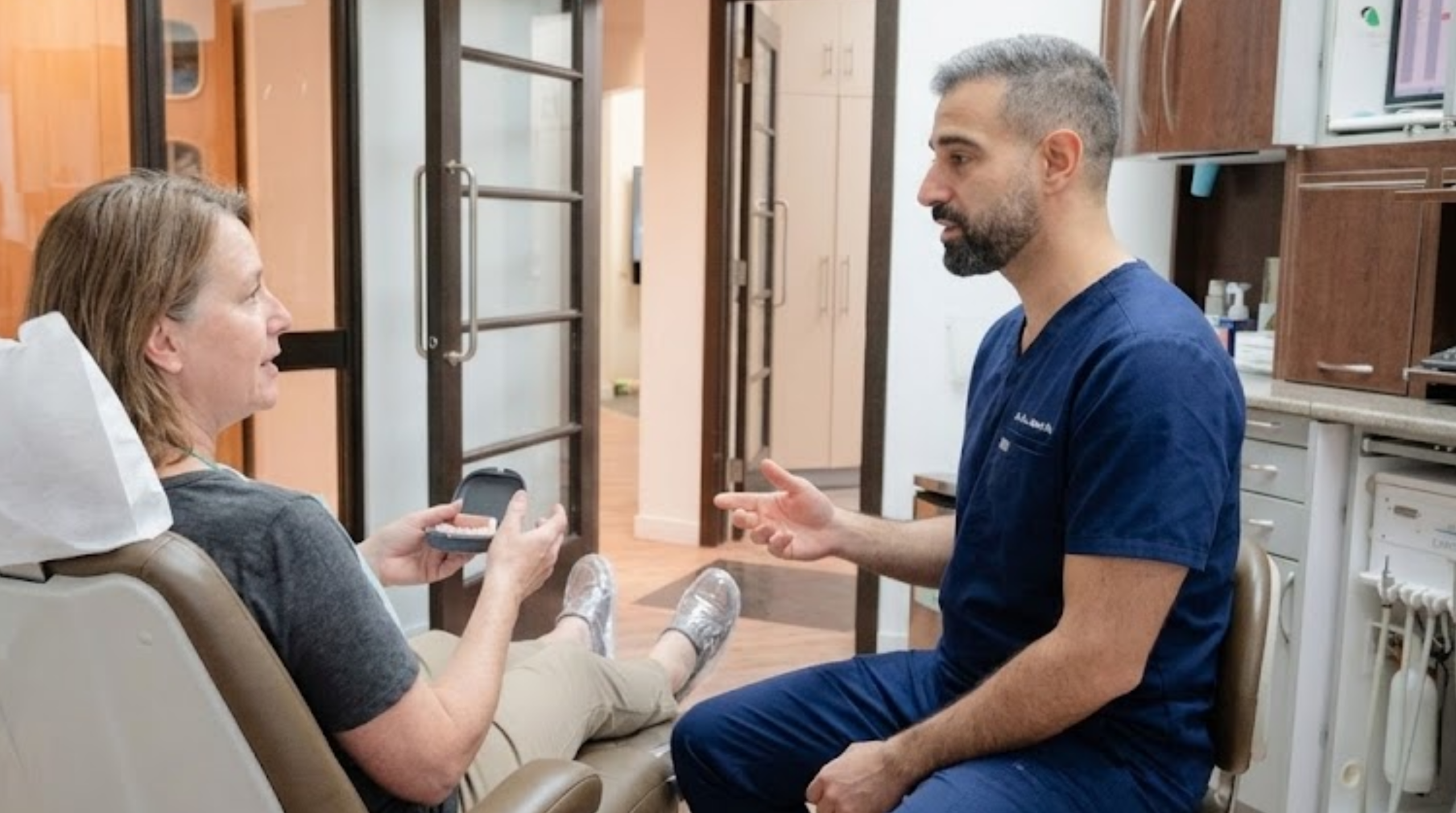
Why Can Dentures Become Less Comfortable?
A traditional complete denture rests on the gums and underlying bony ridge. It remains a valid solution for many people, particularly when surgery is not wanted or recommended.
After teeth are lost, however, the jawbone gradually remodels. The shape of the mouth can change even when the denture itself is still intact. Over time, this may lead to:
- movement while eating or speaking;
- pressure spots or irritation;
- difficulty chewing certain foods;
- more frequent use of denture adhesive;
- adjustments, relining or replacement;
- concern that the denture might move in public.
An unstable denture does not automatically mean that implants are necessary. Sometimes the denture can be adjusted or replaced. An assessment can determine whether the problem is related to fit, changes in the jawbone, the bite or a combination of factors.
Why do some patients switch to Dental Implants?
Improved Stability
Dental implants act as anc
hor points in the jaw. They can retain a removable denture or support a fixed restoration, generally reducing movement during chewing and speaking.
This stability is often the main reason someone explores dental implants in Montreal after wearing traditional dentures.
More Predictable Chewing
A stable prosthesis may make it easier to chew a wider variety of foods. The amount of improvement depends on the type of restoration, jaw anatomy, bite and the patient’s adaptation.
Implants do not restore exactly the same sensation as natural teeth. They can, however, provide firmer support than a prosthesis resting only on the gums.
Fewer Concerns About Movement
When a denture shifts, some people change how they speak, laugh or eat. An implant-supported solution may reduce these concerns, although adjustment is not immediate or identical for everyone.
Support for Bone Around the Implants
When implants are in function, they transfer forces to the surrounding bone. This may help maintain bone where the implants are placed.
Implants do not necessarily stop every change in the jawbone. Bone preservation depends on factors such as implant number and position, prosthesis design, oral hygiene and the health of the surrounding tissues.
Treatment Based on the Patient’s Priorities
Some people primarily want a denture that stays in place more securely. Others want teeth they do not remove at home. These goals lead to different treatment plans: a removable implant denture is not the same as a fixed full-arch restoration.
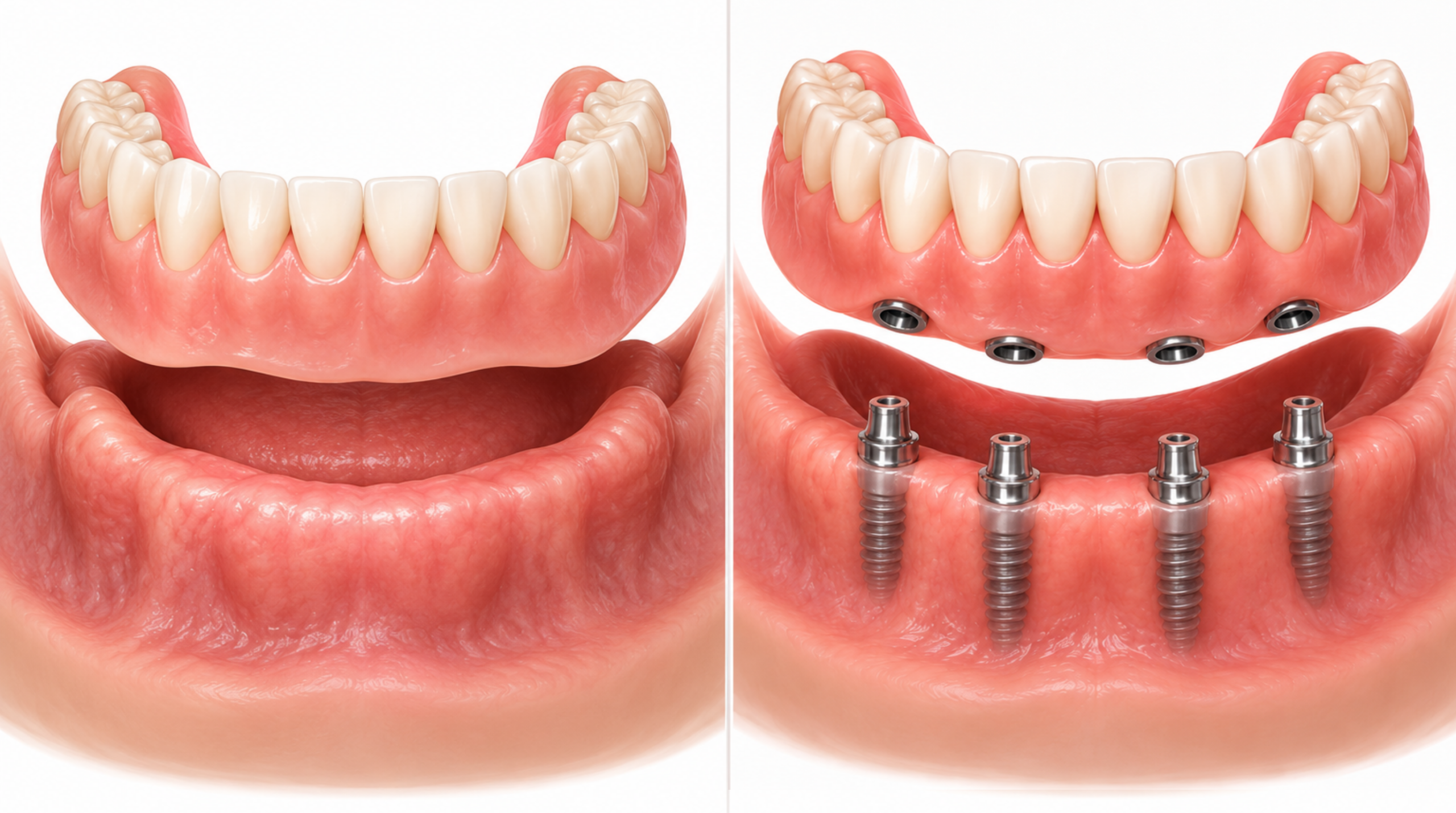 Which Options Can Replace Traditional Dentures?
Removable Implant-Retained Dentures
This type of denture connects to attachments on the implants. The patient can remove it for cleaning, but it generally remains more stable in the mouth than a traditional denture.
It may suit someone who wants to:
- reduce denture movement;
- keep a removable option that is accessible for cleaning;
- improve retention, particularly in the lower jaw;
- limit treatment complexity compared with certain fixed solutions.
The attachments and prosthesis can wear over time and may require adjustment or replacement.
Fixed Full-Arch Implant Restorations
A fixed full-arch implant restoration is secured to several implants with screws and cannot be removed at home. A dental professional can remove it when maintenance or repair is required.
All-on-4 is one approach that can support a complete arch using strategically positioned implants. Implant number and position depend on the anatomy, bite, type of restoration and surgical plan.
A fixed solution can provide a stronger sense of stability, but it requires careful cleaning beneath the restoration.
Traditional Dentures, Removable Implant Dentures or Fixed Teeth?
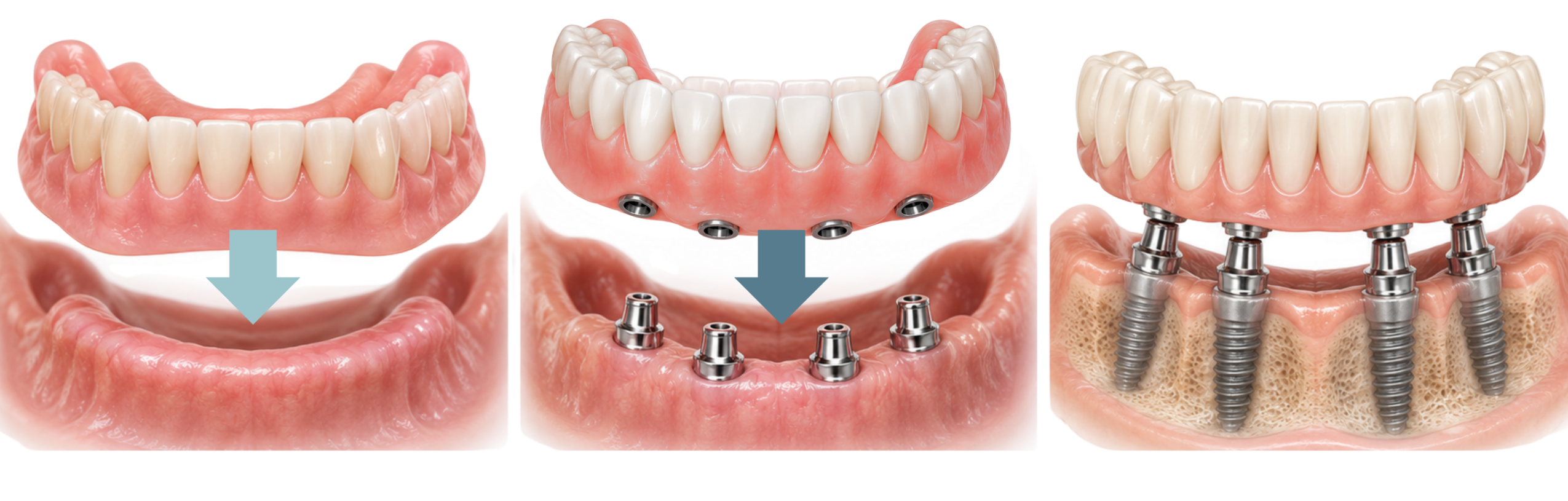
| Factor | Traditional denture | Removable implant denture | Fixed implant restoration |
| Anchorage | Rests on the gums and bony ridge | Connects to implant attachments | Secured to several implants |
| Stability | Variable; may decrease as the jaw changes | Generally more stable than a traditional denture | Generally very stable |
| Removed at home | Yes | Yes | No |
| Chewing | May require dietary adaptations | Often more stable and predictable | May provide function closer to fixed teeth |
| Cleaning | Removed and cleaned daily | Removed daily; attachments also need cleaning | Cleaned around and underneath the restoration |
| Effect on bone | Does not replace tooth roots | Stimulates bone around the implants | Stimulates bone around the implants |
| Surgery | No | Yes | Yes |
| Professional maintenance | Adjustment, relining or replacement may be needed | Implants, attachments and denture require follow-up | Implants, screws, materials and cleaning access require follow-up |
| Initial investment | Usually lower | Usually higher | Usually highest |
| May suit | People who prefer a nonsurgical option | People seeking stability and easy removal | Eligible patients seeking fixed teeth |
No option is automatically best for everyone. The appropriate choice depends on functional priorities, health, anatomy, ability to maintain the restoration and budget.
Can You Get Implants After Wearing Dentures for Years?
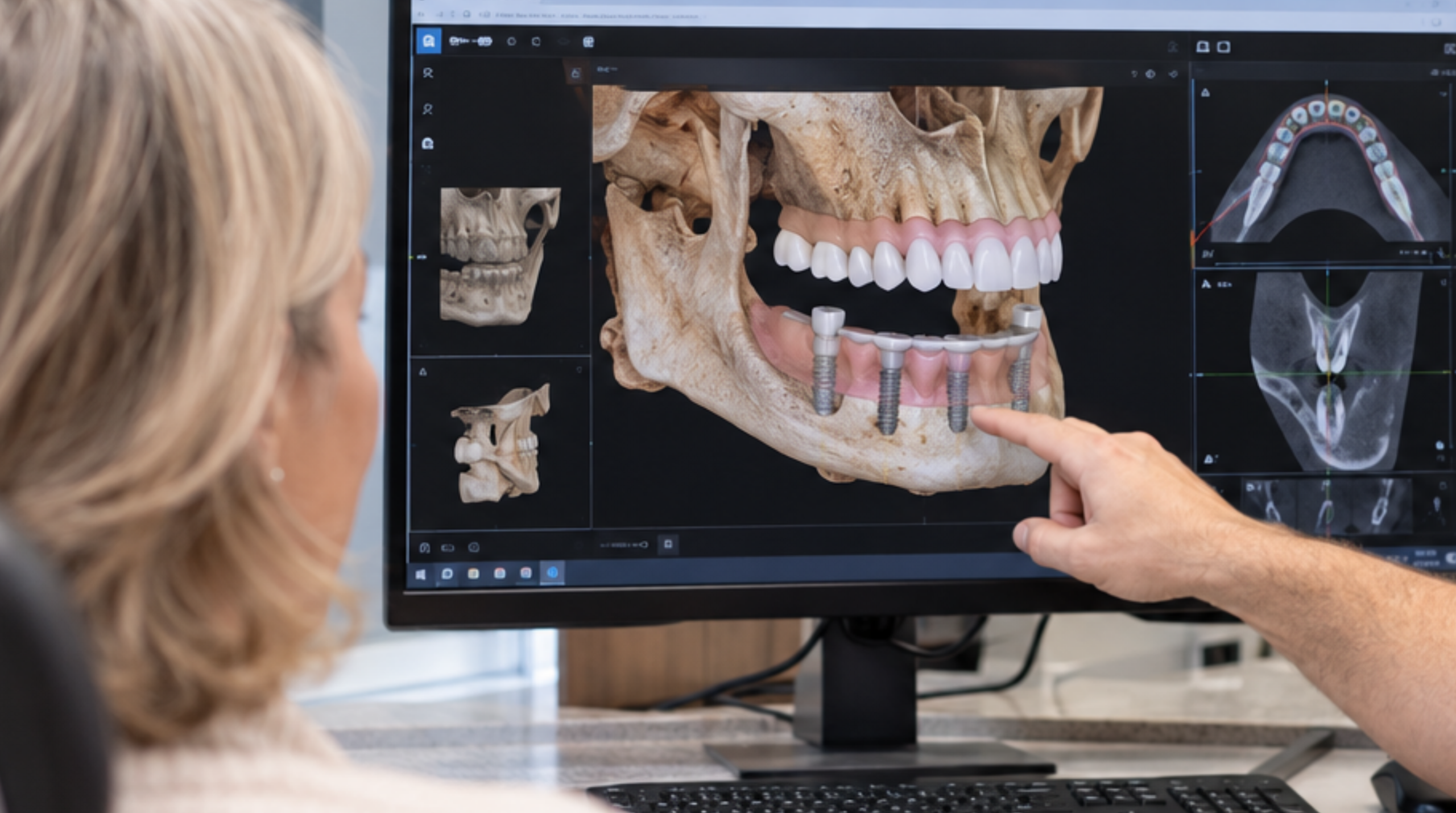
Yes, in many cases. Wearing dentures for a long time does not automatically rule out implant treatment.
More advanced bone loss may change the available options. The surgeon needs to assess:
- the height, width and shape of the bone;
- the location of the sinuses and nerves;
- gum and soft-tissue health;
- previous extraction sites;
- the relationship between the jaws;
- the space required for the future restoration.
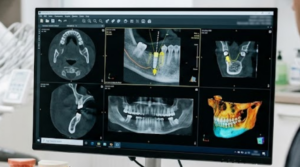
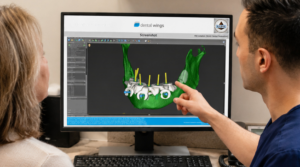
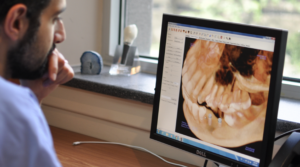
A panoramic X-ray and, when indicated, 3D imaging can help plan implant positions.
What If There Is Not Enough Bone?
Limited bone does not necessarily make implants impossible. Depending on the location and planned restoration, treatment may involve dental bone grafting, a different number or position of implants, or another strategy.
For certain complex cases involving severe upper-jaw bone loss, zygomatic implants may be considered. These specialized implants obtain anchorage in the cheekbone region instead of relying only on the remaining upper-jaw bone. This approach is not appropriate for every patient.
Who Might Consider Replacing Dentures With Implants?
An assessment may be worthwhile if you:
- have a denture that moves despite adjustments;
- frequently experience irritation or pressure spots;
- avoid foods because the denture lacks stability;
- rely heavily on adhesive;
- want to compare a removable stabilized option with fixed teeth;
- are prepared to maintain careful daily hygiene;
- understand that the implants and prosthesis require long-term follow-up.
Age alone does not determine candidacy. Overall health, medications, smoking, oral health, available bone and the ability to maintain the restoration are often more important.
Some health conditions or medical treatments can change the risks or treatment schedule. Never stop a medication in preparation for surgery without guidance from the healthcare professional who prescribed it.
What Does the Transition From Dentures to Implants Involve?
1. Consultation and Planning
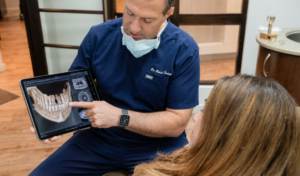
The first step is to discuss the difficulties with the existing denture and the patient’s goals. The examination considers the mouth, gums, bite, current prosthesis, available bone, medical history and medications.
Imaging then helps determine whether a stabilized denture, fixed restoration or another option is realistic.
2. Preparing the Site
Some patients can receive implants without major preparatory treatment. Others require extractions, bone grafting or a healing period before placement.
The plan should also explain what type of prosthesis will be worn during the transition.
3. Placing the Implants
The implants are surgically placed in the jaw. As with any surgery, possible risks include infection, bleeding, injury to a nearby structure, altered sensation, sinus complications in the upper jaw or failure of an implant to integrate.
The level of risk and required precautions vary between patients.
4. Healing and Restoring the Implants
The implants usually need time to integrate with the bone before supporting the final restoration. In selected situations, a provisional prosthesis may be attached sooner. This does not mean healing is complete or that the patient can immediately chew without restrictions.
5. Long-Term Maintenance
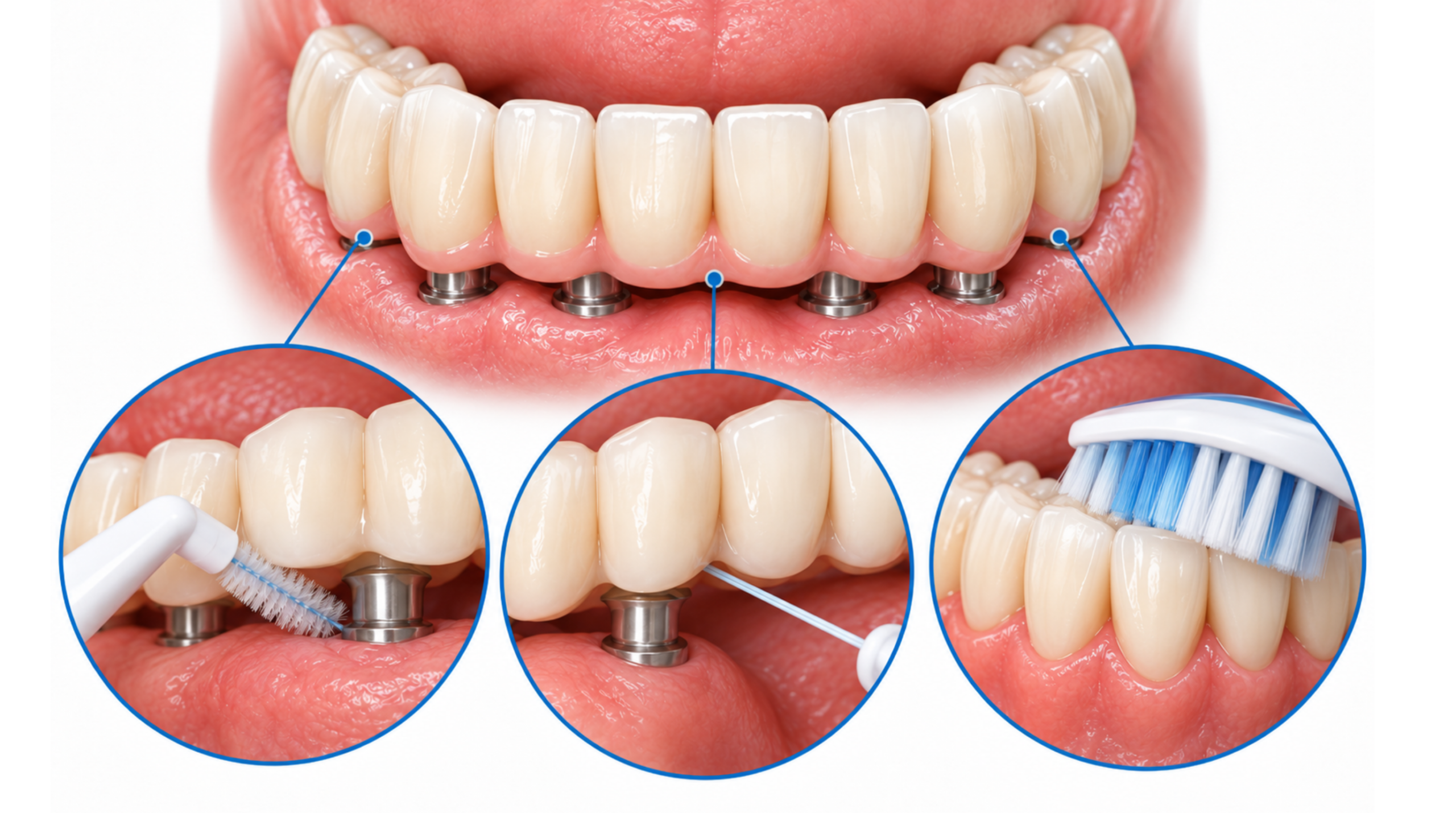
Implants are not immune to inflammation, bone loss or mechanical problems. Effective home care, regular examinations and prosthesis maintenance remain essential.
What Limitations Should You Consider?
Changing to implants may improve function and stability, but there are tradeoffs:
- one or more surgical procedures may be necessary;
- treatment may take several months;
- grafting or another procedure may sometimes be recommended;
- the initial cost is generally higher than for traditional dentures;
- the implants, attachments, screws and prosthesis require follow-up;
- smoking, certain health conditions and inadequate hygiene may increase risk;
- a fixed restoration requires suitable tools and access for cleaning;
- no option can guarantee a particular result or lifespan.
The decision should be based on the expected benefits in your circumstances, not on the assumption that fixed teeth are always superior.
Frequently Asked Questions About Replacing Dentures With Implants
Can an Existing Denture Be Converted Into an Implant Denture?
Sometimes a recent, well-designed denture can be modified. Many dentures do not have the required shape, strength or internal space, so a new prosthesis may be recommended.
How Many Implants Are Needed to Stabilize a Denture?
The number depends on the jaw, available bone, attachment system and prosthesis design. There is no single number that is right for every case.
Is an Implant-Supported Denture Always Fixed?
No. It can be removable and connect to attachments, or it can be screw-retained and removable only by a dental professional.
Will I Have to Go Without Teeth During Treatment?
Not necessarily. A transitional prosthesis can often be planned. The temporary option depends on the procedures performed and the stability achieved during surgery.
Do Implants Eliminate the Need for Maintenance?
No. The tissues around the implants require daily cleaning. Attachments, screws and prosthetic materials can also wear over time.
Is a Removable or Fixed Prosthesis Easier to Clean?
A removable prosthesis is generally more accessible because it can be taken out. A fixed restoration requires specific techniques and tools to clean underneath it.
Can I Eat Normally With Implant-Supported Teeth?
After healing and placement of the final restoration, many patients experience more stable chewing. Some precautions may still be appropriate depending on the prosthesis and bite.
Am I Too Old to Replace My Dentures With Implants?
There is no universal maximum age. Overall health, anatomy, medications, goals and ability to maintain the restoration are evaluated individually.
Are Implants Possible if My Denture Is Extremely Loose?
Potentially. A very loose denture may indicate significant changes in the bony ridge, making imaging and careful planning particularly important.
Do I Need to Stop Smoking Before Treatment?
Smoking is associated with a higher risk of implant complications and failure. Your surgeon can discuss risk reduction and smoking-cessation resources with you.
Do Implants Prevent All Jawbone Loss?
No. They may help maintain bone around the implant sites, but they do not necessarily prevent every bone change elsewhere in the jaw.
How Do I Know Which Option Is Right for Me?
An individual oral surgery assessment can compare traditional dentures, removable implant dentures and fixed restorations according to your health, anatomy and priorities.
Consultation to Replace Dentures in Montreal
Patients who move away from traditional dentures are usually seeking improved stability, more predictable chewing or teeth that remain fixed in the mouth. Implants may meet some of these goals, but treatment must reflect each patient’s anatomy, health and ability to maintain the restoration.
At Seaforth Oral Surgery, a consultation can assess the jawbone, oral health, medical history and proposed restoration. This process helps determine whether an implant-retained denture, an All-on-4 full-arch solution or another option may be appropriate.
Traditional dentures can replace missing teeth effectively, but some people find that their dentures become less stable or comfortable over time. Dental implants provide two possible alternatives: stabilizing a denture that remains removable or supporting a fixed full-arch restoration.
The main difference is anchorage. A conventional denture rests on the gums, while an implant-supported prosthesis connects to implants placed in the jawbone. This can improve stability, chewing and comfort. However, treatment involves surgery, diligent maintenance and an individualized assessment.
Why Can Dentures Become Less Comfortable?
A traditional complete denture rests on the gums and underlying bony ridge. It remains a valid solution for many people, particularly when surgery is not wanted or recommended.
After teeth are lost, however, the jawbone gradually remodels. The shape of the mouth can change even when the denture itself is still intact. Over time, this may lead to:
- movement while eating or speaking;
- pressure spots or irritation;
- difficulty chewing certain foods;
- more frequent use of denture adhesive;
- adjustments, relining or replacement;
- concern that the denture might move in public.
An unstable denture does not automatically mean that implants are necessary. Sometimes the denture can be adjusted or replaced. An assessment can determine whether the problem is related to fit, changes in the jawbone, the bite or a combination of factors.
Why do some patients switch to Dental Implants?
Improved Stability
Dental implants act as anc
hor points in the jaw. They can retain a removable denture or support a fixed restoration, generally reducing movement during chewing and speaking.
This stability is often the main reason someone explores dental implants in Montreal after wearing traditional dentures.
More Predictable Chewing
A stable prosthesis may make it easier to chew a wider variety of foods. The amount of improvement depends on the type of restoration, jaw anatomy, bite and the patient’s adaptation.
Implants do not restore exactly the same sensation as natural teeth. They can, however, provide firmer support than a prosthesis resting only on the gums.
Fewer Concerns About Movement
When a denture shifts, some people change how they speak, laugh or eat. An implant-supported solution may reduce these concerns, although adjustment is not immediate or identical for everyone.
Support for Bone Around the Implants
When implants are in function, they transfer forces to the surrounding bone. This may help maintain bone where the implants are placed.
Implants do not necessarily stop every change in the jawbone. Bone preservation depends on factors such as implant number and position, prosthesis design, oral hygiene and the health of the surrounding tissues.
Treatment Based on the Patient’s Priorities
Some people primarily want a denture that stays in place more securely. Others want teeth they do not remove at home. These goals lead to different treatment plans: a removable implant denture is not the same as a fixed full-arch restoration.
Which Options Can Replace Traditional Dentures?
Removable Implant-Retained Dentures
This type of denture connects to attachments on the implants. The patient can remove it for cleaning, but it generally remains more stable in the mouth than a traditional denture.
It may suit someone who wants to:
- reduce denture movement;
- keep a removable option that is accessible for cleaning;
- improve retention, particularly in the lower jaw;
- limit treatment complexity compared with certain fixed solutions.
The attachments and prosthesis can wear over time and may require adjustment or replacement.
Fixed Full-Arch Implant Restorations
A fixed full-arch implant restoration is secured to several implants with screws and cannot be removed at home. A dental professional can remove it when maintenance or repair is required.
All-on-4 is one approach that can support a complete arch using strategically positioned implants. Implant number and position depend on the anatomy, bite, type of restoration and surgical plan.
A fixed solution can provide a stronger sense of stability, but it requires careful cleaning beneath the restoration.
Traditional Dentures, Removable Implant Dentures or Fixed Teeth?
| Factor | Traditional denture | Removable implant denture | Fixed implant restoration |
| Anchorage | Rests on the gums and bony ridge | Connects to implant attachments | Secured to several implants |
| Stability | Variable; may decrease as the jaw changes | Generally more stable than a traditional denture | Generally very stable |
| Removed at home | Yes | Yes | No |
| Chewing | May require dietary adaptations | Often more stable and predictable | May provide function closer to fixed teeth |
| Cleaning | Removed and cleaned daily | Removed daily; attachments also need cleaning | Cleaned around and underneath the restoration |
| Effect on bone | Does not replace tooth roots | Stimulates bone around the implants | Stimulates bone around the implants |
| Surgery | No | Yes | Yes |
| Professional maintenance | Adjustment, relining or replacement may be needed | Implants, attachments and denture require follow-up | Implants, screws, materials and cleaning access require follow-up |
| Initial investment | Usually lower | Usually higher | Usually highest |
| May suit | People who prefer a nonsurgical option | People seeking stability and easy removal | Eligible patients seeking fixed teeth |
No option is automatically best for everyone. The appropriate choice depends on functional priorities, health, anatomy, ability to maintain the restoration and budget.
Can You Get Implants After Wearing Dentures for Years?
Yes, in many cases. Wearing dentures for a long time does not automatically rule out implant treatment.
More advanced bone loss may change the available options. The surgeon needs to assess:
- the height, width and shape of the bone;
- the location of the sinuses and nerves;
- gum and soft-tissue health;
- previous extraction sites;
- the relationship between the jaws;
- the space required for the future restoration.
A panoramic X-ray and, when indicated, 3D imaging can help plan implant positions.
What If There Is Not Enough Bone?
Limited bone does not necessarily make implants impossible. Depending on the location and planned restoration, treatment may involve dental bone grafting, a different number or position of implants, or another strategy.
For certain complex cases involving severe upper-jaw bone loss, zygomatic implants may be considered. These specialized implants obtain anchorage in the cheekbone region instead of relying only on the remaining upper-jaw bone. This approach is not appropriate for every patient.
Who Might Consider Replacing Dentures With Implants?
An assessment may be worthwhile if you:
- have a denture that moves despite adjustments;
- frequently experience irritation or pressure spots;
- avoid foods because the denture lacks stability;
- rely heavily on adhesive;
- want to compare a removable stabilized option with fixed teeth;
- are prepared to maintain careful daily hygiene;
- understand that the implants and prosthesis require long-term follow-up.
Age alone does not determine candidacy. Overall health, medications, smoking, oral health, available bone and the ability to maintain the restoration are often more important.
Some health conditions or medical treatments can change the risks or treatment schedule. Never stop a medication in preparation for surgery without guidance from the healthcare professional who prescribed it.
What Does the Transition From Dentures to Implants Involve?
1. Consultation and Planning
The first step is to discuss the difficulties with the existing denture and the patient’s goals. The examination considers the mouth, gums, bite, current prosthesis, available bone, medical history and medications.
Imaging then helps determine whether a stabilized denture, fixed restoration or another option is realistic.
2. Preparing the Site
Some patients can receive implants without major preparatory treatment. Others require extractions, bone grafting or a healing period before placement.
The plan should also explain what type of prosthesis will be worn during the transition.
3. Placing the Implants
The implants are surgically placed in the jaw. As with any surgery, possible risks include infection, bleeding, injury to a nearby structure, altered sensation, sinus complications in the upper jaw or failure of an implant to integrate.
The level of risk and required precautions vary between patients.
4. Healing and Restoring the Implants
The implants usually need time to integrate with the bone before supporting the final restoration. In selected situations, a provisional prosthesis may be attached sooner. This does not mean healing is complete or that the patient can immediately chew without restrictions.
5. Long-Term Maintenance
Implants are not immune to inflammation, bone loss or mechanical problems. Effective home care, regular examinations and prosthesis maintenance remain essential.
What Limitations Should You Consider?
Changing to implants may improve function and stability, but there are tradeoffs:
- one or more surgical procedures may be necessary;
- treatment may take several months;
- grafting or another procedure may sometimes be recommended;
- the initial cost is generally higher than for traditional dentures;
- the implants, attachments, screws and prosthesis require follow-up;
- smoking, certain health conditions and inadequate hygiene may increase risk;
- a fixed restoration requires suitable tools and access for cleaning;
- no option can guarantee a particular result or lifespan.
The decision should be based on the expected benefits in your circumstances, not on the assumption that fixed teeth are always superior.
Frequently Asked Questions About Replacing Dentures With Implants
Can an Existing Denture Be Converted Into an Implant Denture?
Sometimes a recent, well-designed denture can be modified. Many dentures do not have the required shape, strength or internal space, so a new prosthesis may be recommended.
How Many Implants Are Needed to Stabilize a Denture?
The number depends on the jaw, available bone, attachment system and prosthesis design. There is no single number that is right for every case.
Is an Implant-Supported Denture Always Fixed?
No. It can be removable and connect to attachments, or it can be screw-retained and removable only by a dental professional.
Will I Have to Go Without Teeth During Treatment?
Not necessarily. A transitional prosthesis can often be planned. The temporary option depends on the procedures performed and the stability achieved during surgery.
Do Implants Eliminate the Need for Maintenance?
No. The tissues around the implants require daily cleaning. Attachments, screws and prosthetic materials can also wear over time.
Is a Removable or Fixed Prosthesis Easier to Clean?
A removable prosthesis is generally more accessible because it can be taken out. A fixed restoration requires specific techniques and tools to clean underneath it.
Can I Eat Normally With Implant-Supported Teeth?
After healing and placement of the final restoration, many patients experience more stable chewing. Some precautions may still be appropriate depending on the prosthesis and bite.
Am I Too Old to Replace My Dentures With Implants?
There is no universal maximum age. Overall health, anatomy, medications, goals and ability to maintain the restoration are evaluated individually.
Are Implants Possible if My Denture Is Extremely Loose?
Potentially. A very loose denture may indicate significant changes in the bony ridge, making imaging and careful planning particularly important.
Do I Need to Stop Smoking Before Treatment?
Smoking is associated with a higher risk of implant complications and failure. Your surgeon can discuss risk reduction and smoking-cessation resources with you.
Do Implants Prevent All Jawbone Loss?
No. They may help maintain bone around the implant sites, but they do not necessarily prevent every bone change elsewhere in the jaw.
How Do I Know Which Option Is Right for Me?
An individual oral surgery assessment can compare traditional dentures, removable implant dentures and fixed restorations according to your health, anatomy and priorities.
Consultation to Replace Dentures in Montreal
Patients who move away from traditional dentures are usually seeking improved stability, more predictable chewing or teeth that remain fixed in the mouth. Implants may meet some of these goals, but treatment must reflect each patient’s anatomy, health and ability to maintain the restoration.
At Seaforth Oral Surgery, a consultation can assess the jawbone, oral health, medical history and proposed restoration. This process helps determine whether an implant-retained denture, an All-on-4 full-arch solution or another option may be appropriate.