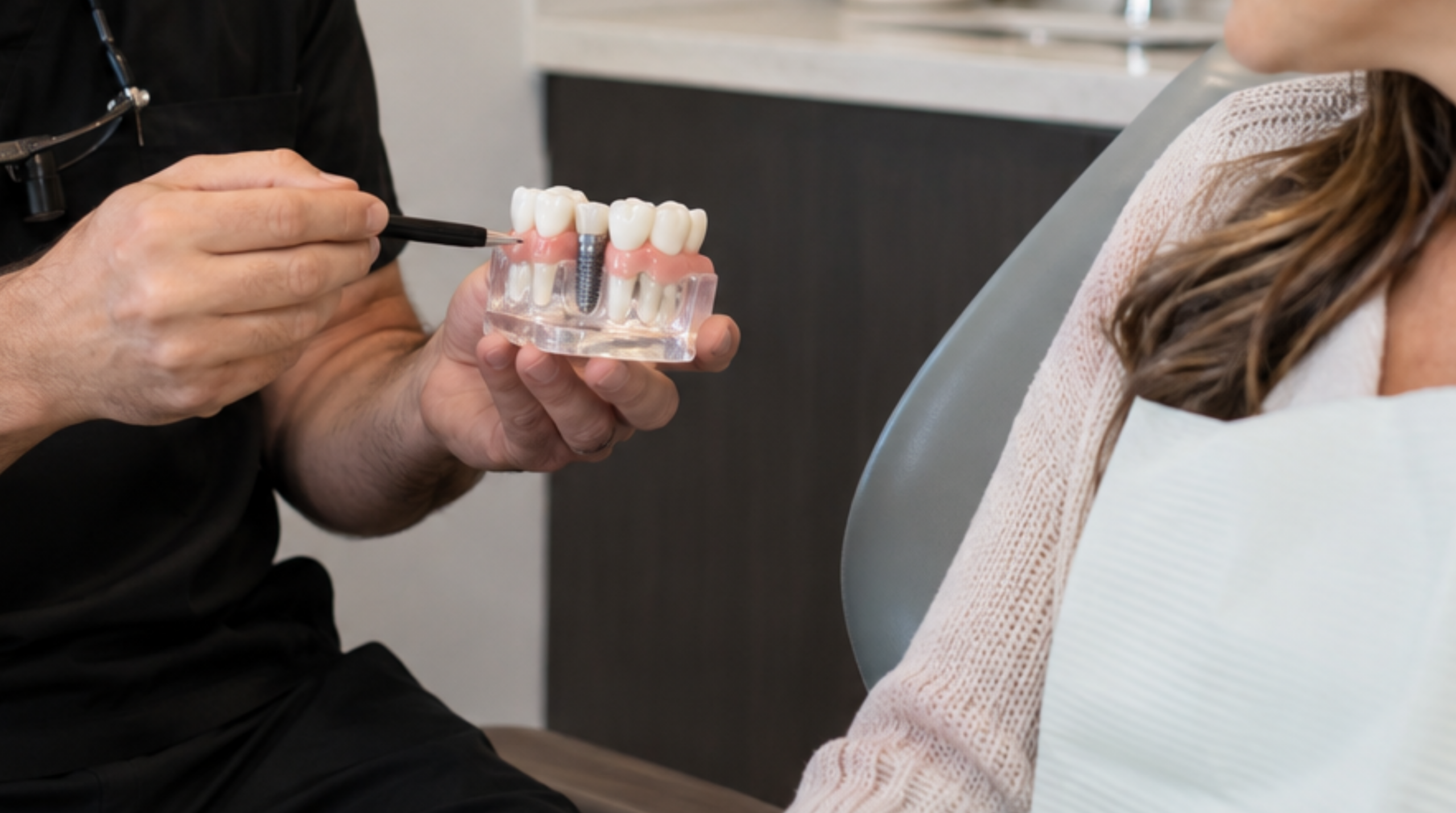
Yes, a tooth can sometimes be replaced on the day it is extracted. The implant may be placed immediately and, when conditions are favourable, a temporary tooth may also be attached. The final restoration is usually completed after healing. A clinical and radiographic assessment is required to determine whether this approach is appropriate.
What Does “Replacing a Tooth the Same Day” Actually Mean?
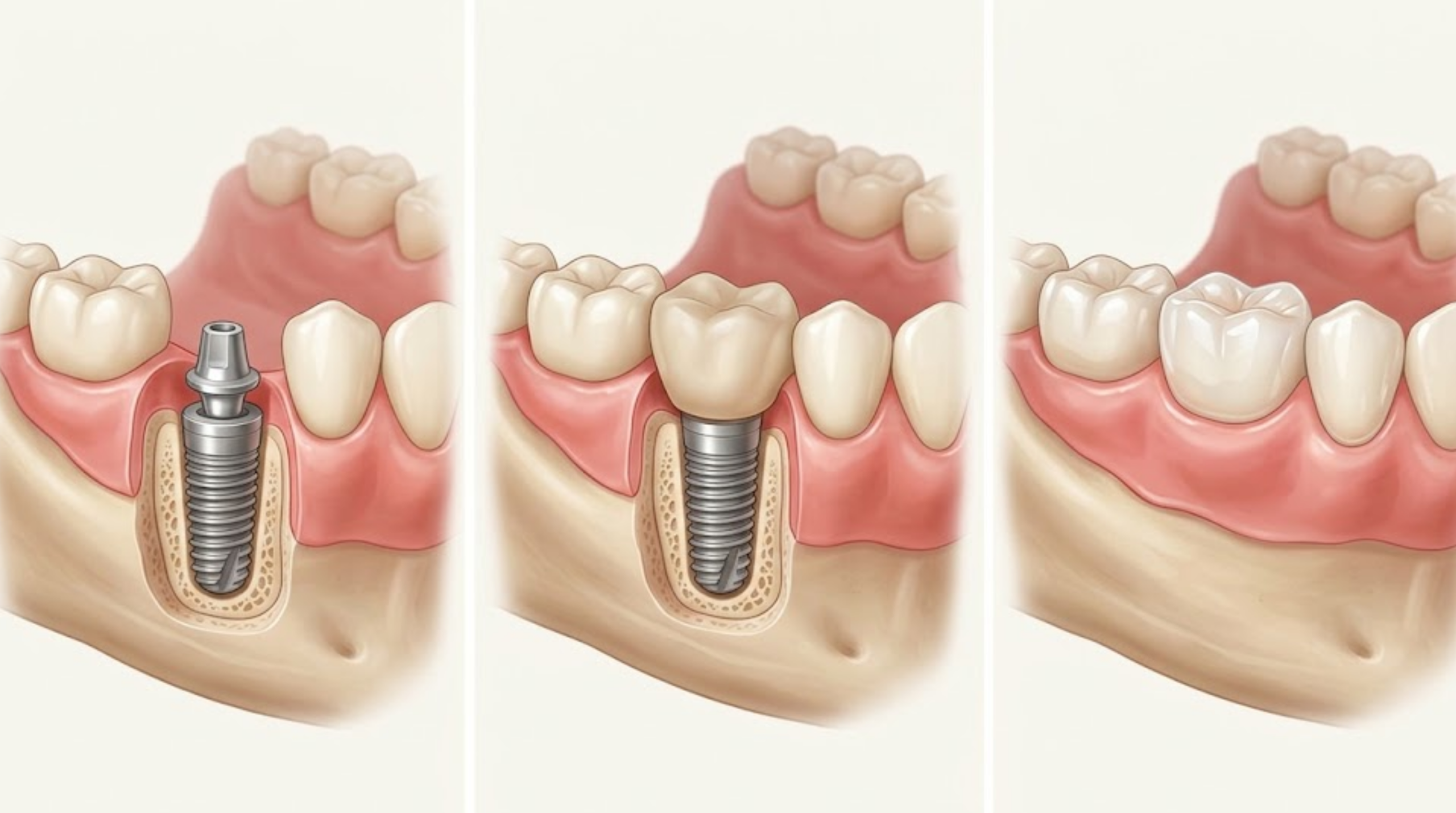
The phrase “same-day tooth” can refer to several different treatment steps. Understanding the distinction helps set realistic expectations.
Immediate Implant Placement
Immediate placement means inserting the implant into the socket left by the tooth root during the same procedure as the extraction.
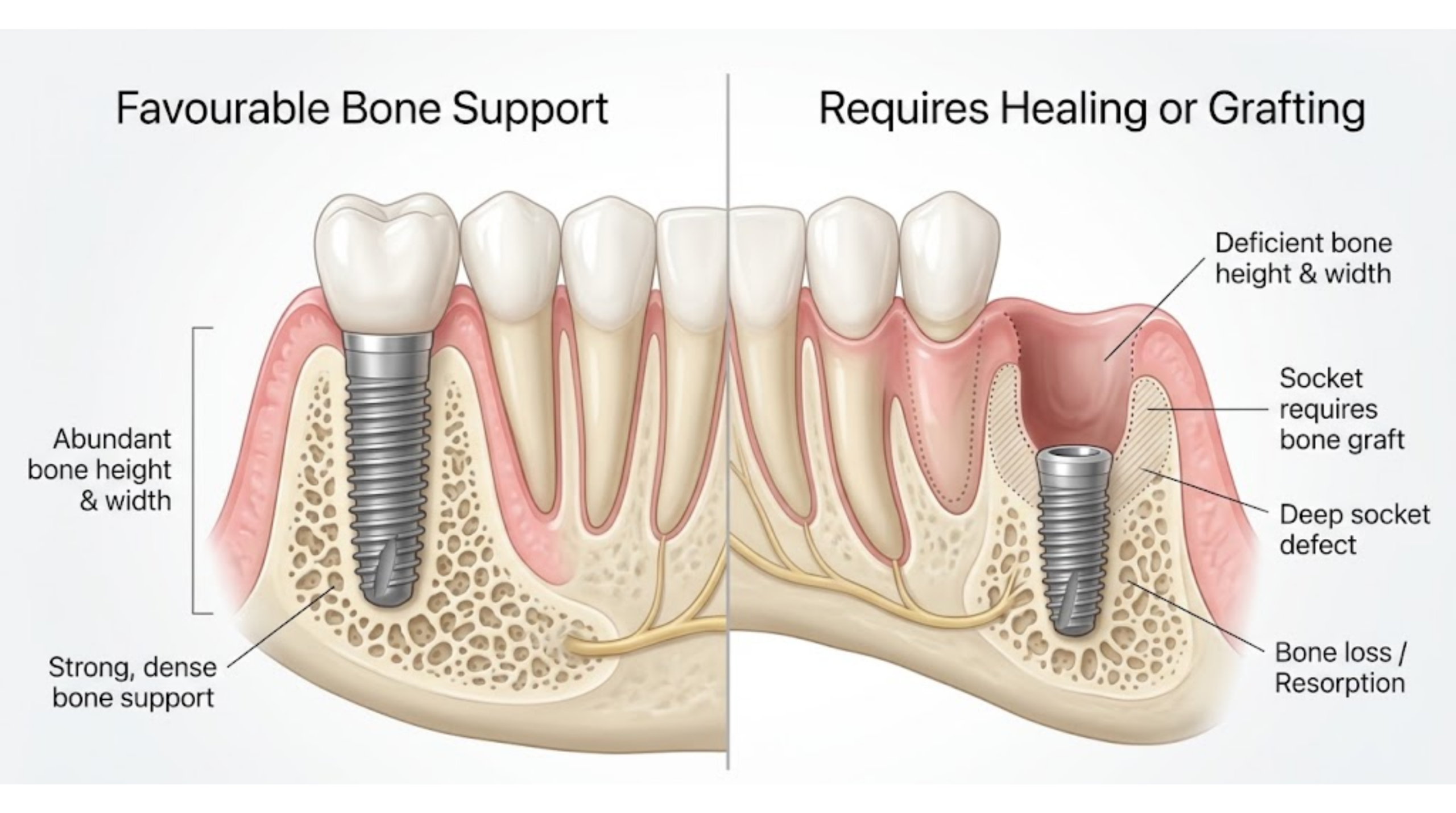
This approach may reduce the number of surgical stages, but it is not suitable for every site. There must be enough appropriate bone to stabilize the implant when it is inserted.
A Same-Day Temporary Tooth
In selected cases, a temporary crown can be attached to the implant on the day of surgery or shortly afterward. This is called immediate restoration or immediate loading, depending on how the temporary tooth contacts the opposing teeth.
For a front tooth, the temporary restoration may mainly preserve the appearance of the smile. It is often adjusted to limit chewing forces during healing.
The Final Restoration
A same-day temporary tooth is not usually the final tooth. The implant must first integrate with the surrounding bone through a process called osseointegration.
Once healing has progressed sufficiently, a custom final crown can be made and installed. The timeline depends on the treatment site, implant stability, tissue health and whether grafting is required.
When Can a Tooth Be Replaced Immediately?
A dental implant in Montreal with a same-day temporary restoration may be considered when several favourable conditions are present:
- the tooth cannot be predictably preserved;
- the bone surrounding the tooth is sufficiently intact;
- the bone volume and quality can provide implant stability;
- the gum tissue is favourable;
- no uncontrolled acute infection compromises the site;
- the bite can be adjusted to protect the temporary tooth;
- the patient’s general health is compatible with surgery;
- the patient can follow dietary and postoperative instructions.
The decision is not based only on the appearance of the tooth or a preference for faster treatment. Some essential criteria can be confirmed only during the extraction and implant procedure.
When Is a Staged Approach More Appropriate?
Delaying the implant or temporary tooth may be recommended when the conditions required for reliable initial stability are not present.
A staged approach may be considered when there is:
- substantial bone loss;
- damage to a socket wall;
- an acute or extensive infection;
- a need for more significant bone grafting;
- gum tissue that should heal first;
- insufficient implant stability during surgery;
- significant grinding or a bite that cannot be adequately protected;
- an uncontrolled health condition that could affect surgery or healing.
Choosing a staged approach does not mean the treatment has failed. It is often the more prudent way to create favourable healing conditions.
Same-Day or Staged Treatment: What Is the Difference?
| Consideration | Same-day treatment | Staged treatment |
| Implant timing | Implant placed when the tooth is extracted | Implant placed after a healing period |
| Visible tooth | A temporary tooth may be attached immediately | A separate temporary solution may be used |
| Final restoration | Usually placed after osseointegration | Placed after implant surgery and healing |
| Requirements | Favourable bone, primary stability and a protectable bite | May be suitable when bone or tissue must heal first |
| Potential advantage | Fewer stages and possibly no visible gap | More time to treat the site and prepare the tissues |
| Main limitation | More selective candidacy and careful aftercare | Usually a longer overall treatment timeline |
Neither option is automatically better. The appropriate protocol is the one that suits the patient’s anatomy, health and treatment needs.
How Is a Same-Day Implant Planned?
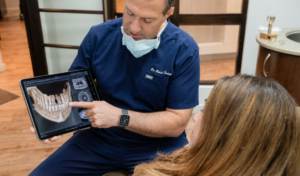
Planning begins before the extraction. A consultation is used to examine the tooth, gums and bite and to understand the patient’s goals.
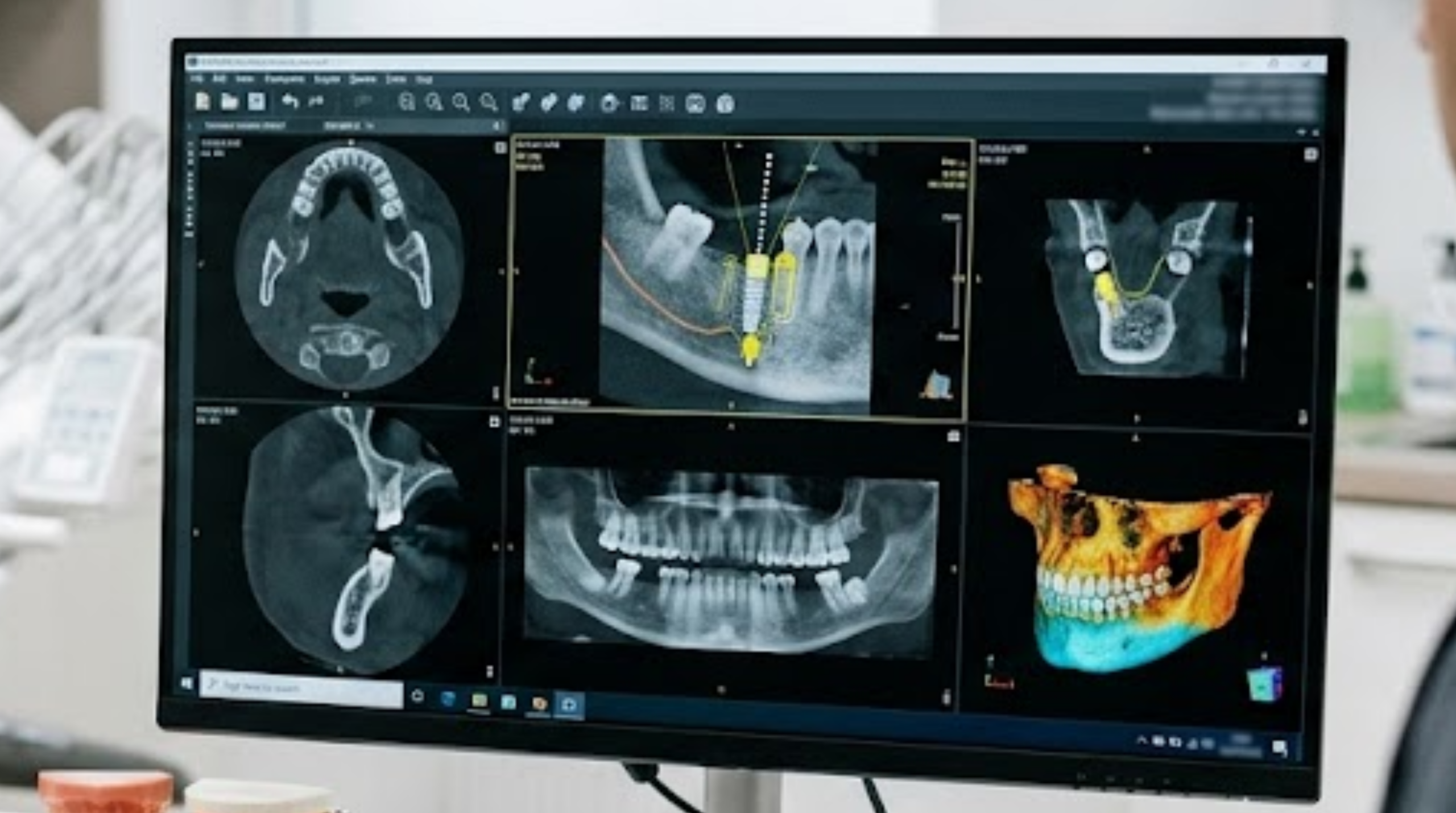 The assessment may include:
- reviewing medical history and medications;
- examining the tooth and surrounding tissues;
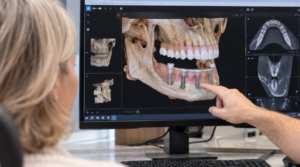
- taking X-rays and, when indicated, 3D imaging;
- assessing bone volume and nearby anatomical structures;
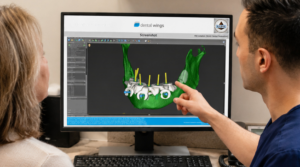
- planning the implant position;
- preparing a temporary solution and an alternative plan.
On the day of surgery, the tooth is carefully removed to preserve the surrounding tissues when possible. The implant is then placed if the site meets the planned criteria.
When adequate stability is achieved, a temporary restoration may be attached. If stability is insufficient, the implant may be left without a fixed temporary tooth during healing, or implant placement itself may be postponed.
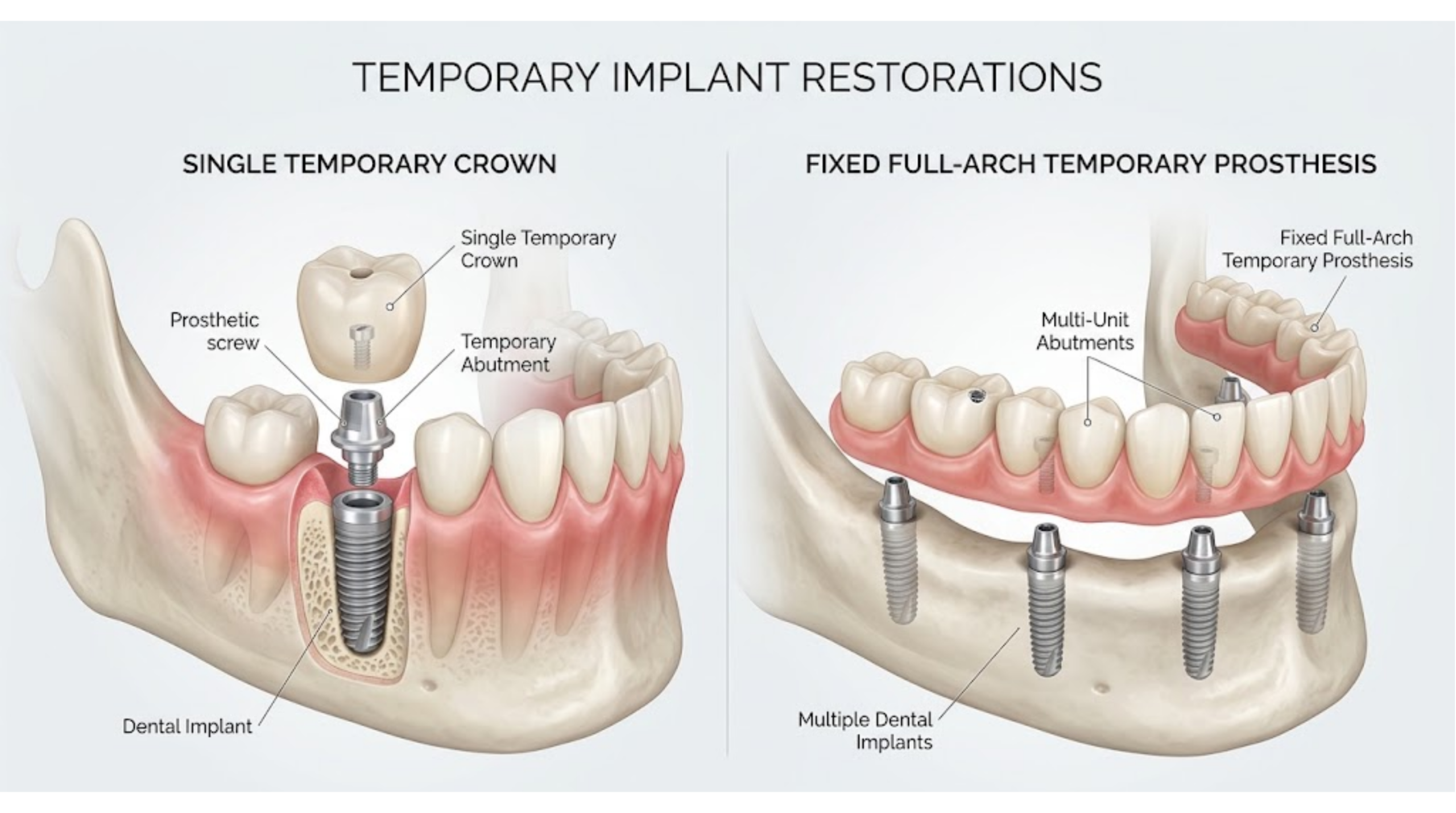
Do Single-Tooth and Full-Arch Treatments Follow the Same Protocol?
No. Replacing one tooth and replacing all the teeth in an arch are different treatments.
Replacing One Tooth
For a single tooth, particularly in a visible area, the priority is often to maintain the appearance of the gum while protecting the implant from excessive force.
The temporary crown may be designed to avoid full contact with the opposing teeth. The patient must then avoid biting directly with that tooth for the recommended period.
Replacing a Full Arch
In selected All-on-X or All-on-4 treatments, several implants work together to support a fixed temporary prosthesis. This shared stabilization may allow some patients to receive teeth on the day of surgery.
The prosthesis is still temporary while the implants heal. A modified diet and scheduled follow-up are required before the final restoration is made.
For certain complex cases involving severe upper-jaw bone loss, zygomatic implants may also be part of a treatment involving immediate restoration. This specialized option requires a thorough assessment.
Why Might the Plan Change During Surgery?
Even with detailed imaging, certain findings become clear only after the tooth is removed. The surgeon may discover that a socket wall is more fragile than expected, that there is a defect around the root or that the implant cannot achieve adequate stability.
A sound treatment plan therefore includes an alternative. Depending on the findings, it may be preferable to:
- place the implant without immediately attaching a tooth;
- graft the site and allow it to heal;
- postpone implant placement;
- use another temporary cosmetic solution.
This adjustment is intended to protect the site and support appropriate healing. Speed should never take priority over the clinical conditions.
How Do You Protect a Same-Day Temporary Tooth?
Receiving a tooth immediately does not mean that the implant has already integrated with the bone. The first several weeks require particular care.
Patients may be instructed to:
- follow a soft diet for the recommended period;
- avoid biting hard or sticky foods with the temporary tooth;
- clean the area according to the instructions provided;
- avoid smoking, which can interfere with healing;
- wear a bite appliance if one is prescribed;
- attend every scheduled follow-up appointment.
Contact the treating team if the temporary tooth becomes loose, bleeding persists, or pain and swelling increase instead of improving. Difficulty breathing or swallowing requires urgent assessment.
Same-Day Dental Implant FAQ
Can a front tooth be replaced on the day it is extracted?
Yes, in selected cases. A temporary tooth may preserve the appearance of the smile, but the bone, gums, implant stability and bite must be favourable.
Is a same-day tooth the final tooth?
Usually not. It is most often a temporary restoration worn during osseointegration. The final crown is made after healing.
Does every immediately placed implant receive a same-day crown?
No. An implant can be placed at the time of extraction without immediately receiving a fixed tooth. These are separate clinical decisions.
How long does it take to receive the final crown?
The timing depends on healing, the location being treated, implant stability and any additional procedures. The treatment team confirms the schedule during follow-up.
Can an implant be placed immediately if there is an infection?
It depends on the type and extent of the infection and the condition of the bone. An acute infection or significant defect may require staged treatment.
Can bone grafting be performed on the same day?
Yes, some limited grafts can be completed when the implant is placed. More extensive reconstruction may require a separate healing period.
Can I eat normally with a temporary tooth?
Not immediately. A soft diet and careful chewing are generally recommended to avoid overloading the implant during healing.
Is same-day treatment more painful?
The number of stages alone does not predict discomfort. The experience varies with the extraction, number of implants, grafting and individual response to surgery.
Does a same-day implant cost less?
Not necessarily. Cost depends on treatment complexity, examinations, the temporary restoration, grafting and the final restoration.
How can I find out whether I qualify?
An oral surgery consultation with an examination and imaging can assess the bone, tissues, bite, general health and available treatment options.
Replacing a Tooth the Same Day in Montreal
An implant and temporary tooth can sometimes be provided during the same appointment, but the final tooth usually comes later. Feasibility depends primarily on the bone and tissue conditions, implant stability and whether the site can be protected during healing.
An assessment at Seaforth Oral Surgery can determine whether an immediate protocol or staged treatment is more appropriate for your situation.
Yes, a tooth can sometimes be replaced on the day it is extracted. The implant may be placed immediately and, when conditions are favourable, a temporary tooth may also be attached. The final restoration is usually completed after healing. A clinical and radiographic assessment is required to determine whether this approach is appropriate.
What Does “Replacing a Tooth the Same Day” Actually Mean?
The phrase “same-day tooth” can refer to several different treatment steps. Understanding the distinction helps set realistic expectations.
Immediate Implant Placement
Immediate placement means inserting the implant into the socket left by the tooth root during the same procedure as the extraction.
This approach may reduce the number of surgical stages, but it is not suitable for every site. There must be enough appropriate bone to stabilize the implant when it is inserted.
A Same-Day Temporary Tooth
In selected cases, a temporary crown can be attached to the implant on the day of surgery or shortly afterward. This is called immediate restoration or immediate loading, depending on how the temporary tooth contacts the opposing teeth.
For a front tooth, the temporary restoration may mainly preserve the appearance of the smile. It is often adjusted to limit chewing forces during healing.
The Final Restoration
A same-day temporary tooth is not usually the final tooth. The implant must first integrate with the surrounding bone through a process called osseointegration.
Once healing has progressed sufficiently, a custom final crown can be made and installed. The timeline depends on the treatment site, implant stability, tissue health and whether grafting is required.
When Can a Tooth Be Replaced Immediately?
A dental implant in Montreal with a same-day temporary restoration may be considered when several favourable conditions are present:
- the tooth cannot be predictably preserved;
- the bone surrounding the tooth is sufficiently intact;
- the bone volume and quality can provide implant stability;
- the gum tissue is favourable;
- no uncontrolled acute infection compromises the site;
- the bite can be adjusted to protect the temporary tooth;
- the patient’s general health is compatible with surgery;
- the patient can follow dietary and postoperative instructions.
The decision is not based only on the appearance of the tooth or a preference for faster treatment. Some essential criteria can be confirmed only during the extraction and implant procedure.
When Is a Staged Approach More Appropriate?
Delaying the implant or temporary tooth may be recommended when the conditions required for reliable initial stability are not present.
A staged approach may be considered when there is:
- substantial bone loss;
- damage to a socket wall;
- an acute or extensive infection;
- a need for more significant bone grafting;
- gum tissue that should heal first;
- insufficient implant stability during surgery;
- significant grinding or a bite that cannot be adequately protected;
- an uncontrolled health condition that could affect surgery or healing.
Choosing a staged approach does not mean the treatment has failed. It is often the more prudent way to create favourable healing conditions.
Same-Day or Staged Treatment: What Is the Difference?
| Consideration | Same-day treatment | Staged treatment |
| Implant timing | Implant placed when the tooth is extracted | Implant placed after a healing period |
| Visible tooth | A temporary tooth may be attached immediately | A separate temporary solution may be used |
| Final restoration | Usually placed after osseointegration | Placed after implant surgery and healing |
| Requirements | Favourable bone, primary stability and a protectable bite | May be suitable when bone or tissue must heal first |
| Potential advantage | Fewer stages and possibly no visible gap | More time to treat the site and prepare the tissues |
| Main limitation | More selective candidacy and careful aftercare | Usually a longer overall treatment timeline |
Neither option is automatically better. The appropriate protocol is the one that suits the patient’s anatomy, health and treatment needs.
How Is a Same-Day Implant Planned?
Planning begins before the extraction. A consultation is used to examine the tooth, gums and bite and to understand the patient’s goals.
The assessment may include:
- reviewing medical history and medications;
- examining the tooth and surrounding tissues;
- taking X-rays and, when indicated, 3D imaging;
- assessing bone volume and nearby anatomical structures;
- planning the implant position;
- preparing a temporary solution and an alternative plan.
On the day of surgery, the tooth is carefully removed to preserve the surrounding tissues when possible. The implant is then placed if the site meets the planned criteria.
When adequate stability is achieved, a temporary restoration may be attached. If stability is insufficient, the implant may be left without a fixed temporary tooth during healing, or implant placement itself may be postponed.
Do Single-Tooth and Full-Arch Treatments Follow the Same Protocol?
No. Replacing one tooth and replacing all the teeth in an arch are different treatments.
Replacing One Tooth
For a single tooth, particularly in a visible area, the priority is often to maintain the appearance of the gum while protecting the implant from excessive force.
The temporary crown may be designed to avoid full contact with the opposing teeth. The patient must then avoid biting directly with that tooth for the recommended period.
Replacing a Full Arch
In selected All-on-X or All-on-4 treatments, several implants work together to support a fixed temporary prosthesis. This shared stabilization may allow some patients to receive teeth on the day of surgery.
The prosthesis is still temporary while the implants heal. A modified diet and scheduled follow-up are required before the final restoration is made.
For certain complex cases involving severe upper-jaw bone loss, zygomatic implants may also be part of a treatment involving immediate restoration. This specialized option requires a thorough assessment.
Why Might the Plan Change During Surgery?
Even with detailed imaging, certain findings become clear only after the tooth is removed. The surgeon may discover that a socket wall is more fragile than expected, that there is a defect around the root or that the implant cannot achieve adequate stability.
A sound treatment plan therefore includes an alternative. Depending on the findings, it may be preferable to:
- place the implant without immediately attaching a tooth;
- graft the site and allow it to heal;
- postpone implant placement;
- use another temporary cosmetic solution.
This adjustment is intended to protect the site and support appropriate healing. Speed should never take priority over the clinical conditions.
How Do You Protect a Same-Day Temporary Tooth?
Receiving a tooth immediately does not mean that the implant has already integrated with the bone. The first several weeks require particular care.
Patients may be instructed to:
- follow a soft diet for the recommended period;
- avoid biting hard or sticky foods with the temporary tooth;
- clean the area according to the instructions provided;
- avoid smoking, which can interfere with healing;
- wear a bite appliance if one is prescribed;
- attend every scheduled follow-up appointment.
Contact the treating team if the temporary tooth becomes loose, bleeding persists, or pain and swelling increase instead of improving. Difficulty breathing or swallowing requires urgent assessment.
Same-Day Dental Implant FAQ
Can a front tooth be replaced on the day it is extracted?
Yes, in selected cases. A temporary tooth may preserve the appearance of the smile, but the bone, gums, implant stability and bite must be favourable.
Is a same-day tooth the final tooth?
Usually not. It is most often a temporary restoration worn during osseointegration. The final crown is made after healing.
Does every immediately placed implant receive a same-day crown?
No. An implant can be placed at the time of extraction without immediately receiving a fixed tooth. These are separate clinical decisions.
How long does it take to receive the final crown?
The timing depends on healing, the location being treated, implant stability and any additional procedures. The treatment team confirms the schedule during follow-up.
Can an implant be placed immediately if there is an infection?
It depends on the type and extent of the infection and the condition of the bone. An acute infection or significant defect may require staged treatment.
Can bone grafting be performed on the same day?
Yes, some limited grafts can be completed when the implant is placed. More extensive reconstruction may require a separate healing period.
Can I eat normally with a temporary tooth?
Not immediately. A soft diet and careful chewing are generally recommended to avoid overloading the implant during healing.
Is same-day treatment more painful?
The number of stages alone does not predict discomfort. The experience varies with the extraction, number of implants, grafting and individual response to surgery.
Does a same-day implant cost less?
Not necessarily. Cost depends on treatment complexity, examinations, the temporary restoration, grafting and the final restoration.
How can I find out whether I qualify?
An oral surgery consultation with an examination and imaging can assess the bone, tissues, bite, general health and available treatment options.
Replacing a Tooth the Same Day in Montreal
An implant and temporary tooth can sometimes be provided during the same appointment, but the final tooth usually comes later. Feasibility depends primarily on the bone and tissue conditions, implant stability and whether the site can be protected during healing.
An assessment at Seaforth Oral Surgery can determine whether an immediate protocol or staged treatment is more appropriate for your situation.