If you’re considering a dental implant in Montreal, you’re probably asking one question above all others: How long will the treatment take?
Many patients worry that the process will take a year or more. Others wonder whether they’ll be left without teeth during healing or if it’s possible to get teeth quickly.
The good news is that there isn’t a single answer. The length of dental implant treatment depends on many factors, including the number of teeth being replaced, the quality of the jawbone, whether extractions or bone grafting are required, and the type of restoration selected.
Quick Answer: The dental implant process can take anywhere from a few weeks to several months depending on the treatment required. Some eligible patients can receive temporary fixed teeth on the same day, while more complex cases may require a longer healing period to ensure a stable and long-lasting result.
Today, thanks to modern implant dentistry techniques such as immediate implants, All-on-X treatment, and zygomatic implants, many patients discover that their treatment can be much faster than they expected.
Timeline Overview by Treatment Type
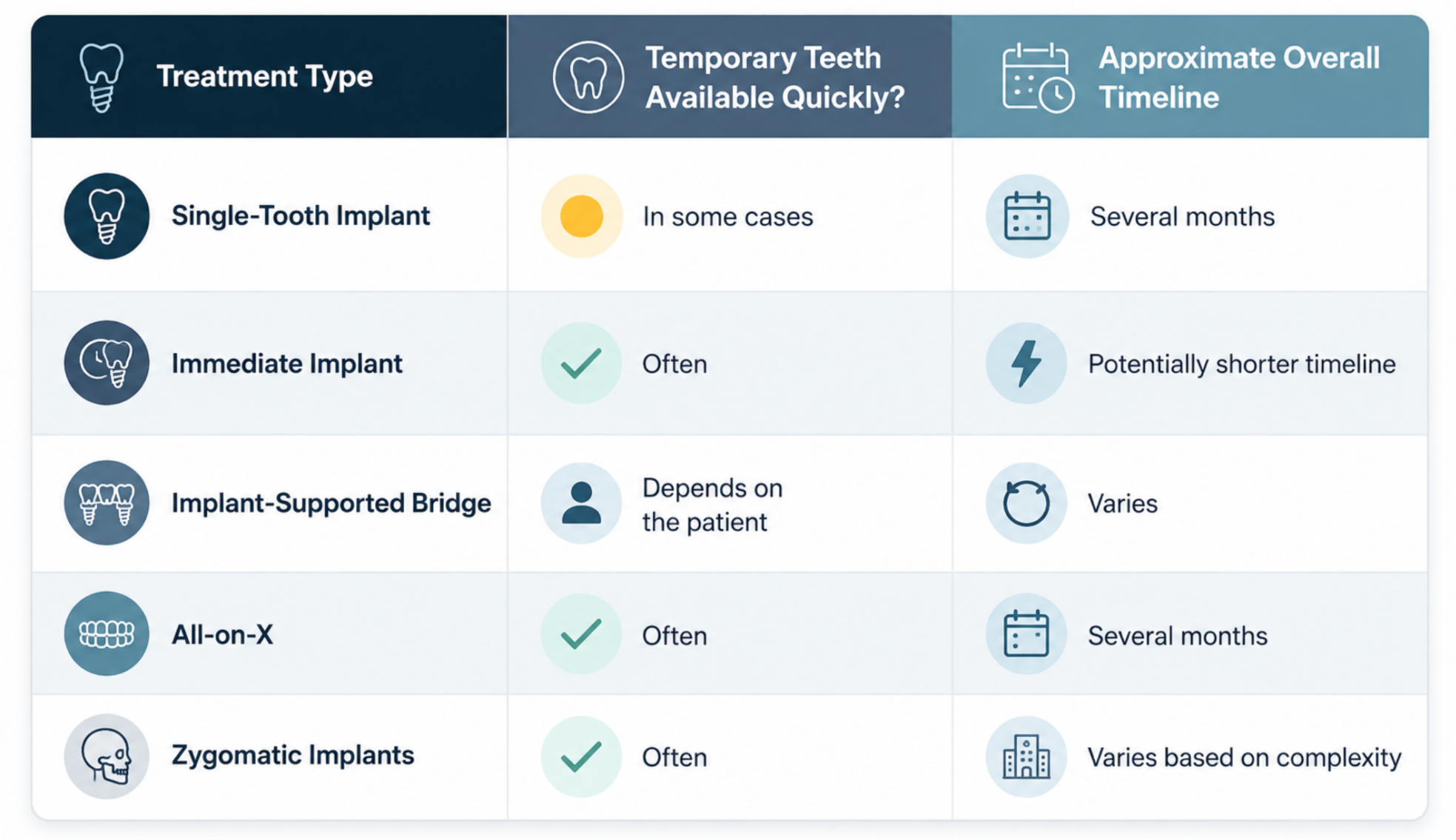
These timelines are general estimates. A comprehensive implant evaluation is always necessary to determine what applies to your specific situation.
Why Does Treatment Time Vary So Much?
One of the most common misconceptions is that all dental implants follow exactly the same timeline. In reality, every patient presents a unique situation.
Some individuals have excellent bone quality and may be candidates for implant placement shortly after an extraction. Others have significant bone loss or more complex needs that require additional planning.
Gum health also plays an important role. Healthy gum tissues promote predictable healing and contribute to the long-term success of the treatment.
A patient’s goals can also affect treatment timelines. Replacing a single tooth does not involve the same process as replacing an entire arch with an All-on-X solution.
Factors That Influence Dental Implant Treatment Time
The overall treatment timeline depends primarily on:
- The number of missing teeth
- Bone quality and density
- The presence or absence of bone loss
- Whether tooth extractions are required
- The need for bone grafting
- Gum health
- The type of implant treatment selected
- The final restoration being placed
- Individual healing time
- Lifestyle factors such as smoking
Quick Answer: The duration of dental implant treatment depends mainly on bone quality, the number of teeth being replaced, and the type of restoration used.
At Seaforth Oral Surgery, every treatment plan is developed through a detailed evaluation to provide the most predictable approach and the timeline best suited to each patient’s needs.
The Main Stages of the Dental Implant Process
Although implant surgery is often completed in a single procedure, the overall treatment involves several important stages.
The Initial Consultation
Every implant treatment begins with a thorough evaluation.
This consultation typically includes:
- A comprehensive clinical examination
- An assessment of gum health
- 3D imaging
- An evaluation of available bone volume
- A discussion of your functional and aesthetic goals
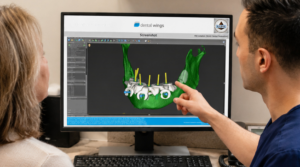
Three-dimensional imaging provides a detailed view of the jawbone, sinuses, and other important anatomical structures. This step helps determine the ideal implant position and identify the most appropriate treatment options.
Depending on your situation, several treatment approaches may be considered:
- Single-tooth implant
- Implant-supported bridge
- All-on-X
- Zygomatic implants
This personalized planning process helps establish a realistic timeline before treatment even begins.
Tooth Extraction (If Necessary)
When a tooth is severely damaged or cannot be saved, extraction may be the first step in treatment.
Depending on the patient, several scenarios are possible:
- Extraction followed by a healing period
- Extraction and immediate implant placement
- Extraction with rapid temporary tooth replacement
The best approach depends on factors such as bone quality and the condition of the surrounding tissues.
Dental Implant Placement
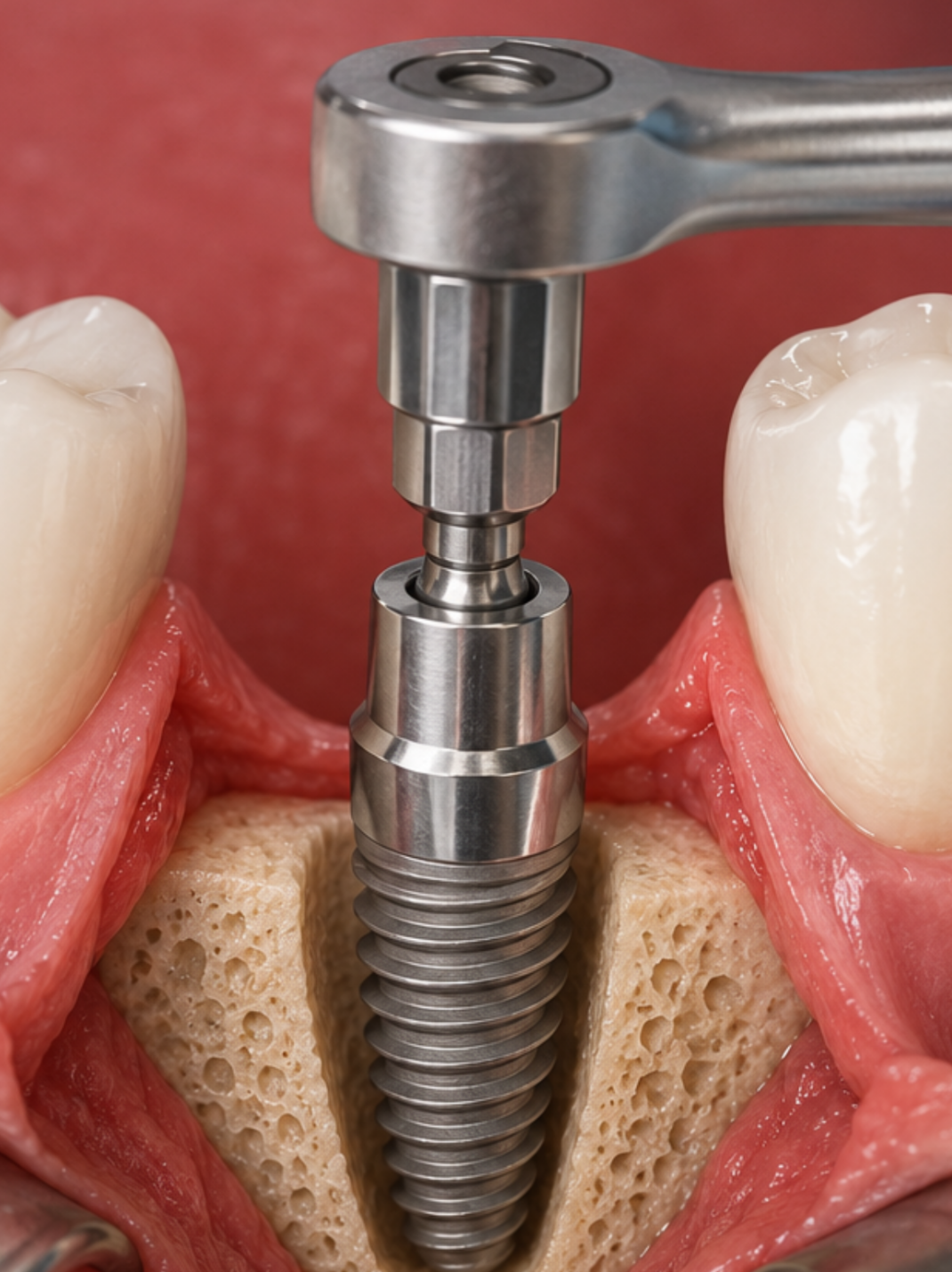 The implant acts as an artificial titanium tooth root that is inserted into the jawbone.
Dental implant placement is generally performed during a single surgical procedure and can often be completed in less than two hours, depending on the number of implants required.
The surgery is typically performed under local anesthesia, with various sedation options available when appropriate.
For many patients, this step is much simpler than they expected.
Osseointegration
Following surgery begins one of the most important stages of the process: osseointegration.
During this period, the implant gradually fuses with the surrounding jawbone. This biological connection creates a solid foundation capable of supporting the final restoration.
Osseointegration is essential to the long-term stability and durability of the implant.
Depending on the patient, this phase may take anywhere from a few weeks to several months.
Several factors can influence healing:
- Bone quality
- Implant location
- Overall health
- Smoking habits
- Compliance with post-operative instructions
While some patients wish to speed up this stage, it should never be rushed. Proper healing contributes directly to the long-term success of the implant.
The Final Restoration
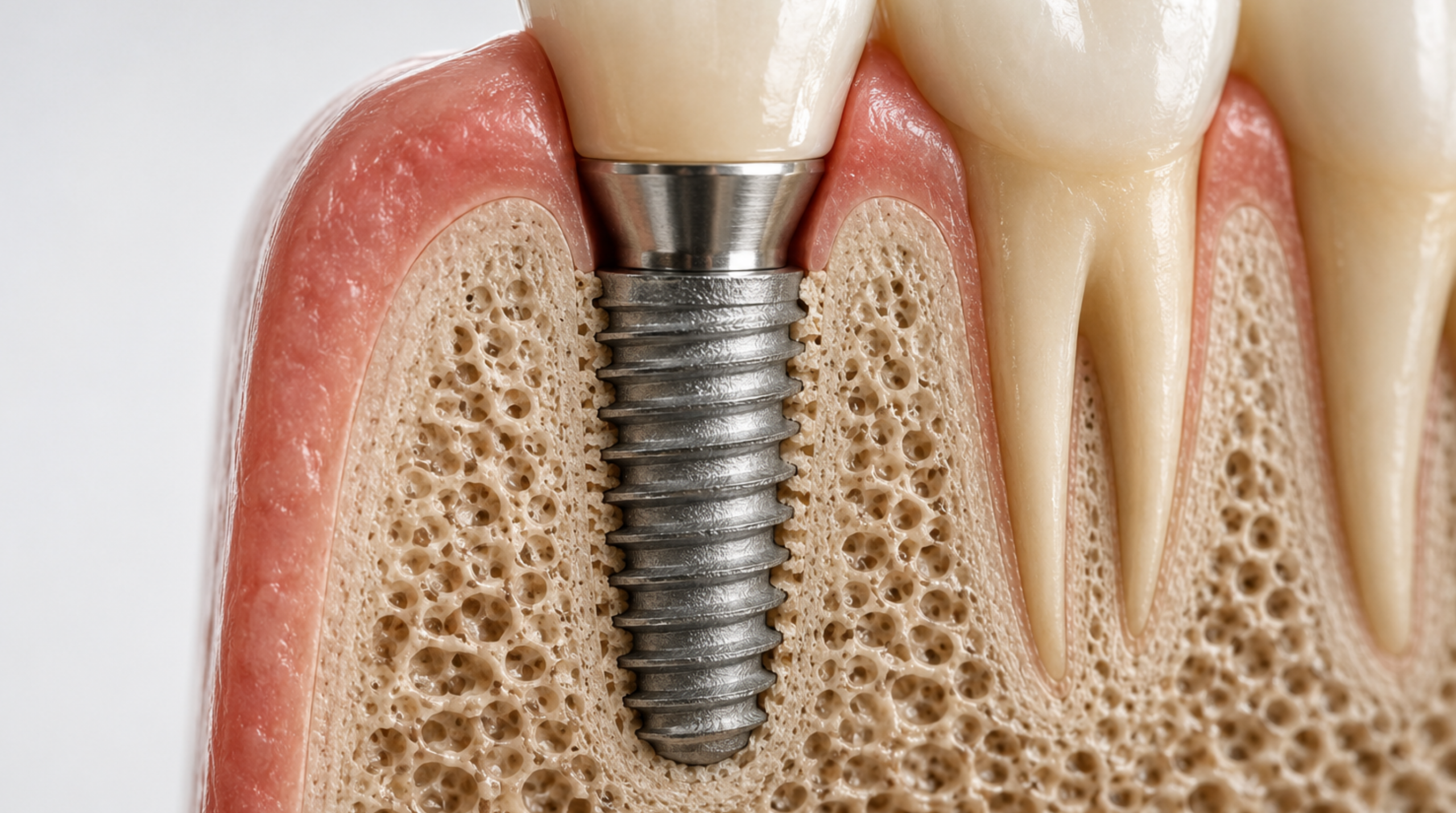
Once osseointegration is complete, the final restoration can be placed.
Depending on the treatment, this may include:
- An implant-supported crown
- An implant-supported bridge
- A full fixed prosthesis
This final stage restores chewing function, comfort, and the natural appearance of the smile.
Will I Be Without Teeth During Treatment?
This is probably one of the most common concerns patients have.
In many cases, the answer is no.
Temporary restorations can often be used during the healing phase to maintain your smile and improve day-to-day comfort.
Depending on the patient, options may include:
- A temporary tooth for a single implant
- A temporary bridge
- A temporary fixed All-on-X prosthesis
- A provisional restoration associated with certain zygomatic implant treatments
The most appropriate solution depends on the initial stability of the implants and the goals of treatment.
Can You Get Temporary Teeth the Same Day?
Quick Answer: Some eligible patients can receive temporary fixed teeth on the same day their dental implants are placed.
This approach is commonly referred to as immediate loading or immediate temporization.
Benefits may include:
- Preserving the appearance of your smile
- Maintaining self-confidence
- Providing a more comfortable transition
- Restoring partial chewing function quickly
However, this option is not suitable for every patient.
Good bone quality and sufficient implant stability are generally required. Safety and predictability always remain the top priorities.
How Long Does a Single-Tooth Implant Take?
Replacing a single missing tooth is often one of the most straightforward implant procedures.
The process typically includes:
- Consultation and treatment planning
- Implant placement
- Osseointegration
- Placement of the final crown
In some cases, an immediate implant or temporary restoration may be possible.
The overall timeline depends largely on bone quality and the patient’s individual healing response.
How Long Does All-on-X Treatment Take?
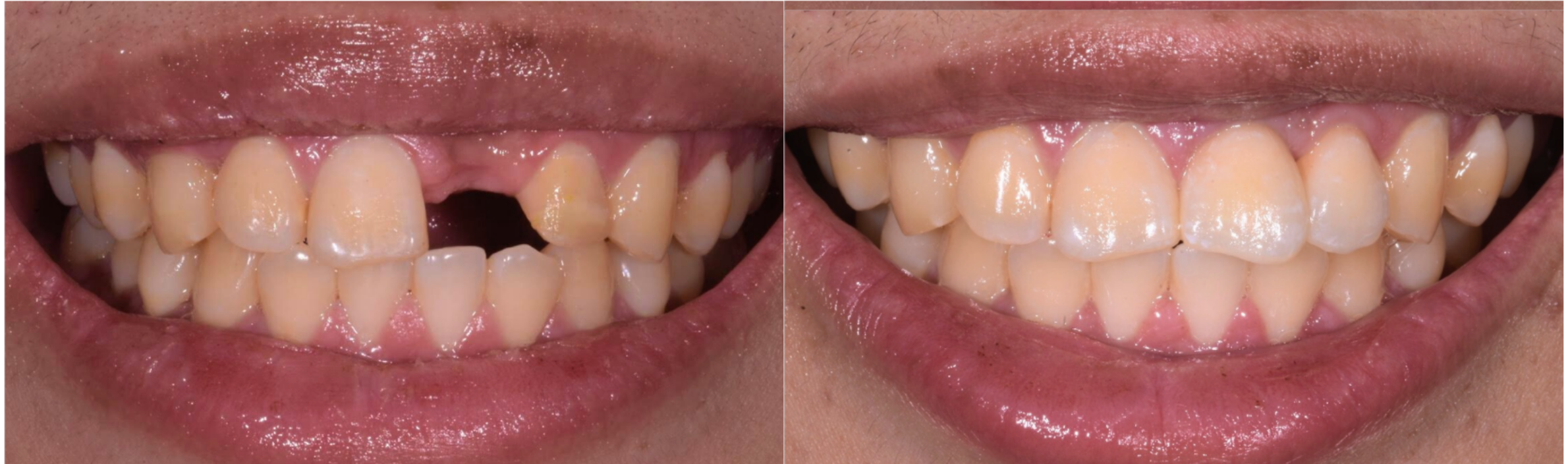
Quick Answer: All-on-X treatment often allows a full arch of teeth to be replaced with a temporary fixed prosthesis on the same day or shortly after surgery.
The All-on-X concept is designed for patients who have lost multiple teeth or wish to replace a removable denture.
Why Many Patients Choose All-on-X
This treatment offers several advantages:
- Rapid smile rehabilitation
- Temporary fixed teeth shortly after surgery
- Improved chewing function
- Greater comfort compared to removable dentures
- Fewer surgical procedures
- Significant improvement in quality of life
Many patients especially appreciate the opportunity to transition from a removable denture to a fixed and long-lasting solution.
Do Zygomatic Implants Extend Treatment Time?
Not necessarily.
In some cases, they can actually help shorten the overall treatment journey.
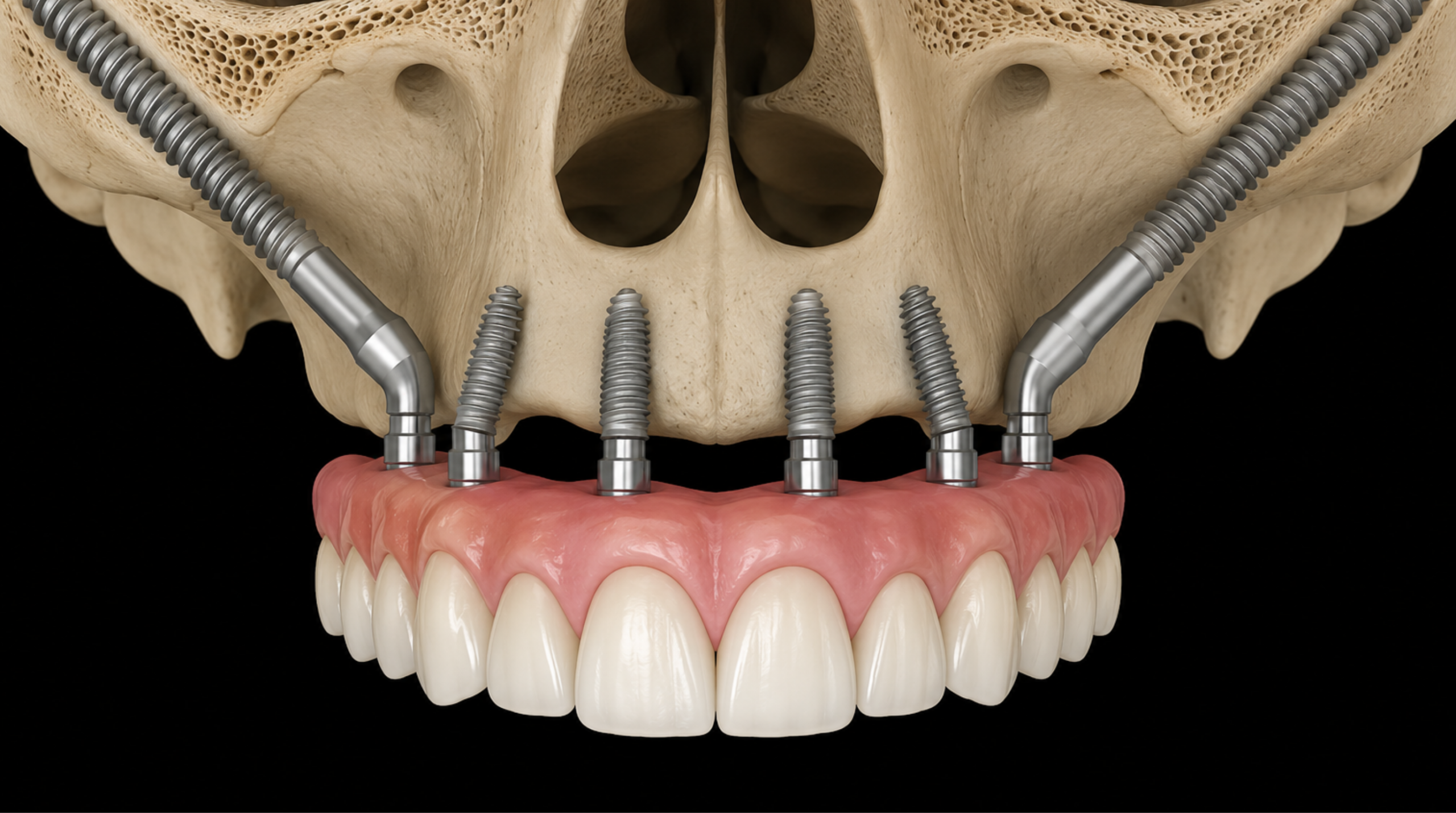
Zygomatic implants are designed for patients with severe bone loss in the upper jaw.
Traditionally, these situations often required complex bone grafting procedures that could significantly extend treatment timelines.
Why Can Zygomatic Implants Sometimes Speed Up Treatment?
Depending on the patient, zygomatic implants may:
- Eliminate the need for certain bone grafting procedures
- Reduce the number of surgical interventions
- Accelerate overall rehabilitation
- Allow temporary fixed teeth shortly after surgery
As a member of the Zygoma ZAGA Centers, Seaforth Oral Surgery offers advanced expertise in the treatment of complex cases involving severe bone loss.
Which Implant Solution Is the Fastest?
There is no universally fastest option for every patient.
| Solution | Temporary Teeth Available Quickly? | Timeline |
| Single-tooth implant | Sometimes | Varies |
| Immediate implant | Often | Faster in certain cases |
| All-on-X | Very often | Rapid |
| Zygomatic implants | Often | Varies |
The best solution always depends on your anatomy, bone quality, and treatment goals.
What Can Extend the Treatment Timeline?
While many implant treatments can be completed relatively quickly, certain factors may lengthen the process:
- Bone grafting procedures
- Active infection
- Gum disease
- Smoking
- Slower healing
- Certain medical conditions
- Complex cases requiring multiple stages
These factors do not mean dental implant treatment is impossible. They simply require careful planning to achieve a stable and long-lasting result.
Are the Results Worth the Wait?
For most patients, the answer is yes.
Dental implants provide several important benefits:
- More efficient chewing
- Greater comfort than removable dentures
- A natural appearance
- Excellent stability
- Preservation of jawbone structure
- A long-term solution for missing teeth
Although dental implant treatment may involve several stages, implants remain one of the most durable and natural-looking options available for replacing missing teeth.
Frequently Asked Questions
How long does the complete dental implant process take?
The full treatment process generally takes anywhere from a few weeks to several months, depending on the patient.
How long does it take to heal after a dental implant?
Healing can take anywhere from a few weeks to several months, depending on bone quality and your body’s healing response.
Can I eat normally after getting a dental implant?
A softer diet is usually recommended immediately after surgery. Your surgical team will provide specific instructions based on your treatment.
Will I be without teeth during treatment?
Not necessarily. Many patients can receive temporary restorations during the healing period.
Can dental implants be placed in one day?
Yes. Some eligible patients can receive dental implants along with temporary fixed teeth on the same day.
How many appointments are required?
The number of appointments varies depending on the complexity of treatment and the patient’s needs.
How long should I wait between a tooth extraction and implant placement?
In some cases, the implant can be placed immediately after extraction. In others, a healing period may be recommended.
Which implant treatment is the fastest?
Immediate implants and certain All-on-X treatments are often among the fastest options when appropriate.
Can I receive a temporary tooth immediately?
Yes. In some situations, a temporary restoration can be placed shortly after surgery.
Are dental implants permanent?
Dental implants are designed to be a long-term solution when properly maintained.
How long does All-on-X treatment take?
A temporary fixed prosthesis can often be placed on the same day or shortly after surgery.
Do zygomatic implants require more time?
Not always. In some cases, they may actually reduce the overall treatment timeline.
Is the procedure painful?
Most patients report only mild to moderate temporary discomfort after surgery.
How long does it take to receive the final tooth?
The final restoration is generally placed after complete osseointegration has occurred.
Conclusion
If you’re wondering how long the dental implant process really takes, the answer depends primarily on your clinical situation.
Some patients can receive temporary fixed teeth very quickly, while others require a longer healing period to achieve a stable and lasting outcome.
Thanks to modern approaches such as immediate implants, All-on-X treatment, and zygomatic implants, many solutions are now available to help reduce treatment times while maintaining a high level of predictability.
A specialized implant consultation remains the best way to determine which treatment options and timelines apply to your specific situation.
Considering Dental Implants in Montreal?
The team at Seaforth Oral Surgery offers personalized solutions ranging from single-tooth implants to full All-on-X rehabilitation and zygomatic implant treatment.
Schedule a consultation to learn which treatment options and timelines are right for you.
If you’re considering a dental implant in Montreal, you’re probably asking one question above all others: How long will the treatment take?
Many patients worry that the process will take a year or more. Others wonder whether they’ll be left without teeth during healing or if it’s possible to get teeth quickly.
The good news is that there isn’t a single answer. The length of dental implant treatment depends on many factors, including the number of teeth being replaced, the quality of the jawbone, whether extractions or bone grafting are required, and the type of restoration selected.
Quick Answer: The dental implant process can take anywhere from a few weeks to several months depending on the treatment required. Some eligible patients can receive temporary fixed teeth on the same day, while more complex cases may require a longer healing period to ensure a stable and long-lasting result.
Today, thanks to modern implant dentistry techniques such as immediate implants, All-on-X treatment, and zygomatic implants, many patients discover that their treatment can be much faster than they expected.
Timeline Overview by Treatment Type
These timelines are general estimates. A comprehensive implant evaluation is always necessary to determine what applies to your specific situation.
Why Does Treatment Time Vary So Much?
One of the most common misconceptions is that all dental implants follow exactly the same timeline. In reality, every patient presents a unique situation.
Some individuals have excellent bone quality and may be candidates for implant placement shortly after an extraction. Others have significant bone loss or more complex needs that require additional planning.
Gum health also plays an important role. Healthy gum tissues promote predictable healing and contribute to the long-term success of the treatment.
A patient’s goals can also affect treatment timelines. Replacing a single tooth does not involve the same process as replacing an entire arch with an All-on-X solution.
Factors That Influence Dental Implant Treatment Time
The overall treatment timeline depends primarily on:
- The number of missing teeth
- Bone quality and density
- The presence or absence of bone loss
- Whether tooth extractions are required
- The need for bone grafting
- Gum health
- The type of implant treatment selected
- The final restoration being placed
- Individual healing time
- Lifestyle factors such as smoking
Quick Answer: The duration of dental implant treatment depends mainly on bone quality, the number of teeth being replaced, and the type of restoration used.
At Seaforth Oral Surgery, every treatment plan is developed through a detailed evaluation to provide the most predictable approach and the timeline best suited to each patient’s needs.
The Main Stages of the Dental Implant Process
Although implant surgery is often completed in a single procedure, the overall treatment involves several important stages.
The Initial Consultation
Every implant treatment begins with a thorough evaluation.
This consultation typically includes:
- A comprehensive clinical examination
- An assessment of gum health
- 3D imaging
- An evaluation of available bone volume
- A discussion of your functional and aesthetic goals
Three-dimensional imaging provides a detailed view of the jawbone, sinuses, and other important anatomical structures. This step helps determine the ideal implant position and identify the most appropriate treatment options.
Depending on your situation, several treatment approaches may be considered:
- Single-tooth implant
- Implant-supported bridge
- All-on-X
- Zygomatic implants
This personalized planning process helps establish a realistic timeline before treatment even begins.
Tooth Extraction (If Necessary)
When a tooth is severely damaged or cannot be saved, extraction may be the first step in treatment.
Depending on the patient, several scenarios are possible:
- Extraction followed by a healing period
- Extraction and immediate implant placement
- Extraction with rapid temporary tooth replacement
The best approach depends on factors such as bone quality and the condition of the surrounding tissues.
Dental Implant Placement
The implant acts as an artificial titanium tooth root that is inserted into the jawbone.
Dental implant placement is generally performed during a single surgical procedure and can often be completed in less than two hours, depending on the number of implants required.
The surgery is typically performed under local anesthesia, with various sedation options available when appropriate.
For many patients, this step is much simpler than they expected.
Osseointegration
Following surgery begins one of the most important stages of the process: osseointegration.
During this period, the implant gradually fuses with the surrounding jawbone. This biological connection creates a solid foundation capable of supporting the final restoration.
Osseointegration is essential to the long-term stability and durability of the implant.
Depending on the patient, this phase may take anywhere from a few weeks to several months.
Several factors can influence healing:
- Bone quality
- Implant location
- Overall health
- Smoking habits
- Compliance with post-operative instructions
While some patients wish to speed up this stage, it should never be rushed. Proper healing contributes directly to the long-term success of the implant.
The Final Restoration
Once osseointegration is complete, the final restoration can be placed.
Depending on the treatment, this may include:
- An implant-supported crown
- An implant-supported bridge
- A full fixed prosthesis
This final stage restores chewing function, comfort, and the natural appearance of the smile.
Will I Be Without Teeth During Treatment?
This is probably one of the most common concerns patients have.
In many cases, the answer is no.
Temporary restorations can often be used during the healing phase to maintain your smile and improve day-to-day comfort.
Depending on the patient, options may include:
- A temporary tooth for a single implant
- A temporary bridge
- A temporary fixed All-on-X prosthesis
- A provisional restoration associated with certain zygomatic implant treatments
The most appropriate solution depends on the initial stability of the implants and the goals of treatment.
Can You Get Temporary Teeth the Same Day?
Quick Answer: Some eligible patients can receive temporary fixed teeth on the same day their dental implants are placed.
This approach is commonly referred to as immediate loading or immediate temporization.
Benefits may include:
- Preserving the appearance of your smile
- Maintaining self-confidence
- Providing a more comfortable transition
- Restoring partial chewing function quickly
However, this option is not suitable for every patient.
Good bone quality and sufficient implant stability are generally required. Safety and predictability always remain the top priorities.
How Long Does a Single-Tooth Implant Take?
Replacing a single missing tooth is often one of the most straightforward implant procedures.
The process typically includes:
- Consultation and treatment planning
- Implant placement
- Osseointegration
- Placement of the final crown
In some cases, an immediate implant or temporary restoration may be possible.
The overall timeline depends largely on bone quality and the patient’s individual healing response.
How Long Does All-on-X Treatment Take?
Quick Answer: All-on-X treatment often allows a full arch of teeth to be replaced with a temporary fixed prosthesis on the same day or shortly after surgery.
The All-on-X concept is designed for patients who have lost multiple teeth or wish to replace a removable denture.
Why Many Patients Choose All-on-X
This treatment offers several advantages:
- Rapid smile rehabilitation
- Temporary fixed teeth shortly after surgery
- Improved chewing function
- Greater comfort compared to removable dentures
- Fewer surgical procedures
- Significant improvement in quality of life
Many patients especially appreciate the opportunity to transition from a removable denture to a fixed and long-lasting solution.
Do Zygomatic Implants Extend Treatment Time?
Not necessarily.
In some cases, they can actually help shorten the overall treatment journey.
Zygomatic implants are designed for patients with severe bone loss in the upper jaw.
Traditionally, these situations often required complex bone grafting procedures that could significantly extend treatment timelines.
Why Can Zygomatic Implants Sometimes Speed Up Treatment?
Depending on the patient, zygomatic implants may:
- Eliminate the need for certain bone grafting procedures
- Reduce the number of surgical interventions
- Accelerate overall rehabilitation
- Allow temporary fixed teeth shortly after surgery
As a member of the Zygoma ZAGA Centers, Seaforth Oral Surgery offers advanced expertise in the treatment of complex cases involving severe bone loss.
Which Implant Solution Is the Fastest?
There is no universally fastest option for every patient.
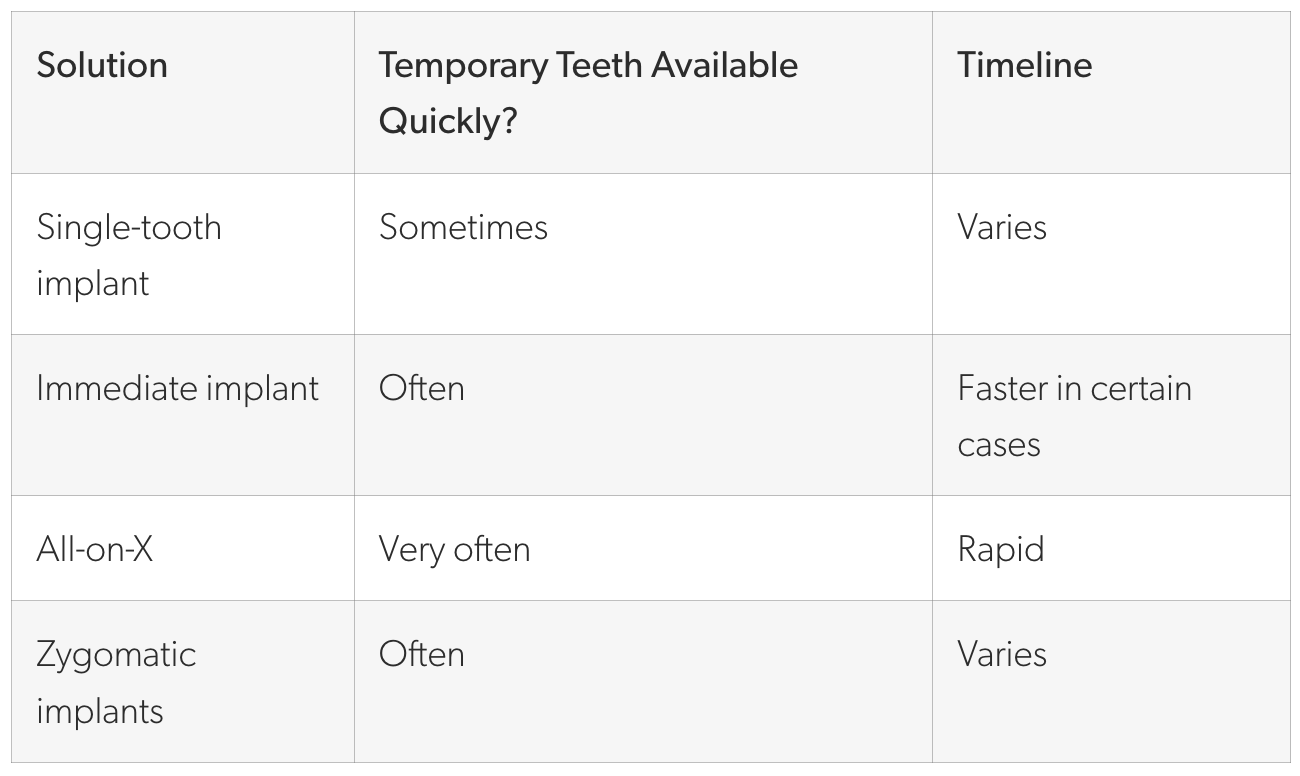
The best solution always depends on your anatomy, bone quality, and treatment goals.
What Can Extend the Treatment Timeline?
While many implant treatments can be completed relatively quickly, certain factors may lengthen the process:
- Bone grafting procedures
- Active infection
- Gum disease
- Smoking
- Slower healing
- Certain medical conditions
- Complex cases requiring multiple stages
These factors do not mean dental implant treatment is impossible. They simply require careful planning to achieve a stable and long-lasting result.
Are the Results Worth the Wait?
For most patients, the answer is yes.
Dental implants provide several important benefits:
- More efficient chewing
- Greater comfort than removable dentures
- A natural appearance
- Excellent stability
- Preservation of jawbone structure
- A long-term solution for missing teeth
Although dental implant treatment may involve several stages, implants remain one of the most durable and natural-looking options available for replacing missing teeth.
Frequently Asked Questions
How long does the complete dental implant process take?
The full treatment process generally takes anywhere from a few weeks to several months, depending on the patient.
How long does it take to heal after a dental implant?
Healing can take anywhere from a few weeks to several months, depending on bone quality and your body’s healing response.
Can I eat normally after getting a dental implant?
A softer diet is usually recommended immediately after surgery. Your surgical team will provide specific instructions based on your treatment.
Will I be without teeth during treatment?
Not necessarily. Many patients can receive temporary restorations during the healing period.
Can dental implants be placed in one day?
Yes. Some eligible patients can receive dental implants along with temporary fixed teeth on the same day.
How many appointments are required?
The number of appointments varies depending on the complexity of treatment and the patient’s needs.
How long should I wait between a tooth extraction and implant placement?
In some cases, the implant can be placed immediately after extraction. In others, a healing period may be recommended.
Which implant treatment is the fastest?
Immediate implants and certain All-on-X treatments are often among the fastest options when appropriate.
Can I receive a temporary tooth immediately?
Yes. In some situations, a temporary restoration can be placed shortly after surgery.
Are dental implants permanent?
Dental implants are designed to be a long-term solution when properly maintained.
How long does All-on-X treatment take?
A temporary fixed prosthesis can often be placed on the same day or shortly after surgery.
Do zygomatic implants require more time?
Not always. In some cases, they may actually reduce the overall treatment timeline.
Is the procedure painful?
Most patients report only mild to moderate temporary discomfort after surgery.
How long does it take to receive the final tooth?
The final restoration is generally placed after complete osseointegration has occurred.
Conclusion
If you’re wondering how long the dental implant process really takes, the answer depends primarily on your clinical situation.
Some patients can receive temporary fixed teeth very quickly, while others require a longer healing period to achieve a stable and lasting outcome.
Thanks to modern approaches such as immediate implants, All-on-X treatment, and zygomatic implants, many solutions are now available to help reduce treatment times while maintaining a high level of predictability.
A specialized implant consultation remains the best way to determine which treatment options and timelines apply to your specific situation.
Considering Dental Implants in Montreal?
The team at Seaforth Oral Surgery offers personalized solutions ranging from single-tooth implants to full All-on-X rehabilitation and zygomatic implant treatment.
Schedule a consultation to learn which treatment options and timelines are right for you.
If you’re considering a dental implant in Montreal, you’re probably asking one question above all others: How long will the treatment take?
Many patients worry that the process will take a year or more. Others wonder whether they’ll be left without teeth during healing or if it’s possible to get teeth quickly.
The good news is that there isn’t a single answer. The length of dental implant treatment depends on many factors, including the number of teeth being replaced, the quality of the jawbone, whether extractions or bone grafting are required, and the type of restoration selected.
Quick Answer: The dental implant process can take anywhere from a few weeks to several months depending on the treatment required. Some eligible patients can receive temporary fixed teeth on the same day, while more complex cases may require a longer healing period to ensure a stable and long-lasting result.
Today, thanks to modern implant dentistry techniques such as immediate implants, All-on-X treatment, and zygomatic implants, many patients discover that their treatment can be much faster than they expected.
Timeline Overview by Treatment Type
These timelines are general estimates. A comprehensive implant evaluation is always necessary to determine what applies to your specific situation.
Why Does Treatment Time Vary So Much?
One of the most common misconceptions is that all dental implants follow exactly the same timeline. In reality, every patient presents a unique situation.
Some individuals have excellent bone quality and may be candidates for implant placement shortly after an extraction. Others have significant bone loss or more complex needs that require additional planning.
Gum health also plays an important role. Healthy gum tissues promote predictable healing and contribute to the long-term success of the treatment.
A patient’s goals can also affect treatment timelines. Replacing a single tooth does not involve the same process as replacing an entire arch with an All-on-X solution.
Factors That Influence Dental Implant Treatment Time
The overall treatment timeline depends primarily on:
- The number of missing teeth
- Bone quality and density
- The presence or absence of bone loss
- Whether tooth extractions are required
- The need for bone grafting
- Gum health
- The type of implant treatment selected
- The final restoration being placed
- Individual healing time
- Lifestyle factors such as smoking
Quick Answer: The duration of dental implant treatment depends mainly on bone quality, the number of teeth being replaced, and the type of restoration used.
At Seaforth Oral Surgery, every treatment plan is developed through a detailed evaluation to provide the most predictable approach and the timeline best suited to each patient’s needs.
The Main Stages of the Dental Implant Process
Although implant surgery is often completed in a single procedure, the overall treatment involves several important stages.
The Initial Consultation
Every implant treatment begins with a thorough evaluation.
This consultation typically includes:
- A comprehensive clinical examination
- An assessment of gum health
- 3D imaging
- An evaluation of available bone volume
- A discussion of your functional and aesthetic goals
Three-dimensional imaging provides a detailed view of the jawbone, sinuses, and other important anatomical structures. This step helps determine the ideal implant position and identify the most appropriate treatment options.
Depending on your situation, several treatment approaches may be considered:
- Single-tooth implant
- Implant-supported bridge
- All-on-X
- Zygomatic implants
This personalized planning process helps establish a realistic timeline before treatment even begins.
Tooth Extraction (If Necessary)
When a tooth is severely damaged or cannot be saved, extraction may be the first step in treatment.
Depending on the patient, several scenarios are possible:
- Extraction followed by a healing period
- Extraction and immediate implant placement
- Extraction with rapid temporary tooth replacement
The best approach depends on factors such as bone quality and the condition of the surrounding tissues.
Dental Implant Placement
The implant acts as an artificial titanium tooth root that is inserted into the jawbone.
Dental implant placement is generally performed during a single surgical procedure and can often be completed in less than two hours, depending on the number of implants required.
The surgery is typically performed under local anesthesia, with various sedation options available when appropriate.
For many patients, this step is much simpler than they expected.
Osseointegration
Following surgery begins one of the most important stages of the process: osseointegration.
During this period, the implant gradually fuses with the surrounding jawbone. This biological connection creates a solid foundation capable of supporting the final restoration.
Osseointegration is essential to the long-term stability and durability of the implant.
Depending on the patient, this phase may take anywhere from a few weeks to several months.
Several factors can influence healing:
- Bone quality
- Implant location
- Overall health
- Smoking habits
- Compliance with post-operative instructions
While some patients wish to speed up this stage, it should never be rushed. Proper healing contributes directly to the long-term success of the implant.
The Final Restoration
Once osseointegration is complete, the final restoration can be placed.
Depending on the treatment, this may include:
- An implant-supported crown
- An implant-supported bridge
- A full fixed prosthesis
This final stage restores chewing function, comfort, and the natural appearance of the smile.
Will I Be Without Teeth During Treatment?
This is probably one of the most common concerns patients have.
In many cases, the answer is no.
Temporary restorations can often be used during the healing phase to maintain your smile and improve day-to-day comfort.
Depending on the patient, options may include:
- A temporary tooth for a single implant
- A temporary bridge
- A temporary fixed All-on-X prosthesis
- A provisional restoration associated with certain zygomatic implant treatments
The most appropriate solution depends on the initial stability of the implants and the goals of treatment.
Can You Get Temporary Teeth the Same Day?
Quick Answer: Some eligible patients can receive temporary fixed teeth on the same day their dental implants are placed.
This approach is commonly referred to as immediate loading or immediate temporization.
Benefits may include:
- Preserving the appearance of your smile
- Maintaining self-confidence
- Providing a more comfortable transition
- Restoring partial chewing function quickly
However, this option is not suitable for every patient.
Good bone quality and sufficient implant stability are generally required. Safety and predictability always remain the top priorities.
How Long Does a Single-Tooth Implant Take?
Replacing a single missing tooth is often one of the most straightforward implant procedures.
The process typically includes:
- Consultation and treatment planning
- Implant placement
- Osseointegration
- Placement of the final crown
In some cases, an immediate implant or temporary restoration may be possible.
The overall timeline depends largely on bone quality and the patient’s individual healing response.
How Long Does All-on-X Treatment Take?
Quick Answer: All-on-X treatment often allows a full arch of teeth to be replaced with a temporary fixed prosthesis on the same day or shortly after surgery.
The All-on-X concept is designed for patients who have lost multiple teeth or wish to replace a removable denture.
Why Many Patients Choose All-on-X
This treatment offers several advantages:
- Rapid smile rehabilitation
- Temporary fixed teeth shortly after surgery
- Improved chewing function
- Greater comfort compared to removable dentures
- Fewer surgical procedures
- Significant improvement in quality of life
Many patients especially appreciate the opportunity to transition from a removable denture to a fixed and long-lasting solution.
Do Zygomatic Implants Extend Treatment Time?
Not necessarily.
In some cases, they can actually help shorten the overall treatment journey.
Zygomatic implants are designed for patients with severe bone loss in the upper jaw.
Traditionally, these situations often required complex bone grafting procedures that could significantly extend treatment timelines.
Why Can Zygomatic Implants Sometimes Speed Up Treatment?
Depending on the patient, zygomatic implants may:
- Eliminate the need for certain bone grafting procedures
- Reduce the number of surgical interventions
- Accelerate overall rehabilitation
- Allow temporary fixed teeth shortly after surgery
As a member of the Zygoma ZAGA Centers, Seaforth Oral Surgery offers advanced expertise in the treatment of complex cases involving severe bone loss.
Which Implant Solution Is the Fastest?
There is no universally fastest option for every patient.
| Solution | Temporary Teeth Available Quickly? | Timeline |
| Single-tooth implant | Sometimes | Varies |
| Immediate implant | Often | Faster in certain cases |
| All-on-X | Very often | Rapid |
| Zygomatic implants | Often | Varies |
The best solution always depends on your anatomy, bone quality, and treatment goals.
What Can Extend the Treatment Timeline?
While many implant treatments can be completed relatively quickly, certain factors may lengthen the process:
- Bone grafting procedures
- Active infection
- Gum disease
- Smoking
- Slower healing
- Certain medical conditions
- Complex cases requiring multiple stages
These factors do not mean dental implant treatment is impossible. They simply require careful planning to achieve a stable and long-lasting result.
Are the Results Worth the Wait?
For most patients, the answer is yes.
Dental implants provide several important benefits:
- More efficient chewing
- Greater comfort than removable dentures
- A natural appearance
- Excellent stability
- Preservation of jawbone structure
- A long-term solution for missing teeth
Although dental implant treatment may involve several stages, implants remain one of the most durable and natural-looking options available for replacing missing teeth.
Frequently Asked Questions
How long does the complete dental implant process take?
The full treatment process generally takes anywhere from a few weeks to several months, depending on the patient.
How long does it take to heal after a dental implant?
Healing can take anywhere from a few weeks to several months, depending on bone quality and your body’s healing response.
Can I eat normally after getting a dental implant?
A softer diet is usually recommended immediately after surgery. Your surgical team will provide specific instructions based on your treatment.
Will I be without teeth during treatment?
Not necessarily. Many patients can receive temporary restorations during the healing period.
Can dental implants be placed in one day?
Yes. Some eligible patients can receive dental implants along with temporary fixed teeth on the same day.
How many appointments are required?
The number of appointments varies depending on the complexity of treatment and the patient’s needs.
How long should I wait between a tooth extraction and implant placement?
In some cases, the implant can be placed immediately after extraction. In others, a healing period may be recommended.
Which implant treatment is the fastest?
Immediate implants and certain All-on-X treatments are often among the fastest options when appropriate.
Can I receive a temporary tooth immediately?
Yes. In some situations, a temporary restoration can be placed shortly after surgery.
Are dental implants permanent?
Dental implants are designed to be a long-term solution when properly maintained.
How long does All-on-X treatment take?
A temporary fixed prosthesis can often be placed on the same day or shortly after surgery.
Do zygomatic implants require more time?
Not always. In some cases, they may actually reduce the overall treatment timeline.
Is the procedure painful?
Most patients report only mild to moderate temporary discomfort after surgery.
How long does it take to receive the final tooth?
The final restoration is generally placed after complete osseointegration has occurred.
Conclusion
If you’re wondering how long the dental implant process really takes, the answer depends primarily on your clinical situation.
Some patients can receive temporary fixed teeth very quickly, while others require a longer healing period to achieve a stable and lasting outcome.
Thanks to modern approaches such as immediate implants, All-on-X treatment, and zygomatic implants, many solutions are now available to help reduce treatment times while maintaining a high level of predictability.
A specialized implant consultation remains the best way to determine which treatment options and timelines apply to your specific situation.
Considering Dental Implants in Montreal?
The team at Seaforth Oral Surgery offers personalized solutions ranging from single-tooth implants to full All-on-X rehabilitation and zygomatic implant treatment.
Schedule a consultation to learn which treatment options and timelines are right for you.