All the teeth in one arch can be replaced with either a removable implant-supported denture or a fixed full-arch restoration, such as All-on-4 or All-on-X. The appropriate option depends on your remaining teeth, bone anatomy, general health, preferences and ability to care for the restoration.
An individual assessment is needed to determine whether any remaining teeth can be preserved and to compare the benefits, limitations and maintenance requirements of each option.
What Does “Replacing All Your Teeth” Mean?
Full replacement may involve the upper arch, the lower arch or both. It generally does not require one implant for every missing tooth. Instead, several implants can support a prosthesis that replaces an entire arch.
Before extractions are considered, each remaining tooth should be assessed. Some teeth may still be treatable and worth preserving. When their prognosis is poor, full-arch rehabilitation may be considered to restore chewing, appearance and dental stability.
The principal options are:
- a conventional complete denture without implants;
- a removable implant-supported denture;
- a fixed full-arch implant restoration;
- in some cases, a different solution for each jaw.
What Are the Main Options?
A Conventional Complete Denture
A complete denture rests mainly on the gums. It does not require implant surgery and is removed for cleaning and usually while sleeping.
It remains an appropriate option for some people, particularly when implant surgery is not desired or recommended. Its stability can vary with jaw shape, remaining bone, saliva and the fit of the denture.
A Removable Implant-Supported Denture
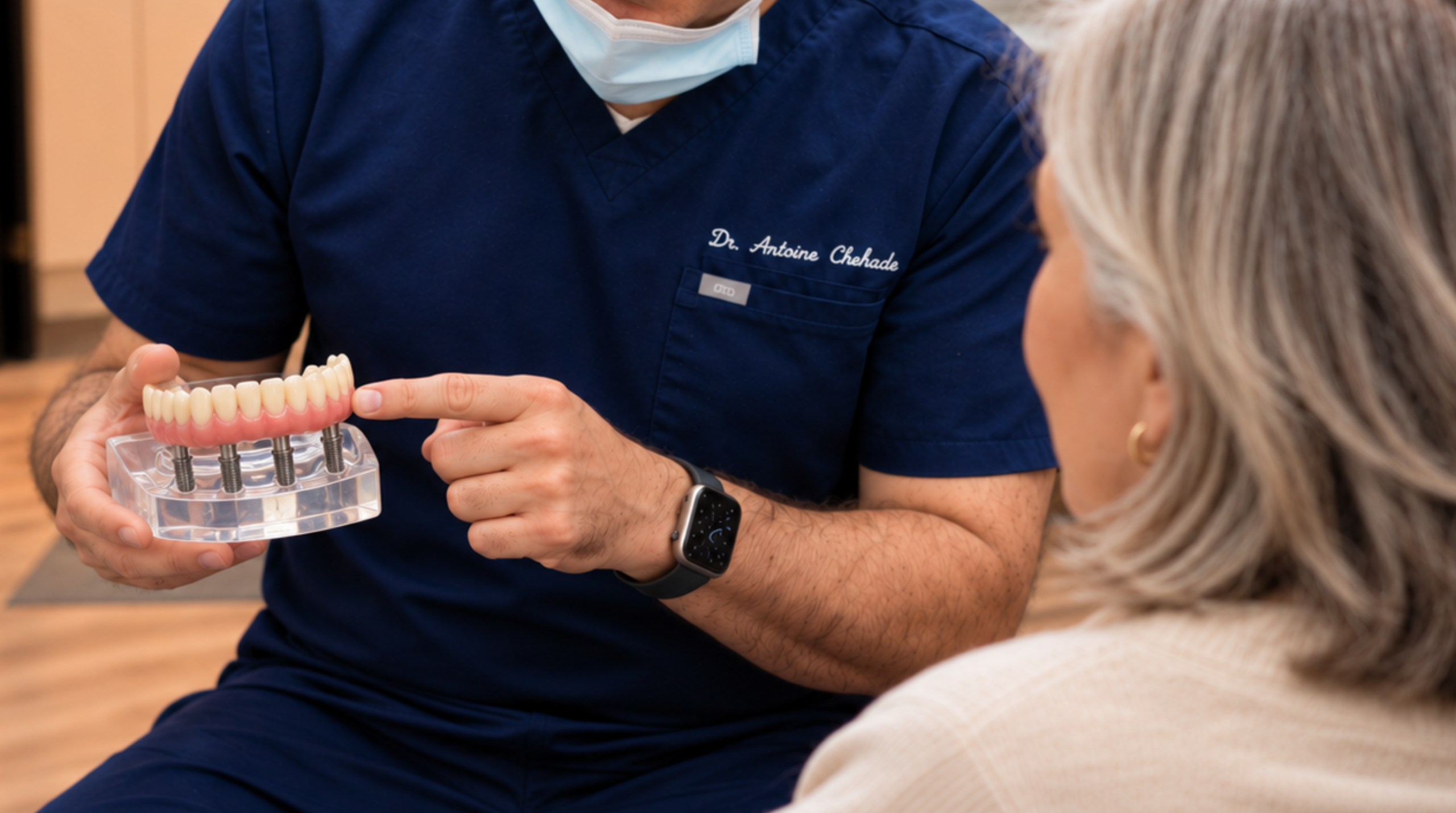
This denture connects to implants with individual attachments or a bar. It remains removable, so you take it out to clean the denture, implants and gums thoroughly.
The implants generally improve retention and reduce movement while eating or speaking. The number and arrangement of implants are individualized and may differ between the upper and lower jaws.
This option may suit someone who wants greater stability than a conventional denture while retaining a prosthesis that is easy to remove for cleaning.
A Fixed Full-Arch Implant Restoration
A fixed full-arch restoration is screwed or otherwise secured to several implants. You do not remove it yourself, although a dental professional can remove it when maintenance or repairs are required.
All-on-4 and All-on-X treatment use a number of implants determined by the patient’s anatomy, the proposed restoration and the forces placed on the jaw. All-on-4 describes an arch supported by four implants. All-on-X allows the number to be customized to the case.
A fixed solution provides a high degree of stability, but it requires complex planning and careful cleaning beneath the restoration.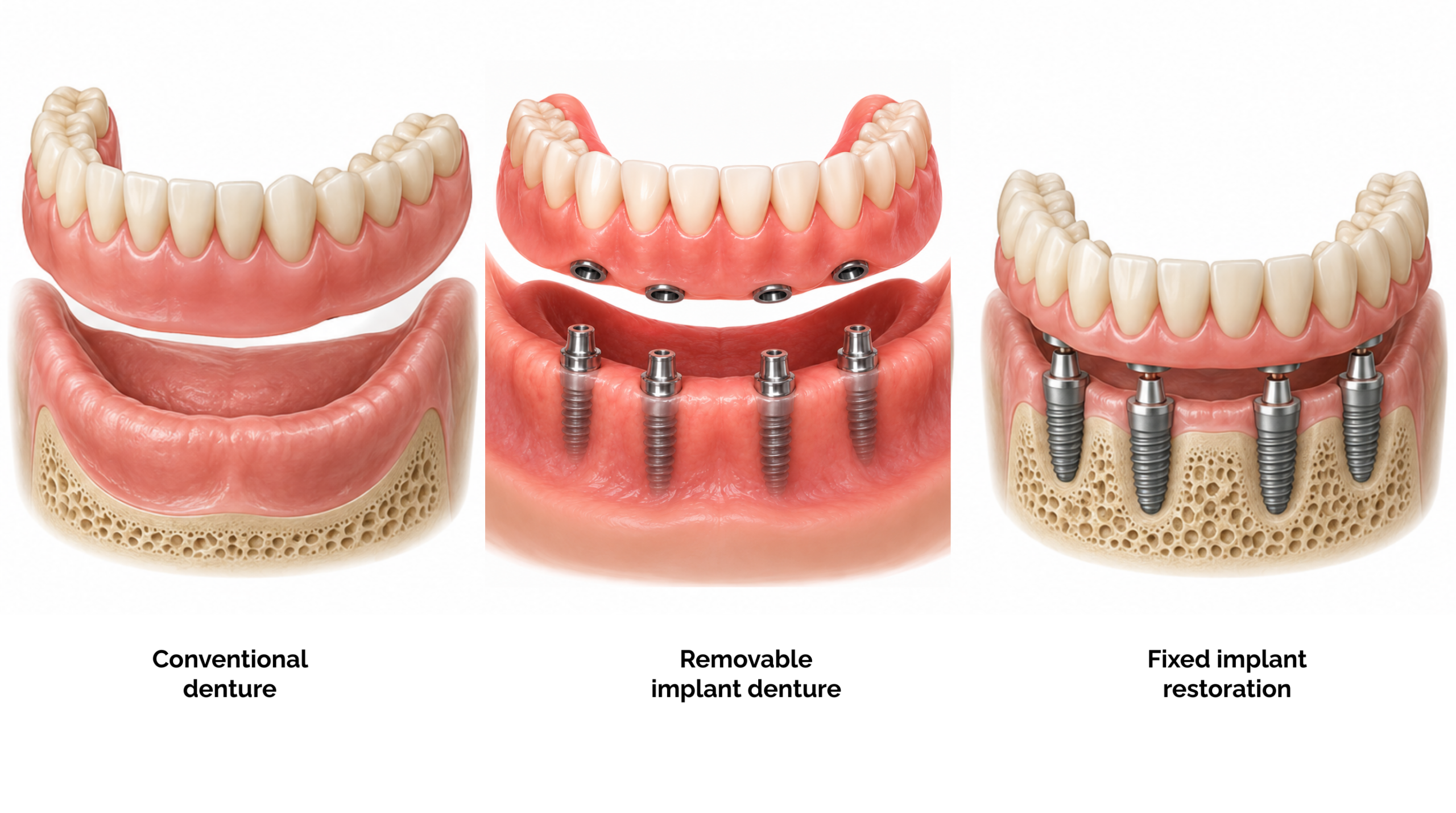
Comparing Full-Arch Tooth-Replacement Options
| Factor | Conventional denture | Removable implant denture | Fixed implant restoration |
| Support | Rests mainly on the gums | Connects to implants and may also rest partly on the tissues | Supported by several implants |
| Removed by the patient | Yes | Yes | No |
| Stability | Variable | Greater than a conventional denture in suitable cases | Generally the highest |
| Cleaning | Outside the mouth | Outside the mouth, plus cleaning of attachments and implants | Under and around the restoration with specialized tools |
| Surgery | No | Yes | Yes |
| Bone requirements | No implants required | Depend on the proposed design | Depend on the design and implant distribution |
| Professional maintenance | Adjustments and eventual replacement | Monitoring of implants, attachments and denture | Monitoring of implants, screws, components and restoration |
| Relative cost | Generally the lowest | Often intermediate | Generally the highest |
| Daily feel | May move or cover part of the palate | More stable but still removable | Fixed and usually feels more like non-removable teeth |
No column is automatically the “best” choice. The right option provides a realistic balance among stability, anatomy, cleaning requirements, risk, goals and budget.
Do You Need One Implant for Every Tooth?
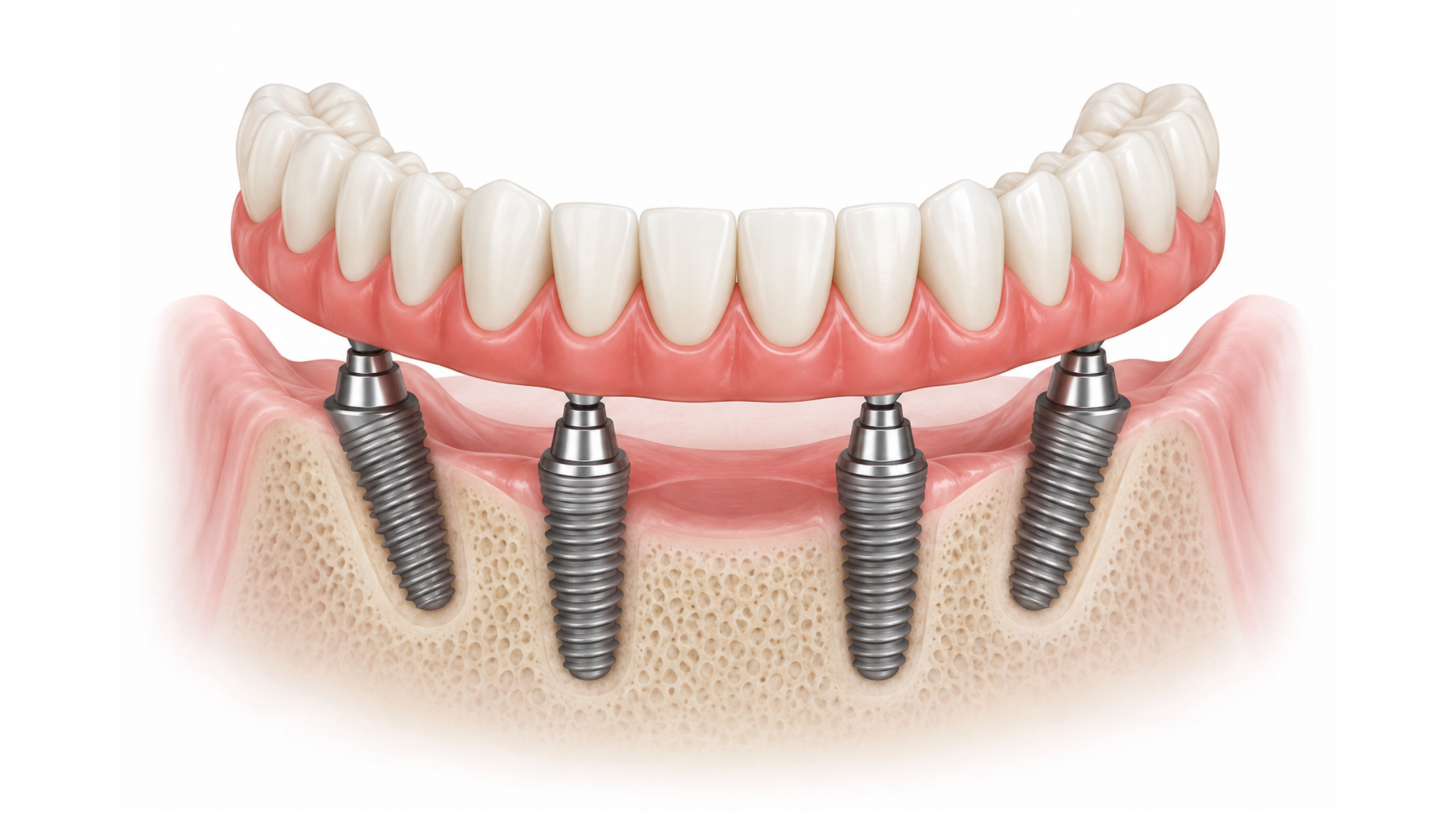
No. For full-arch replacement, implants act as anchors for a restoration containing several artificial teeth. The recommended number depends on:
- the jaw being treated;
- available bone volume and quality;
- possible implant positions;
- the shape of the arch;
- the opposing teeth or restoration;
- the prosthesis design and material;
- chewing forces;
- clenching or grinding habits.
Adding more implants does not necessarily improve every treatment. Their position, stability and relationship to the proposed restoration matter as much as the total number.
Can You Receive Fixed Teeth on the Day of Surgery?
In selected cases, a fixed temporary restoration can be attached on the day the implants are placed. This is known as immediate loading.
Eligibility depends on factors such as the initial stability of the implants, bone anatomy, force distribution and whether additional procedures are required. Sometimes the final decision cannot be made until surgery.
Teeth delivered immediately are usually provisional. They provide appearance and limited function while healing occurs, but dietary changes and other precautions are required. The final restoration is made once the implants and tissues have healed sufficiently.
“Teeth in a day” therefore does not mean that healing and the entire definitive treatment are completed in a single appointment.
What If You Have Insufficient Bone?
Bone loss does not automatically rule out implant treatment. Its location and severity will affect which options are practical.
Depending on the assessment, the plan may involve:
- changing implant positions or angles;
- bone grafting;
- sinus floor elevation in certain areas of the upper jaw;
- designing a full-arch restoration around the available bone;
- choosing a removable implant denture;
- choosing a non-implant alternative.
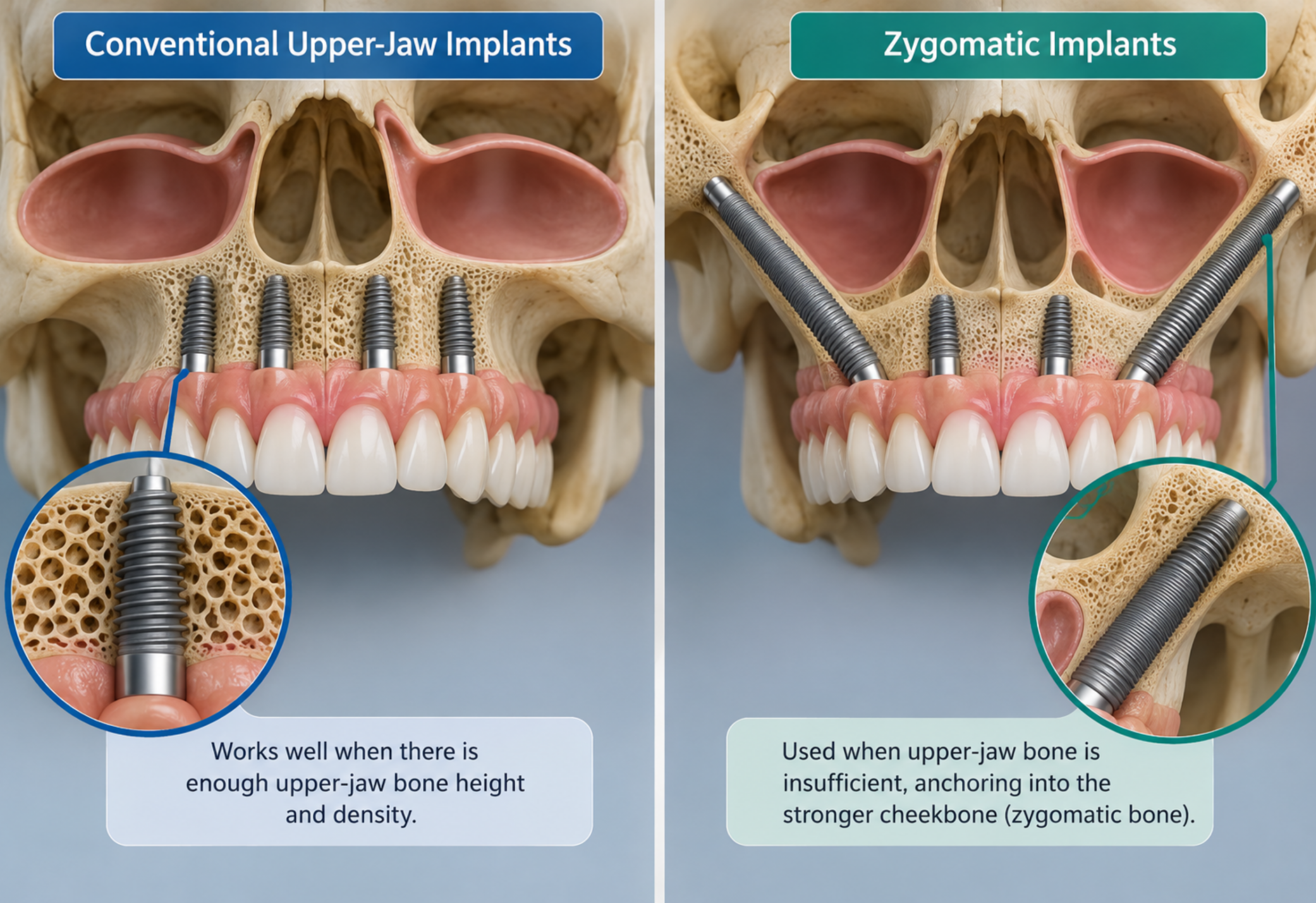
Zygomatic Implants
For certain complex cases involving severe upper-jaw bone loss, zygomatic implants may be considered. These implants are longer than conventional implants and obtain support in the cheekbone region.
This approach is not appropriate for every pattern of bone loss and requires a specialized assessment. It may provide another treatment pathway when the upper jaw cannot support conventional implants.
Who May Be a Candidate for Full-Arch Implants?
Candidacy depends on more than the number of missing teeth. An assessment considers:
- whether any teeth can be preserved;
- gum and soft-tissue health;
- bone volume and distribution;
- general health;
- medications and medical treatments;
- smoking;
- diabetes control, when applicable;
- clenching or grinding;
- ability to maintain daily hygiene;
- functional and aesthetic expectations.
Older age or a chronic medical condition does not automatically prevent implant treatment. Some factors may increase risk, change the treatment plan or make a less complex option more appropriate.
Never stop a medication before surgery unless the prescribing healthcare professional has instructed you to do so.
What Does Full-Arch Treatment Involve?
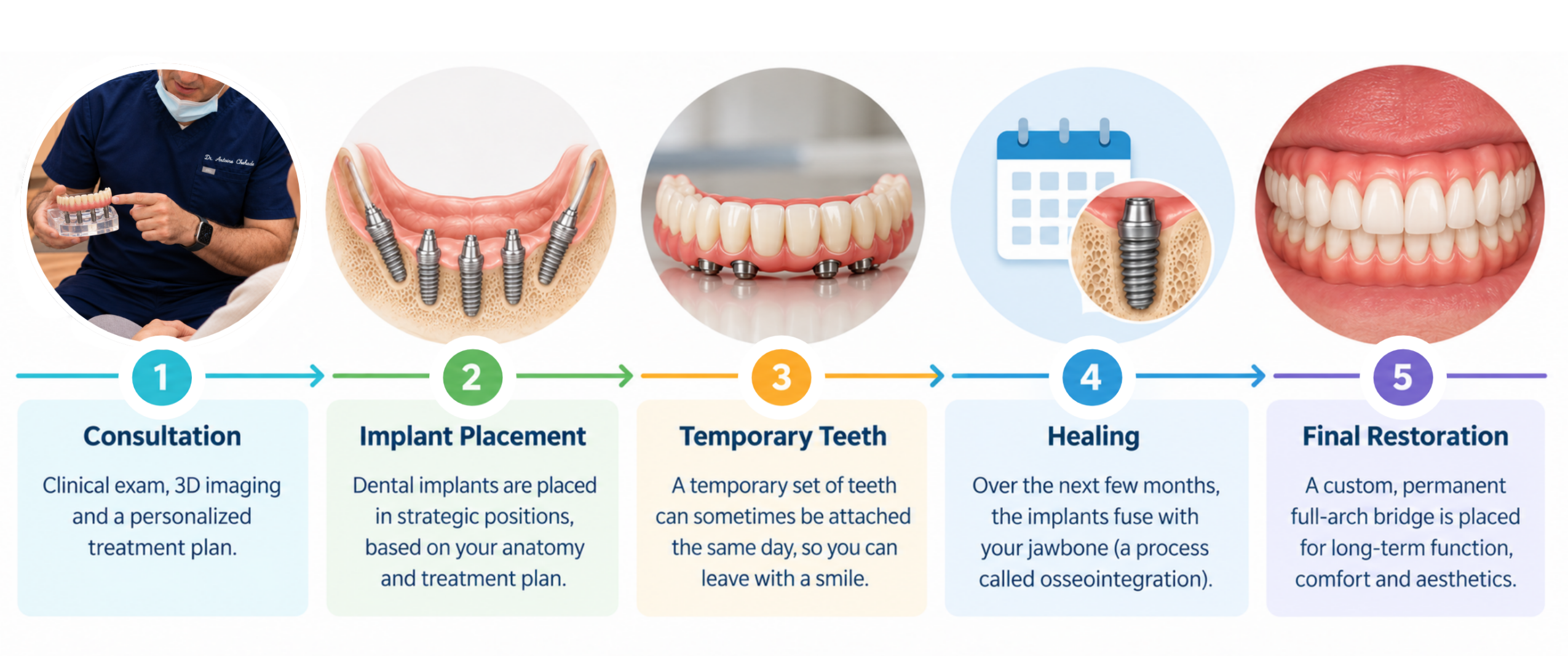
1. Consultation and Imaging
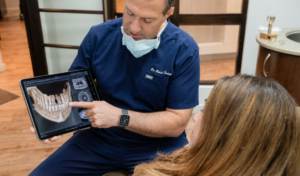
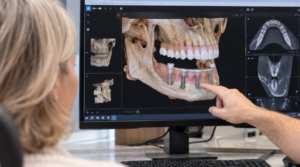
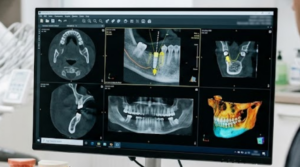
The consultation includes an examination, review of your medical history and discussion of your goals. X-rays and, when needed, 3D imaging help assess the bone and nearby anatomical structures.
2. Collaborative Planning
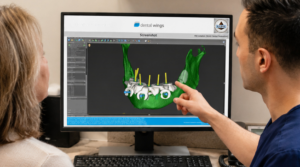
The surgical plan should be developed around the final restoration. The surgeon, restorative dentist and, where applicable, prosthodontist or laboratory may coordinate implant positions, tooth design and the bite.
3. Extractions and Implant Placement
Teeth that cannot predictably be preserved may be removed. Implants may be placed at the same appointment or during a later procedure, depending on infection, anatomy and the stability that can be achieved.
Sedation options may be discussed based on the procedure, your health and your level of anxiety.
4. Temporary Teeth and Healing
Depending on the plan, a fixed or removable temporary prosthesis may be provided. The implants then integrate with the bone through a process called osseointegration, which usually takes several months.
5. Final Restoration and Follow-Up
Once healing is sufficient, the final restoration is made and adjusted. Follow-up visits are used to monitor the implants, tissues, bite and prosthetic components.
What Are the Risks and Maintenance Needs?
Like any surgery, implant placement has risks. These can include infection, bleeding, delayed healing, failure of an implant to integrate and injury to nearby structures such as a nerve or sinus. Inflammation and bone loss may also develop around an implant over time.
The restoration itself requires maintenance. Attachments can wear, screws can loosen, and parts of the prosthesis can chip or require repair.
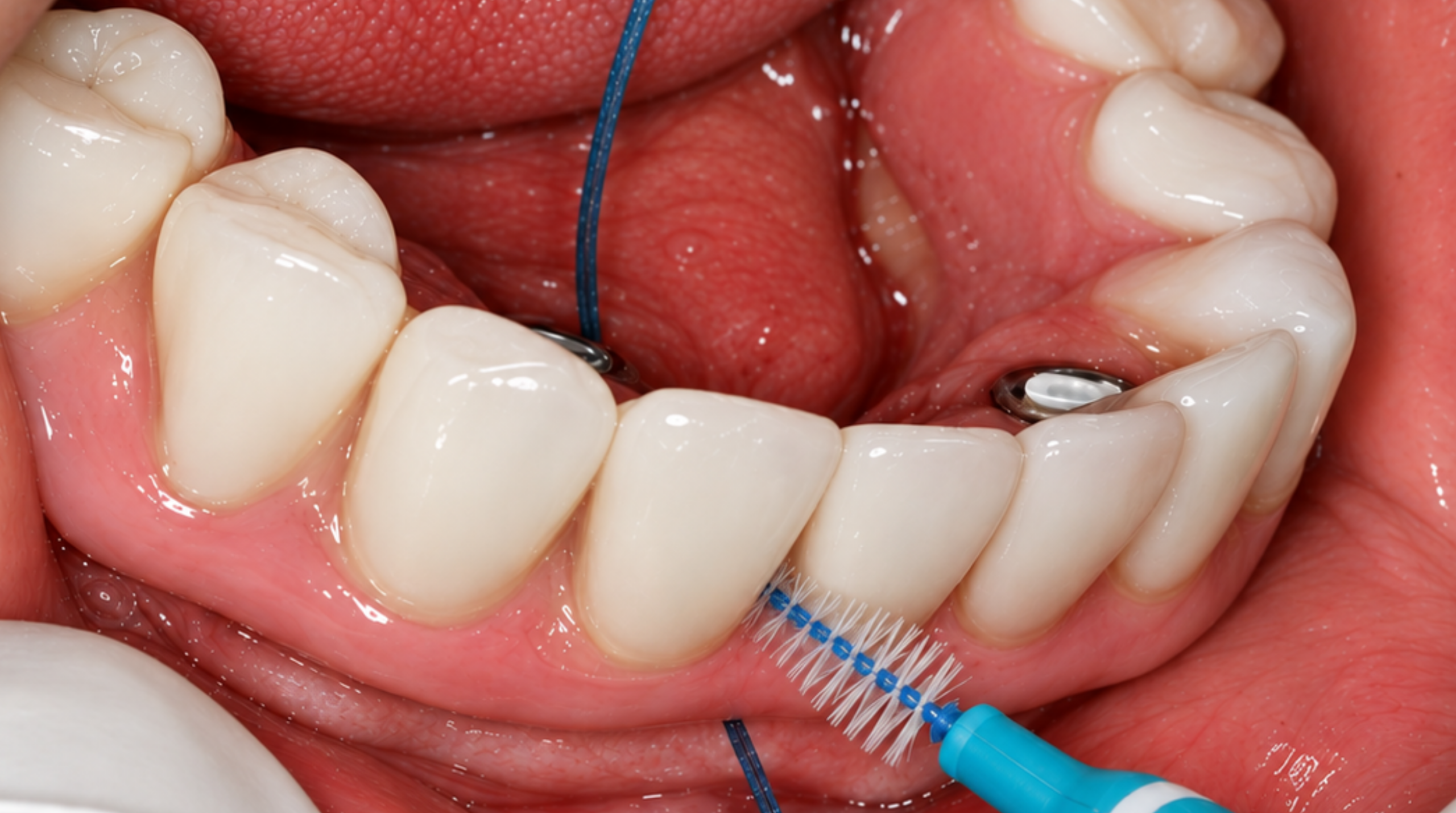
To help reduce long-term risks:
- clean around every implant each day;
- use the brushes, floss threaders or other tools recommended for you;
- remove and clean a removable prosthesis as directed;
- attend professional maintenance appointments;
- promptly report persistent pain, mobility, bleeding, swelling or a change in fit.
Implants cannot develop cavities, but the tissues surrounding them can become diseased. Long-term professional care remains essential.
How Do You Choose Between Fixed and Removable Teeth?
Discuss these questions with your treatment team:
- Do you want to be able to remove the prosthesis yourself?
- Can you clean effectively beneath a fixed restoration?
- Does the prosthesis need to replace a significant amount of gum tissue or provide lip support?
- How much bone is available?
- How much surgery are you prepared to consider?
- What repairs and follow-up may each option require?
- What is the complete cost, including surgery, restoration and maintenance?
- Is an immediate fixed temporary restoration realistic in your case?
A consultation for dental implants in Montreal should compare options that fit your anatomy rather than selecting treatment from a commercial name alone.
FAQs About Replacing All Your Teeth With Implants
Can four implants replace all the teeth in one jaw?
Sometimes. Four implants can support a fixed arch under an All-on-4 plan, but that number is not automatically appropriate for every jaw or patient.
Are All-on-4 and All-on-X the same?
Both describe full-arch treatment. All-on-4 specifies four implants, while All-on-X uses a customized number based on the treatment plan.
Do all my remaining teeth need to be extracted?
No. Teeth that remain treatable and worth preserving should not be removed merely to simplify treatment. Each tooth requires an individual prognosis.
Is an implant denture always fixed?
No. Implant-supported teeth can be fixed or removable. A removable implant denture must be taken out by the patient for cleaning.
Can both jaws be treated?
Yes, when health, anatomy and the overall plan permit it. The upper and lower jaws may require different restoration designs.
Can I receive my final teeth on the same day?
Usually, teeth attached immediately are temporary. The final restoration is made after the implants and tissues have healed.
Do full-arch implants eliminate the need for bone grafting?
Not always. Certain designs may reduce the need for grafting, but bone augmentation remains appropriate in some cases.
Can I receive implants after wearing dentures for years?
Possibly. Imaging can show whether conventional implants, a different full-arch design or zygomatic implants may be considered.
Can a fixed implant bridge be removed?
You do not remove it for daily cleaning. A dental professional can remove it when maintenance or repairs require access.
Is a removable option easier to clean?
Often, because it can be taken out. A fixed restoration can also be maintained, but it requires suitable tools andcleaning techniques.
How much does full-mouth implant treatment cost?
Cost depends on the number of arches, implants, restoration design, extractions, anatomy and any additional procedures. A personalized assessment is needed for an accurate estimate.
How long does treatment take?
Timing varies with extractions, implant stability, grafting and healing. Even when temporary teeth are attached immediately, the complete treatment generally extends over several months.
Full-Arch Implant Consultation in Montreal
Replacing all your teeth does not mean automatically choosing the option with the most implants or the one that sounds the most permanent. Treatment must reflect your health, anatomy, ability to maintain the restoration and personal priorities.
Seaforth Oral Surgery assesses straightforward and complex implant cases, including All-on-4 restorations and zygomatic implants.
A clinical and radiographic evaluation can identify which options may be appropriate, without guaranteeing that a particular technique will suit every patient.
Book an implant consultation to discuss the treatment pathways that may fit your circumstances.
All the teeth in one arch can be replaced with either a removable implant-supported denture or a fixed full-arch restoration, such as All-on-4 or All-on-X. The appropriate option depends on your remaining teeth, bone anatomy, general health, preferences and ability to care for the restoration.
An individual assessment is needed to determine whether any remaining teeth can be preserved and to compare the benefits, limitations and maintenance requirements of each option.
What Does “Replacing All Your Teeth” Mean?
Full replacement may involve the upper arch, the lower arch or both. It generally does not require one implant for every missing tooth. Instead, several implants can support a prosthesis that replaces an entire arch.
Before extractions are considered, each remaining tooth should be assessed. Some teeth may still be treatable and worth preserving. When their prognosis is poor, full-arch rehabilitation may be considered to restore chewing, appearance and dental stability.
The principal options are:
- a conventional complete denture without implants;
- a removable implant-supported denture;
- a fixed full-arch implant restoration;
- in some cases, a different solution for each jaw.
What Are the Main Options?
A Conventional Complete Denture
A complete denture rests mainly on the gums. It does not require implant surgery and is removed for cleaning and usually while sleeping.
It remains an appropriate option for some people, particularly when implant surgery is not desired or recommended. Its stability can vary with jaw shape, remaining bone, saliva and the fit of the denture.
A Removable Implant-Supported Denture
This denture connects to implants with individual attachments or a bar. It remains removable, so you take it out to clean the denture, implants and gums thoroughly.
The implants generally improve retention and reduce movement while eating or speaking. The number and arrangement of implants are individualized and may differ between the upper and lower jaws.
This option may suit someone who wants greater stability than a conventional denture while retaining a prosthesis that is easy to remove for cleaning.
A Fixed Full-Arch Implant Restoration
A fixed full-arch restoration is screwed or otherwise secured to several implants. You do not remove it yourself, although a dental professional can remove it when maintenance or repairs are required.
All-on-4 and All-on-X treatment use a number of implants determined by the patient’s anatomy, the proposed restoration and the forces placed on the jaw. All-on-4 describes an arch supported by four implants. All-on-X allows the number to be customized to the case.
A fixed solution provides a high degree of stability, but it requires complex planning and careful cleaning beneath the restoration.
Comparing Full-Arch Tooth-Replacement Options
| Factor | Conventional denture | Removable implant denture | Fixed implant restoration |
| Support | Rests mainly on the gums | Connects to implants and may also rest partly on the tissues | Supported by several implants |
| Removed by the patient | Yes | Yes | No |
| Stability | Variable | Greater than a conventional denture in suitable cases | Generally the highest |
| Cleaning | Outside the mouth | Outside the mouth, plus cleaning of attachments and implants | Under and around the restoration with specialized tools |
| Surgery | No | Yes | Yes |
| Bone requirements | No implants required | Depend on the proposed design | Depend on the design and implant distribution |
| Professional maintenance | Adjustments and eventual replacement | Monitoring of implants, attachments and denture | Monitoring of implants, screws, components and restoration |
| Relative cost | Generally the lowest | Often intermediate | Generally the highest |
| Daily feel | May move or cover part of the palate | More stable but still removable | Fixed and usually feels more like non-removable teeth |
No column is automatically the “best” choice. The right option provides a realistic balance among stability, anatomy, cleaning requirements, risk, goals and budget.
Do You Need One Implant for Every Tooth?
No. For full-arch replacement, implants act as anchors for a restoration containing several artificial teeth. The recommended number depends on:
- the jaw being treated;
- available bone volume and quality;
- possible implant positions;
- the shape of the arch;
- the opposing teeth or restoration;
- the prosthesis design and material;
- chewing forces;
- clenching or grinding habits.
Adding more implants does not necessarily improve every treatment. Their position, stability and relationship to the proposed restoration matter as much as the total number.
Can You Receive Fixed Teeth on the Day of Surgery?
In selected cases, a fixed temporary restoration can be attached on the day the implants are placed. This is known as immediate loading.
Eligibility depends on factors such as the initial stability of the implants, bone anatomy, force distribution and whether additional procedures are required. Sometimes the final decision cannot be made until surgery.
Teeth delivered immediately are usually provisional. They provide appearance and limited function while healing occurs, but dietary changes and other precautions are required. The final restoration is made once the implants and tissues have healed sufficiently.
“Teeth in a day” therefore does not mean that healing and the entire definitive treatment are completed in a single appointment.
What If You Have Insufficient Bone?
Bone loss does not automatically rule out implant treatment. Its location and severity will affect which options are practical.
Depending on the assessment, the plan may involve:
- changing implant positions or angles;
- bone grafting;
- sinus floor elevation in certain areas of the upper jaw;
- designing a full-arch restoration around the available bone;
- choosing a removable implant denture;
- choosing a non-implant alternative.
Zygomatic Implants
For certain complex cases involving severe upper-jaw bone loss, zygomatic implants may be considered. These implants are longer than conventional implants and obtain support in the cheekbone region.
This approach is not appropriate for every pattern of bone loss and requires a specialized assessment. It may provide another treatment pathway when the upper jaw cannot support conventional implants.
Who May Be a Candidate for Full-Arch Implants?
Candidacy depends on more than the number of missing teeth. An assessment considers:
- whether any teeth can be preserved;
- gum and soft-tissue health;
- bone volume and distribution;
- general health;
- medications and medical treatments;
- smoking;
- diabetes control, when applicable;
- clenching or grinding;
- ability to maintain daily hygiene;
- functional and aesthetic expectations.
Older age or a chronic medical condition does not automatically prevent implant treatment. Some factors may increase risk, change the treatment plan or make a less complex option more appropriate.
Never stop a medication before surgery unless the prescribing healthcare professional has instructed you to do so.
What Does Full-Arch Treatment Involve?
1. Consultation and Imaging
The consultation includes an examination, review of your medical history and discussion of your goals. X-rays and, when needed, 3D imaging help assess the bone and nearby anatomical structures.
2. Collaborative Planning
The surgical plan should be developed around the final restoration. The surgeon, restorative dentist and, where applicable, prosthodontist or laboratory may coordinate implant positions, tooth design and the bite.
3. Extractions and Implant Placement
Teeth that cannot predictably be preserved may be removed. Implants may be placed at the same appointment or during a later procedure, depending on infection, anatomy and the stability that can be achieved.
Sedation options may be discussed based on the procedure, your health and your level of anxiety.
4. Temporary Teeth and Healing
Depending on the plan, a fixed or removable temporary prosthesis may be provided. The implants then integrate with the bone through a process called osseointegration, which usually takes several months.
5. Final Restoration and Follow-Up
Once healing is sufficient, the final restoration is made and adjusted. Follow-up visits are used to monitor the implants, tissues, bite and prosthetic components.
What Are the Risks and Maintenance Needs?
Like any surgery, implant placement has risks. These can include infection, bleeding, delayed healing, failure of an implant to integrate and injury to nearby structures such as a nerve or sinus. Inflammation and bone loss may also develop around an implant over time.
The restoration itself requires maintenance. Attachments can wear, screws can loosen, and parts of the prosthesis can chip or require repair.
To help reduce long-term risks:
- clean around every implant each day;
- use the brushes, floss threaders or other tools recommended for you;
- remove and clean a removable prosthesis as directed;
- attend professional maintenance appointments;
- promptly report persistent pain, mobility, bleeding, swelling or a change in fit.
Implants cannot develop cavities, but the tissues surrounding them can become diseased. Long-term professional care remains essential.
How Do You Choose Between Fixed and Removable Teeth?
Discuss these questions with your treatment team:
- Do you want to be able to remove the prosthesis yourself?
- Can you clean effectively beneath a fixed restoration?
- Does the prosthesis need to replace a significant amount of gum tissue or provide lip support?
- How much bone is available?
- How much surgery are you prepared to consider?
- What repairs and follow-up may each option require?
- What is the complete cost, including surgery, restoration and maintenance?
- Is an immediate fixed temporary restoration realistic in your case?
A consultation for dental implants in Montreal should compare options that fit your anatomy rather than selecting treatment from a commercial name alone.
FAQs About Replacing All Your Teeth With Implants
Can four implants replace all the teeth in one jaw?
Sometimes. Four implants can support a fixed arch under an All-on-4 plan, but that number is not automatically appropriate for every jaw or patient.
Are All-on-4 and All-on-X the same?
Both describe full-arch treatment. All-on-4 specifies four implants, while All-on-X uses a customized number based on the treatment plan.
Do all my remaining teeth need to be extracted?
No. Teeth that remain treatable and worth preserving should not be removed merely to simplify treatment. Each tooth requires an individual prognosis.
Is an implant denture always fixed?
No. Implant-supported teeth can be fixed or removable. A removable implant denture must be taken out by the patient for cleaning.
Can both jaws be treated?
Yes, when health, anatomy and the overall plan permit it. The upper and lower jaws may require different restoration designs.
Can I receive my final teeth on the same day?
Usually, teeth attached immediately are temporary. The final restoration is made after the implants and tissues have healed.
Do full-arch implants eliminate the need for bone grafting?
Not always. Certain designs may reduce the need for grafting, but bone augmentation remains appropriate in some cases.
Can I receive implants after wearing dentures for years?
Possibly. Imaging can show whether conventional implants, a different full-arch design or zygomatic implants may be considered.
Can a fixed implant bridge be removed?
You do not remove it for daily cleaning. A dental professional can remove it when maintenance or repairs require access.
Is a removable option easier to clean?
Often, because it can be taken out. A fixed restoration can also be maintained, but it requires suitable tools andcleaning techniques.
How much does full-mouth implant treatment cost?
Cost depends on the number of arches, implants, restoration design, extractions, anatomy and any additional procedures. A personalized assessment is needed for an accurate estimate.
How long does treatment take?
Timing varies with extractions, implant stability, grafting and healing. Even when temporary teeth are attached immediately, the complete treatment generally extends over several months.
Full-Arch Implant Consultation in Montreal
Replacing all your teeth does not mean automatically choosing the option with the most implants or the one that sounds the most permanent. Treatment must reflect your health, anatomy, ability to maintain the restoration and personal priorities.
Seaforth Oral Surgery assesses straightforward and complex implant cases, including All-on-4 restorations and zygomatic implants.
A clinical and radiographic evaluation can identify which options may be appropriate, without guaranteeing that a particular technique will suit every patient.
Book an implant consultation to discuss the treatment pathways that may fit your circumstances.