What Happens If a Missing Tooth Is Not Replaced?
A missing tooth leaves more than a visible gap. Over time, the jawbone in that area may lose volume, neighbouring teeth may tip toward the space, and the opposing tooth may move because it no longer has contact. Chewing, bite alignment and oral hygiene may also change. The effects vary with the tooth involved, your oral health and how long the space has been present.
Having the space assessed does not commit you to immediate treatment. It helps you understand what is happening, determine whether the area is stable and compare options while treatment may still be relatively straightforward.
Why Can One Missing Tooth Affect More Than the Gap?
Teeth work together. They contact their neighbours, meet the teeth in the opposite arch and transfer forces to the bone during chewing. When a permanent tooth is lost, this balance can gradually change.
A long-standing gap may cause no symptoms. However, the absence of pain does not tell you whether the bone, available space or bite has changed. A clinical examination and, when appropriate, X-rays can show what is actually happening.
What Changes Can Happen After Tooth Loss?
The Jawbone Remodels
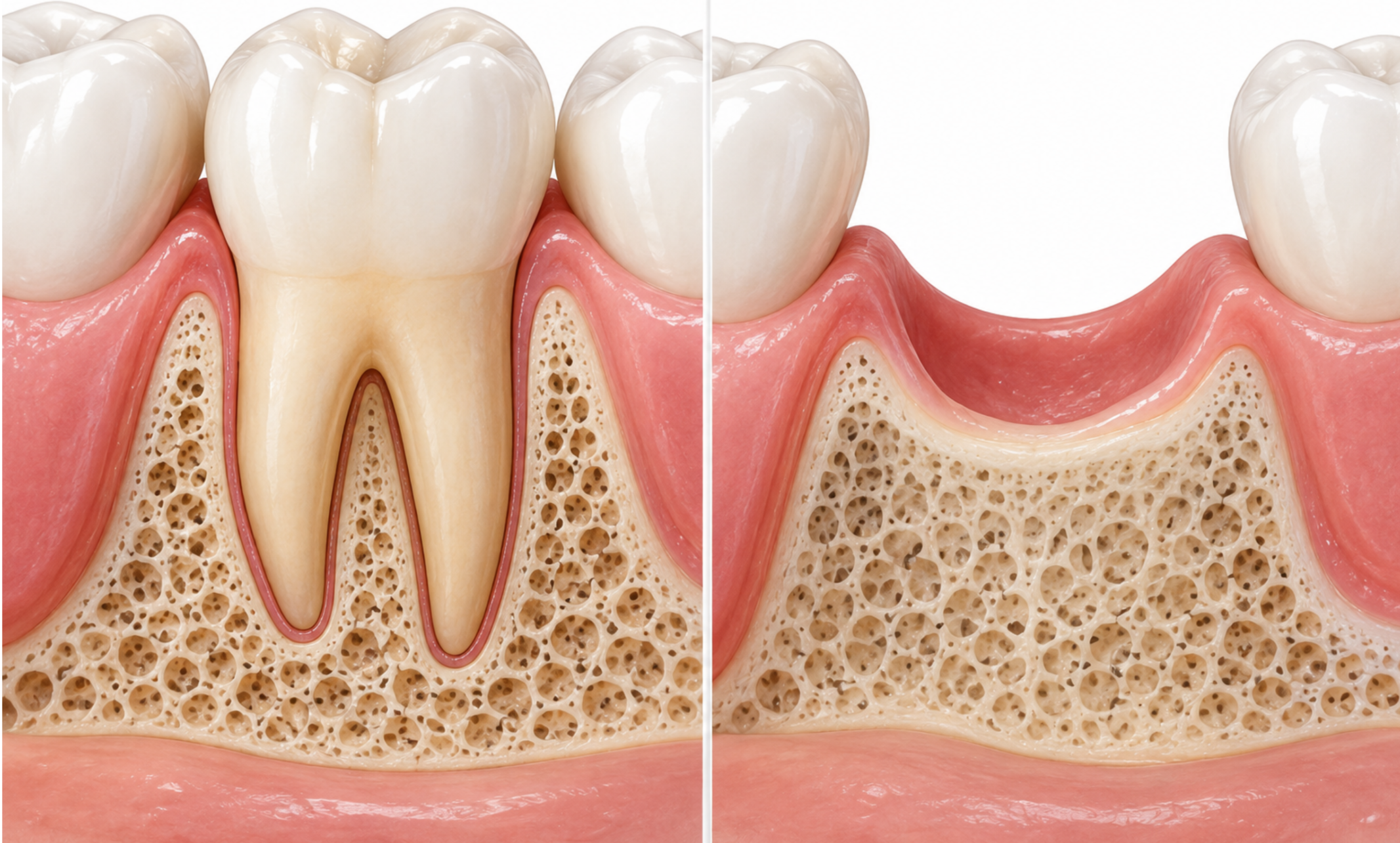
After an extraction, the socket heals and the bone that supported the root naturally remodels. Because it no longer receives the same forces, the ridge may become narrower or shorter. Much of the change occurs early after extraction, but the amount varies from person to person.
Reduced bone volume does not automatically make a future implant impossible. It may, however, influence implant positioning or make a dental bone graft necessary before or during surgery. That is why it can be useful to discuss your goals early, even if replacement is planned for later.
Neighbouring Teeth May Tip or Shift
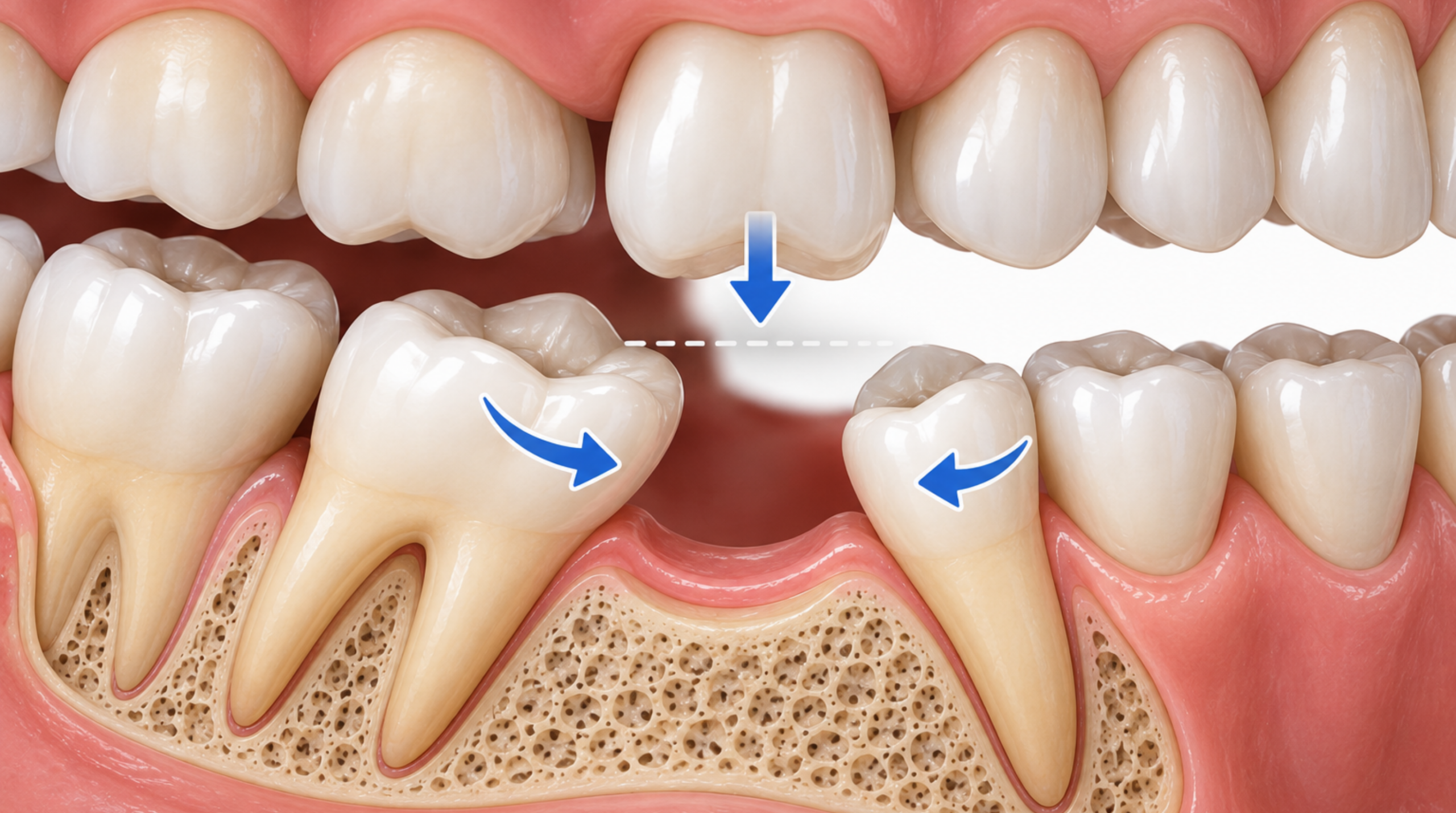
The teeth on either side of the gap may drift or tilt into it. The opposing tooth may also move farther out of its socket, a process called over-eruption, because it no longer meets a tooth on the other arch.
These movements do not happen to everyone or follow a fixed timeline. When substantial, they may reduce the available space, change tooth contacts and complicate later replacement. Orthodontic treatment or other preparatory steps may then be considered.
Chewing and Force Distribution May Change
Losing a molar or premolar can reduce chewing efficiency on that side. Some people compensate by eating mainly on the other side. The remaining teeth may then experience different forces, particularly when several teeth are missing.
One missing tooth does not automatically cause jaw pain or tooth wear. In some people, however, it may contribute to changes in the bite. An assessment is especially worthwhile if your bite feels different, you avoid certain foods or a neighbouring tooth becomes sensitive.
Cleaning May Become Less Predictable
An open space can trap food. If teeth move or tilt, new areas that are difficult to clean may develop. This does not mean decay or gum disease is inevitable, but adapted oral hygiene and regular follow-up become important.
Your Smile and Speech May Be Affected
A missing front tooth directly changes the appearance of the smile and may affect certain sounds. A back tooth is less visible, but it remains important for chewing and bite organization. When several teeth are lost, the functional and aesthetic changes may be more noticeable.
How Long Can You Leave a Missing Tooth?
There is no universal deadline. Bone changes begin as part of normal healing after an extraction, while tooth movement may be slow, minor or more pronounced depending on the situation. Waiting a few weeks for tissue healing is not the same as leaving the space unmonitored for years.
If a tooth has just been removed or is scheduled for extraction, ask when replacement planning should begin. In some cases, socket preservation, immediate implant placement or a temporary replacement may be discussed. These approaches are not suitable for everyone and depend on factors such as infection, available bone, soft tissues and the restorative plan.
If the tooth has been missing for a long time, an assessment can still be worthwhile. Treatment options may remain possible even when bone loss or tooth movement has occurred.
Does Every Missing Tooth Need to Be Replaced?
Not necessarily. Extracted wisdom teeth usually do not need replacement. In carefully selected situations, a back-tooth space may also be monitored when function, bite and the stability of the remaining teeth are satisfactory.
The decision depends on the tooth involved, the number of missing teeth, your chewing ability, the condition of neighbouring teeth, gum health, bone volume, overall health and your preferences. The useful question is not whether an implant is automatically required, but what the likely consequences of each option are, including no immediate treatment.
What Are the Options for Replacing a Missing Tooth?
The main options are a dental implant, a fixed bridge and a removable partial denture. In some cases, structured monitoring may also be reasonable. The decision is made with your restorative dentist and, when implant surgery is being considered, an oral and maxillofacial surgeon.
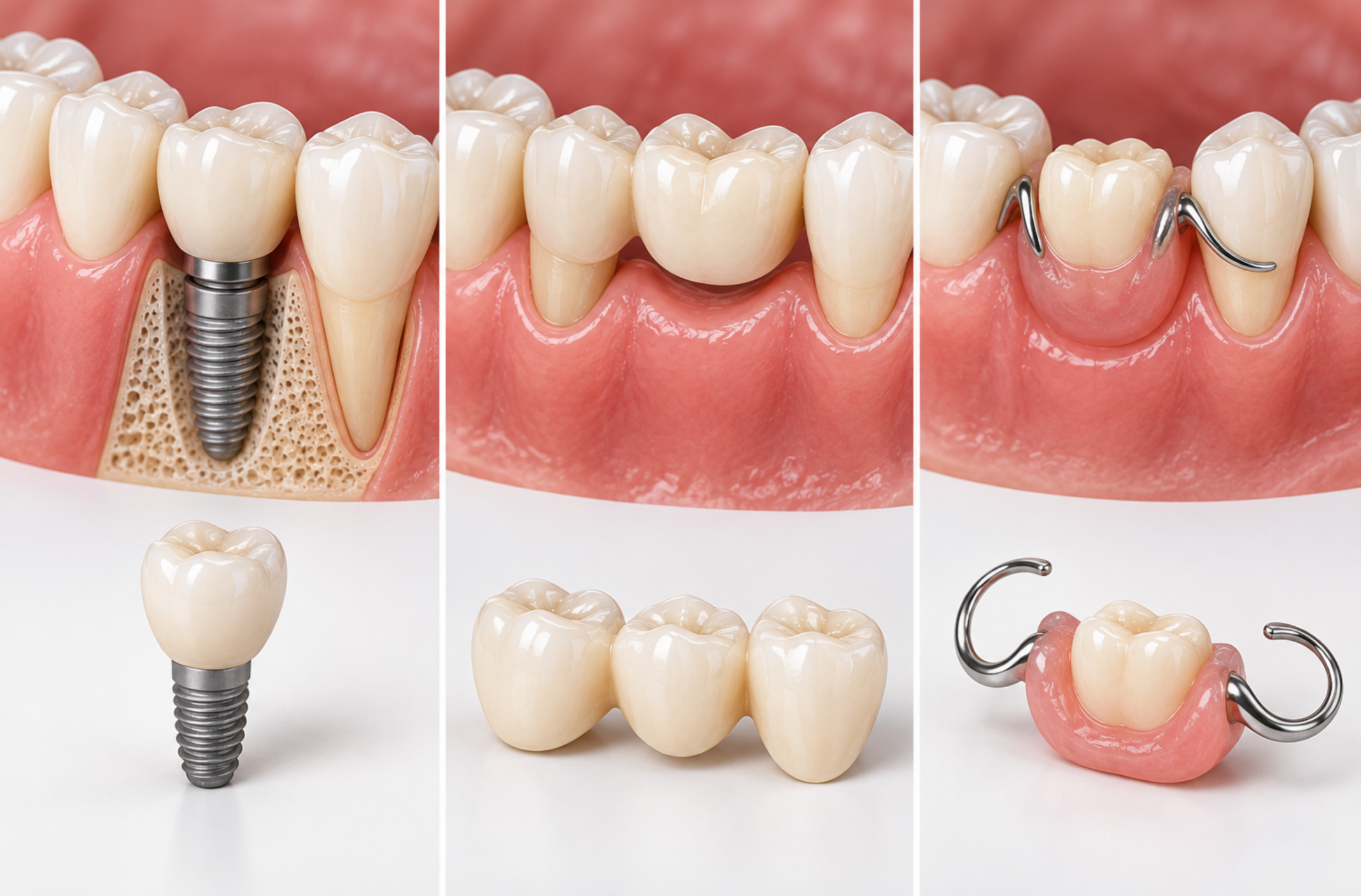
| Option | How it replaces the tooth | Effect on neighbouring teeth | Bone considerations | Care and treatment |
| Dental implant | An artificial root supports a crown | Usually does not require reshaping adjacent teeth | Transfers forces to local bone; available bone must be assessed | Surgery and healing period; daily cleaning and follow-up |
| Fixed bridge | An artificial tooth is supported by neighbouring teeth | Usually requires preparation of the supporting teeth | Does not replace the root in the gap | Fixed solution; cleaning beneath the bridge is required |
| Removable partial denture | A removable appliance replaces one or more teeth | Rests on teeth and tissues according to its design | Does not replace the root in the gap | Must be removed and cleaned; may need adjustment over time |
| Monitoring | The space remains without a prosthetic tooth | Tooth position and bite should be reviewed | Bone remodelling may continue | No initial treatment, but examinations and reassessment are needed |
Dental implant treatment can provide a fixed replacement without using adjacent teeth as supports. It does require an assessment of general health, gum health, bone and restorative space. No single option is ideal for everyone.
How Do You Know If Replacement Has Become More Complex?
Consider arranging an assessment if you notice:
- neighbouring teeth appear to be leaning toward the gap;
- the opposing tooth looks longer;
- food frequently becomes trapped;
- your bite or chewing pattern has changed;
- the gum or ridge seems to have become thinner;
- your partial denture has become unstable;
- you now want to replace a tooth that has been missing for a long time.
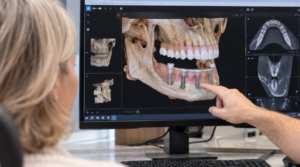
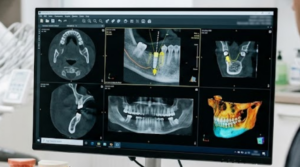
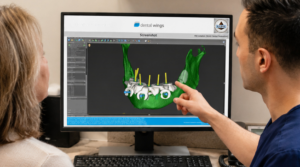
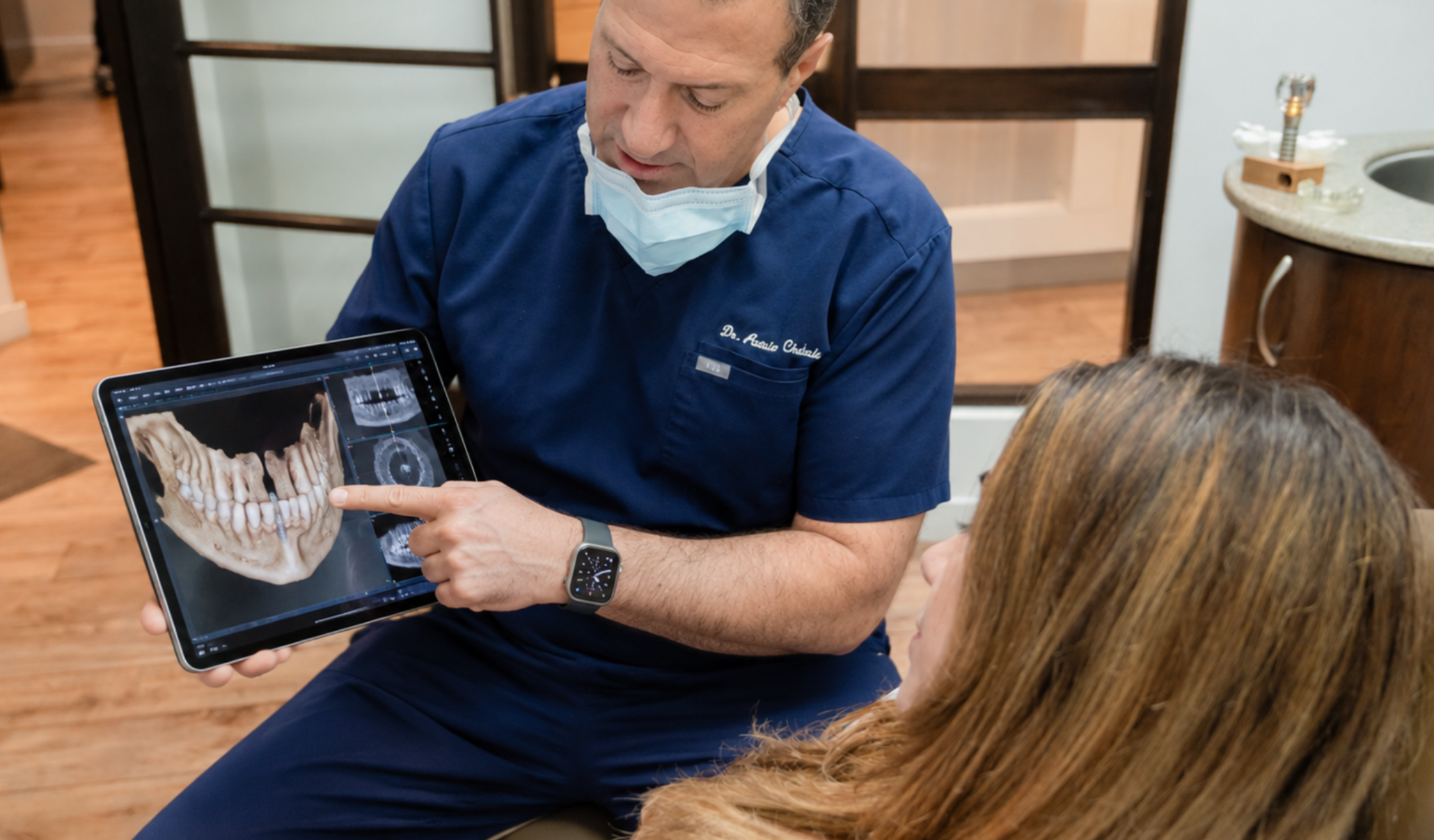
These signs cannot establish a diagnosis on their own. The examination may include an assessment of the teeth and gums, X-rays and, for some implant plans, three-dimensional imaging. The goal is to determine the available space, bone volume, nearby anatomy and appropriate sequence of care.
What Should You Do If a Tooth Has Just Fallen Out or Been Knocked Out?
A permanent tooth knocked out by trauma is a dental emergency. Hold it by the crown, avoid touching the root and contact a dentist or emergency dental service immediately. Prompt care may sometimes allow the tooth to be saved. Do not try to reinsert a baby tooth.
Severe pain, increasing swelling, fever, uncontrolled bleeding or difficulty breathing or swallowing also requires urgent assessment. Educational information cannot replace care tailored to your situation.
Frequently Asked Questions About Missing Teeth
Does a Missing Tooth Always Need to Be Replaced?
No. Wisdom teeth usually do not require replacement, and some spaces may be monitored. The decision depends on function, bite, neighbouring teeth, bone and your needs.
Is It Serious to Leave a Missing Molar?
It is not necessarily an emergency, but a missing molar may affect chewing, available space and the bite. An assessment helps estimate the risks in your mouth.
Will a Missing Tooth Always Make the Other Teeth Move?
No. Movement is possible, but its speed and extent vary. Periodic examinations can show whether the space remains stable.
Does Bone Loss Start Immediately After an Extraction?
Bone remodelling begins as the socket heals. It is generally more active early on and then continues more slowly. The amount of change varies by site and person.
Can You Get an Implant Years After Losing a Tooth?
Often, yes. The space, bone and tooth positions need to be assessed. Bone grafting or orthodontic preparation may sometimes be recommended.
Does an Implant Prevent All Bone Loss?
No. An implant transfers forces to local bone and may help maintain it, but it cannot guarantee that no remodelling or bone loss will occur. Hygiene and follow-up remain essential.
Does a Dental Bridge Preserve Bone Under the Missing Tooth?
A bridge restores appearance and function, but it does not replace the root in the bone. The ridge may therefore continue to remodel beneath the artificial tooth.
Can You Wait Before Replacing an Extracted Tooth?
Yes. A healing period is often part of the plan. What matters is having follow-up and a timeline, especially if you are considering an implant or the space may change.
Can One Missing Tooth Change Your Face?
One missing tooth rarely causes an obvious facial change. More extensive tooth loss, together with reduced dental and bone support, is more likely to influence facial contours.
Who Should You See About Replacing a Missing Tooth?
Your dentist can assess the space and restorative options. If an implant or graft is being considered, an oral surgery consultation can support planning with your dentist.
Have a Missing Tooth Assessed in Montreal
A missing tooth does not have the same consequences for everyone, but time can change the bone, available space and bite. An early assessment helps you understand your options without assuming which treatment you will need.
At Seaforth Oral Surgery in Montreal, a consultation for dental implants in Montreal can assess your oral health, medical history and jaw anatomy, then coordinate the surgical portion with your dentist when appropriate.
Book an appointment to discuss options suited to your situation.
What Happens If a Missing Tooth Is Not Replaced?
A missing tooth leaves more than a visible gap. Over time, the jawbone in that area may lose volume, neighbouring teeth may tip toward the space, and the opposing tooth may move because it no longer has contact. Chewing, bite alignment and oral hygiene may also change. The effects vary with the tooth involved, your oral health and how long the space has been present.
Having the space assessed does not commit you to immediate treatment. It helps you understand what is happening, determine whether the area is stable and compare options while treatment may still be relatively straightforward.
Why Can One Missing Tooth Affect More Than the Gap?
Teeth work together. They contact their neighbours, meet the teeth in the opposite arch and transfer forces to the bone during chewing. When a permanent tooth is lost, this balance can gradually change.
A long-standing gap may cause no symptoms. However, the absence of pain does not tell you whether the bone, available space or bite has changed. A clinical examination and, when appropriate, X-rays can show what is actually happening.
What Changes Can Happen After Tooth Loss?
The Jawbone Remodels
After an extraction, the socket heals and the bone that supported the root naturally remodels. Because it no longer receives the same forces, the ridge may become narrower or shorter. Much of the change occurs early after extraction, but the amount varies from person to person.
Reduced bone volume does not automatically make a future implant impossible. It may, however, influence implant positioning or make a dental bone graft necessary before or during surgery. That is why it can be useful to discuss your goals early, even if replacement is planned for later.
Neighbouring Teeth May Tip or Shift
The teeth on either side of the gap may drift or tilt into it. The opposing tooth may also move farther out of its socket, a process called over-eruption, because it no longer meets a tooth on the other arch.
These movements do not happen to everyone or follow a fixed timeline. When substantial, they may reduce the available space, change tooth contacts and complicate later replacement. Orthodontic treatment or other preparatory steps may then be considered.
Chewing and Force Distribution May Change
Losing a molar or premolar can reduce chewing efficiency on that side. Some people compensate by eating mainly on the other side. The remaining teeth may then experience different forces, particularly when several teeth are missing.
One missing tooth does not automatically cause jaw pain or tooth wear. In some people, however, it may contribute to changes in the bite. An assessment is especially worthwhile if your bite feels different, you avoid certain foods or a neighbouring tooth becomes sensitive.
Cleaning May Become Less Predictable
An open space can trap food. If teeth move or tilt, new areas that are difficult to clean may develop. This does not mean decay or gum disease is inevitable, but adapted oral hygiene and regular follow-up become important.
Your Smile and Speech May Be Affected
A missing front tooth directly changes the appearance of the smile and may affect certain sounds. A back tooth is less visible, but it remains important for chewing and bite organization. When several teeth are lost, the functional and aesthetic changes may be more noticeable.
How Long Can You Leave a Missing Tooth?
There is no universal deadline. Bone changes begin as part of normal healing after an extraction, while tooth movement may be slow, minor or more pronounced depending on the situation. Waiting a few weeks for tissue healing is not the same as leaving the space unmonitored for years.
If a tooth has just been removed or is scheduled for extraction, ask when replacement planning should begin. In some cases, socket preservation, immediate implant placement or a temporary replacement may be discussed. These approaches are not suitable for everyone and depend on factors such as infection, available bone, soft tissues and the restorative plan.
If the tooth has been missing for a long time, an assessment can still be worthwhile. Treatment options may remain possible even when bone loss or tooth movement has occurred.
Does Every Missing Tooth Need to Be Replaced?
Not necessarily. Extracted wisdom teeth usually do not need replacement. In carefully selected situations, a back-tooth space may also be monitored when function, bite and the stability of the remaining teeth are satisfactory.
The decision depends on the tooth involved, the number of missing teeth, your chewing ability, the condition of neighbouring teeth, gum health, bone volume, overall health and your preferences. The useful question is not whether an implant is automatically required, but what the likely consequences of each option are, including no immediate treatment.
What Are the Options for Replacing a Missing Tooth?
The main options are a dental implant, a fixed bridge and a removable partial denture. In some cases, structured monitoring may also be reasonable. The decision is made with your restorative dentist and, when implant surgery is being considered, an oral and maxillofacial surgeon.
| Option | How it replaces the tooth | Effect on neighbouring teeth | Bone considerations | Care and treatment |
| Dental implant | An artificial root supports a crown | Usually does not require reshaping adjacent teeth | Transfers forces to local bone; available bone must be assessed | Surgery and healing period; daily cleaning and follow-up |
| Fixed bridge | An artificial tooth is supported by neighbouring teeth | Usually requires preparation of the supporting teeth | Does not replace the root in the gap | Fixed solution; cleaning beneath the bridge is required |
| Removable partial denture | A removable appliance replaces one or more teeth | Rests on teeth and tissues according to its design | Does not replace the root in the gap | Must be removed and cleaned; may need adjustment over time |
| Monitoring | The space remains without a prosthetic tooth | Tooth position and bite should be reviewed | Bone remodelling may continue | No initial treatment, but examinations and reassessment are needed |
Dental implant treatment can provide a fixed replacement without using adjacent teeth as supports. It does require an assessment of general health, gum health, bone and restorative space. No single option is ideal for everyone.
How Do You Know If Replacement Has Become More Complex?
Consider arranging an assessment if you notice:
- neighbouring teeth appear to be leaning toward the gap;
- the opposing tooth looks longer;
- food frequently becomes trapped;
- your bite or chewing pattern has changed;
- the gum or ridge seems to have become thinner;
- your partial denture has become unstable;
- you now want to replace a tooth that has been missing for a long time.
These signs cannot establish a diagnosis on their own. The examination may include an assessment of the teeth and gums, X-rays and, for some implant plans, three-dimensional imaging. The goal is to determine the available space, bone volume, nearby anatomy and appropriate sequence of care.
What Should You Do If a Tooth Has Just Fallen Out or Been Knocked Out?
A permanent tooth knocked out by trauma is a dental emergency. Hold it by the crown, avoid touching the root and contact a dentist or emergency dental service immediately. Prompt care may sometimes allow the tooth to be saved. Do not try to reinsert a baby tooth.
Severe pain, increasing swelling, fever, uncontrolled bleeding or difficulty breathing or swallowing also requires urgent assessment. Educational information cannot replace care tailored to your situation.
Frequently Asked Questions About Missing Teeth
Does a Missing Tooth Always Need to Be Replaced?
No. Wisdom teeth usually do not require replacement, and some spaces may be monitored. The decision depends on function, bite, neighbouring teeth, bone and your needs.
Is It Serious to Leave a Missing Molar?
It is not necessarily an emergency, but a missing molar may affect chewing, available space and the bite. An assessment helps estimate the risks in your mouth.
Will a Missing Tooth Always Make the Other Teeth Move?
No. Movement is possible, but its speed and extent vary. Periodic examinations can show whether the space remains stable.
Does Bone Loss Start Immediately After an Extraction?
Bone remodelling begins as the socket heals. It is generally more active early on and then continues more slowly. The amount of change varies by site and person.
Can You Get an Implant Years After Losing a Tooth?
Often, yes. The space, bone and tooth positions need to be assessed. Bone grafting or orthodontic preparation may sometimes be recommended.
Does an Implant Prevent All Bone Loss?
No. An implant transfers forces to local bone and may help maintain it, but it cannot guarantee that no remodelling or bone loss will occur. Hygiene and follow-up remain essential.
Does a Dental Bridge Preserve Bone Under the Missing Tooth?
A bridge restores appearance and function, but it does not replace the root in the bone. The ridge may therefore continue to remodel beneath the artificial tooth.
Can You Wait Before Replacing an Extracted Tooth?
Yes. A healing period is often part of the plan. What matters is having follow-up and a timeline, especially if you are considering an implant or the space may change.
Can One Missing Tooth Change Your Face?
One missing tooth rarely causes an obvious facial change. More extensive tooth loss, together with reduced dental and bone support, is more likely to influence facial contours.
Who Should You See About Replacing a Missing Tooth?
Your dentist can assess the space and restorative options. If an implant or graft is being considered, an oral surgery consultation can support planning with your dentist.
Have a Missing Tooth Assessed in Montreal
A missing tooth does not have the same consequences for everyone, but time can change the bone, available space and bite. An early assessment helps you understand your options without assuming which treatment you will need.
At Seaforth Oral Surgery in Montreal, a consultation for dental implants in Montreal can assess your oral health, medical history and jaw anatomy, then coordinate the surgical portion with your dentist when appropriate.
Book an appointment to discuss options suited to your situation.