When you need to replace a missing tooth, treatment durability is often one of your main concerns. Does a dental implant really last longer than a conventional dental bridge? And which option is the better investment long-term?
Both dental implants and bridges replace missing teeth, but they differ significantly in lifespan, maintenance, and impact on long-term oral health.
The best choice depends on several factors, including your oral health, bone quality, the number of teeth that need to be replaced, and your long-term goals.
At a Glance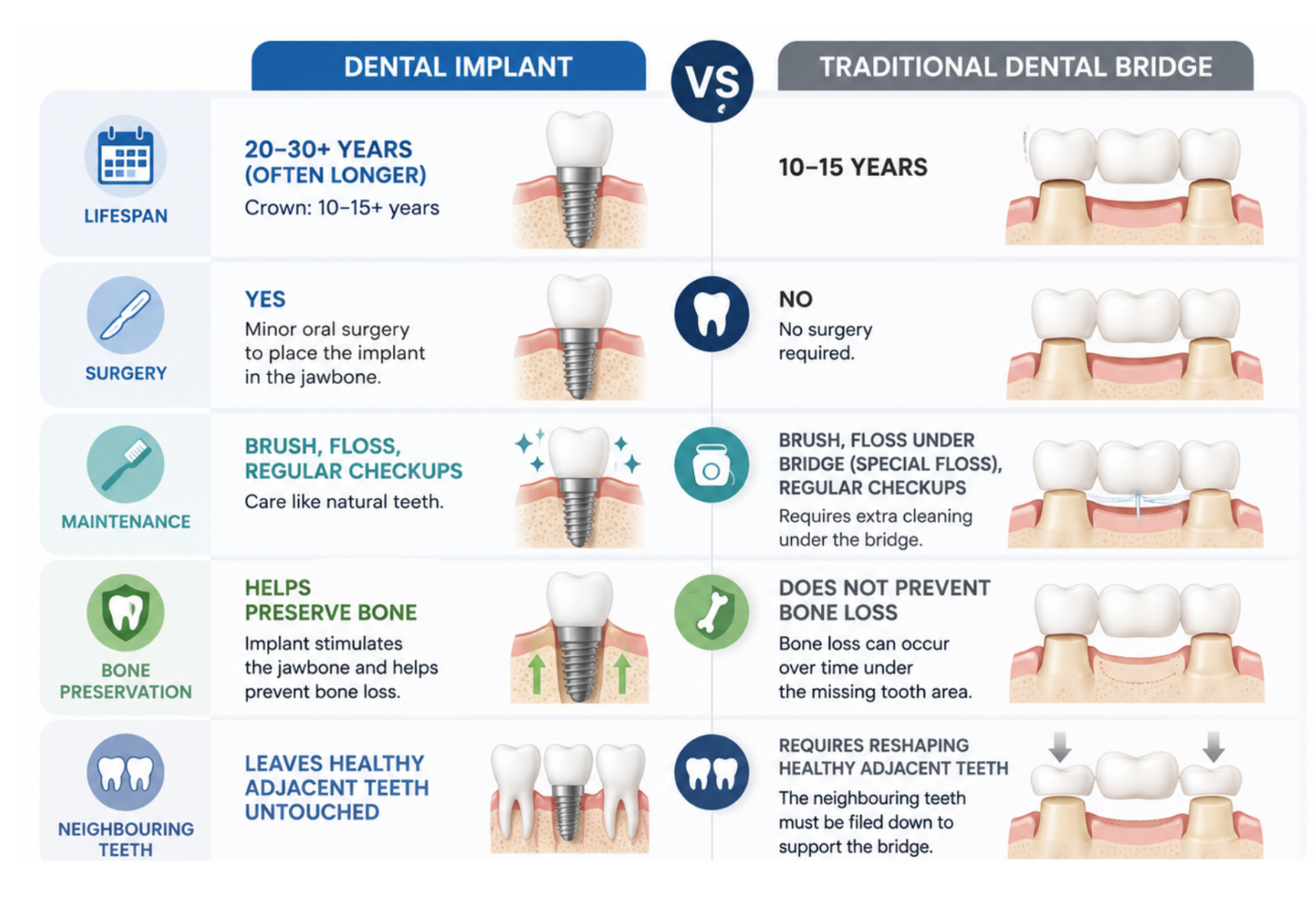
With proper care, dental implants typically outlast dental bridges. By replacing the root of the missing tooth, an implant functions independently while preserving the underlying jawbone.
A traditional dental bridge remains a reliable, non-surgical option—especially if the adjacent teeth already need crowns or fillings. Because placing a bridge requires trimming down those neighboring teeth to support it, you wouldn’t want to sacrifice otherwise healthy enamel if you don’t have to.
No option can be guaranteed for life. Treatment longevity depends on factors such as:
- your oral hygiene;
- the health of your teeth and gums;
- the quality and volume of your bone;
- your lifestyle habits;
- your dental cleaning visits;
- the forces placed on the restoration.
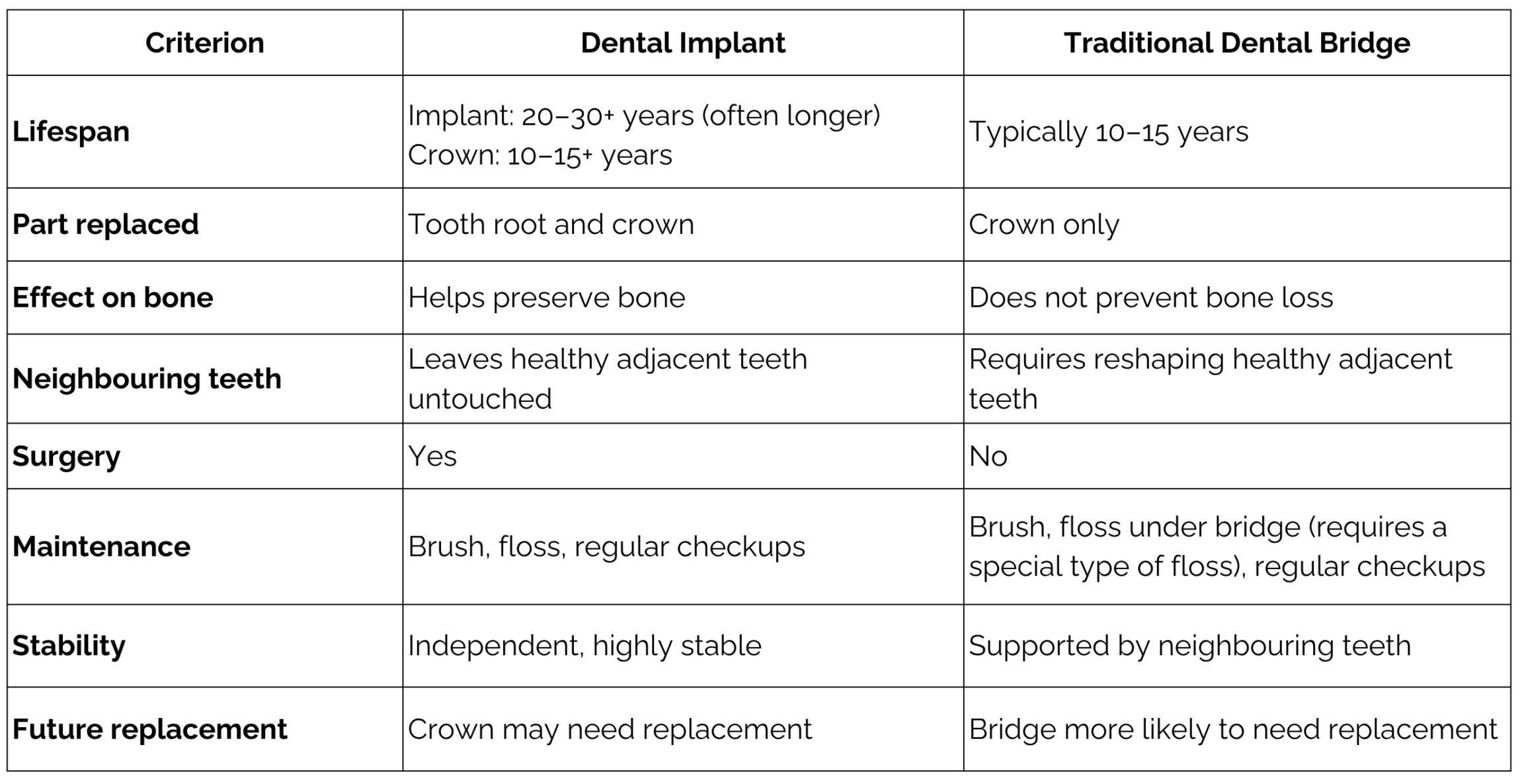
Dental Implant or Dental Bridge: Quick Comparison
How Does a Dental Implant Work?
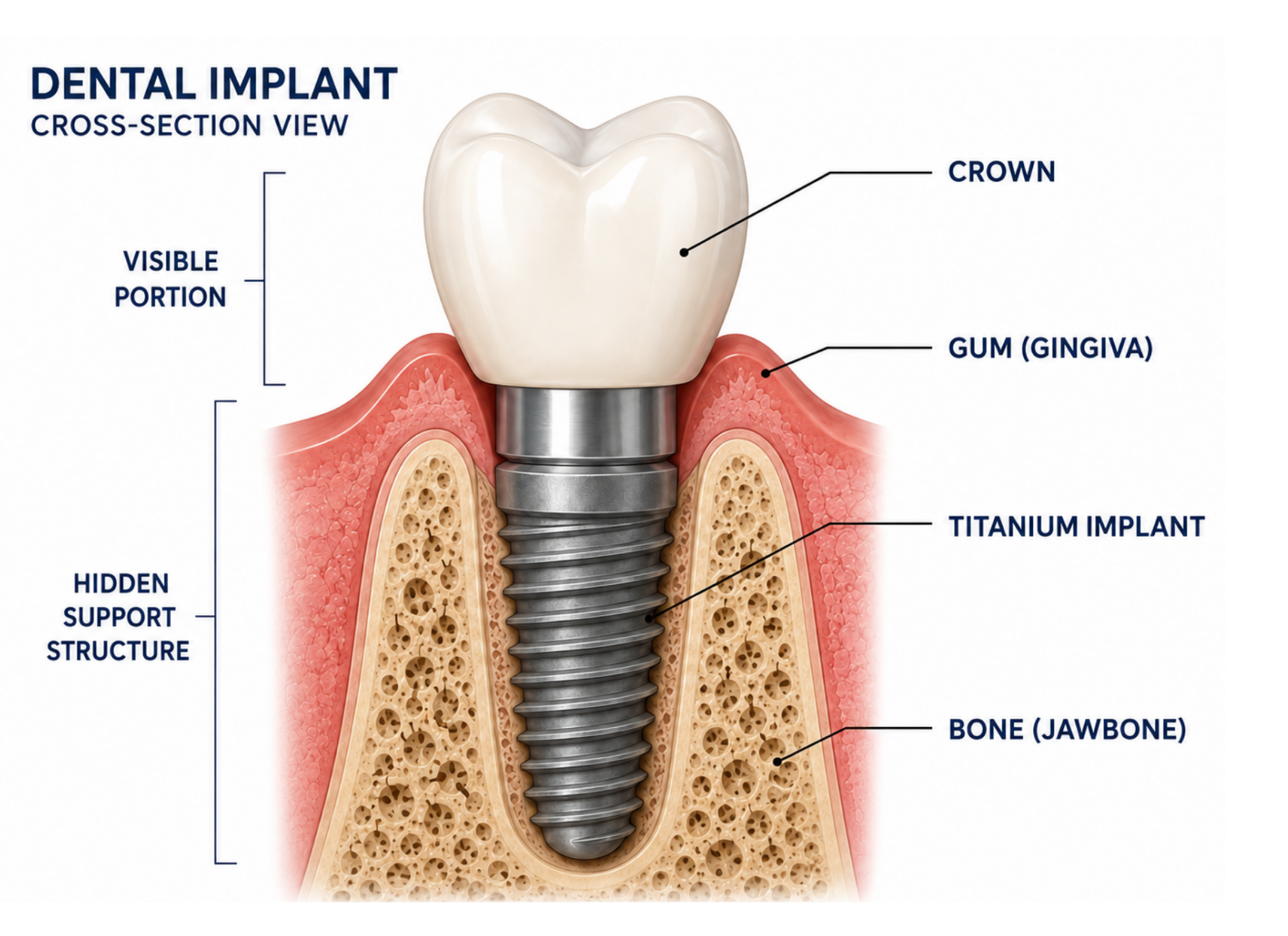
A dental implant is an artificial tooth root placed in the jawbone to support a crown, bridge, or full-arch restoration.
The implant is usually made of titanium. After placement, it gradually integrates with the jaw bone through a process called osseointegration. A crown is then attached to the implant to replace the visible portion of the tooth.
This independent restoration generally helps to:
- restore chewing function;
- preserve the adjacent teeth;
- fill the space left by the missing tooth;
- restore a natural appearance;
- transfer chewing forces to the bone.
How Does a Dental Bridge Work?
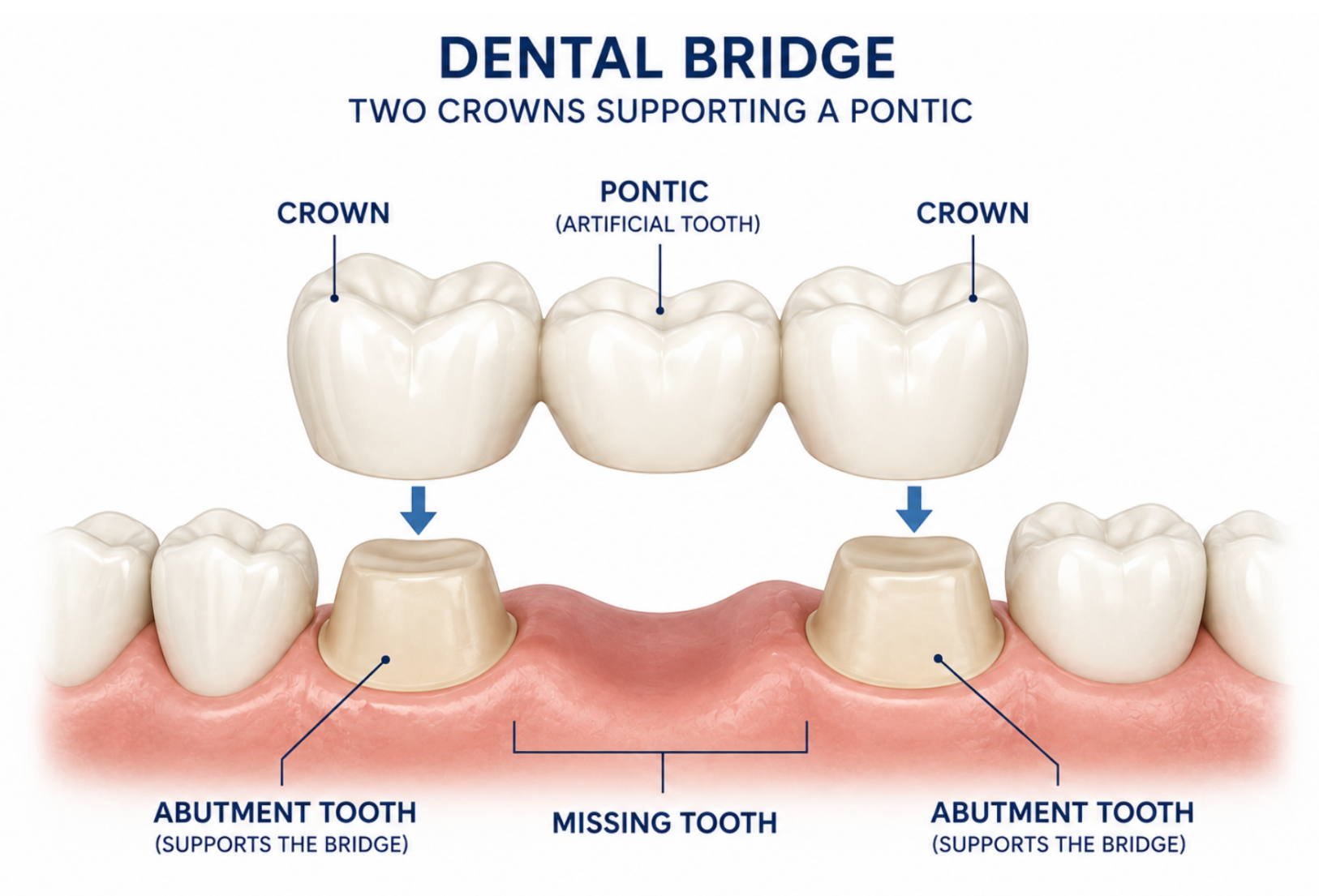
A traditional dental bridge replaces one or more missing teeth by relying on the neighbouring teeth for support.
The bridge usually includes an artificial tooth secured between two crowns. These crowns are placed on the teeth located on either side of the space, known as abutment teeth.
To receive the bridge, the abutment teeth usually need to be prepared. Part of their structure is removed so the crowns can fit properly.
Other types of bridges are also available, including resin-bonded bridges and implant-supported bridges. The choice depends on the location of the missing teeth, the health of the neighbouring teeth, and the treatment plan.
Which Option Lasts Longer?
In general, a well-maintained dental implant lasts longer than a traditional dental bridge.
The implant integrates with the bone and does not depend on natural teeth to remain in place. In many cases, it can remain functional for several decades. However, the crown or prosthesis attached to the implant may wear down and require repair or replacement before the implant itself.
A dental bridge can also provide many years of service. However, its lifespan depends on several factors at the same time:
- the condition of the restoration;
- the health of the abutment teeth;
- the absence of decay beneath the crowns;
- gum health;
- the quality of cleaning beneath the bridge.
It is therefore important to distinguish between implant survival, the lifespan of the implant crown, and the lifespan of a complete bridge. Even when an implant remains firmly integrated, its prosthetic components may require maintenance or replacement.
Why Do Dental Implants Often Last Longer?
Implants often last longer because they are anchored in the bone and do not depend on the health of neighbouring teeth.
Their design offers several advantages:
- they do not require healthy teeth to be reshaped;
- they distribute chewing forces into the bone;
- they cannot develop cavities;
- they help maintain the bone around the treated site;
- they provide a stable foundation for the crown.
This does not mean an implant is free from potential problems. The tissues around it can become inflamed or infected, and certain components may wear down or fracture. Excellent oral hygiene and professional follow-up remain essential.
Why Might a Dental Bridge Need to Be Replaced?
The lifespan of a bridge depends as much on the restoration itself as on the health of the teeth supporting it.
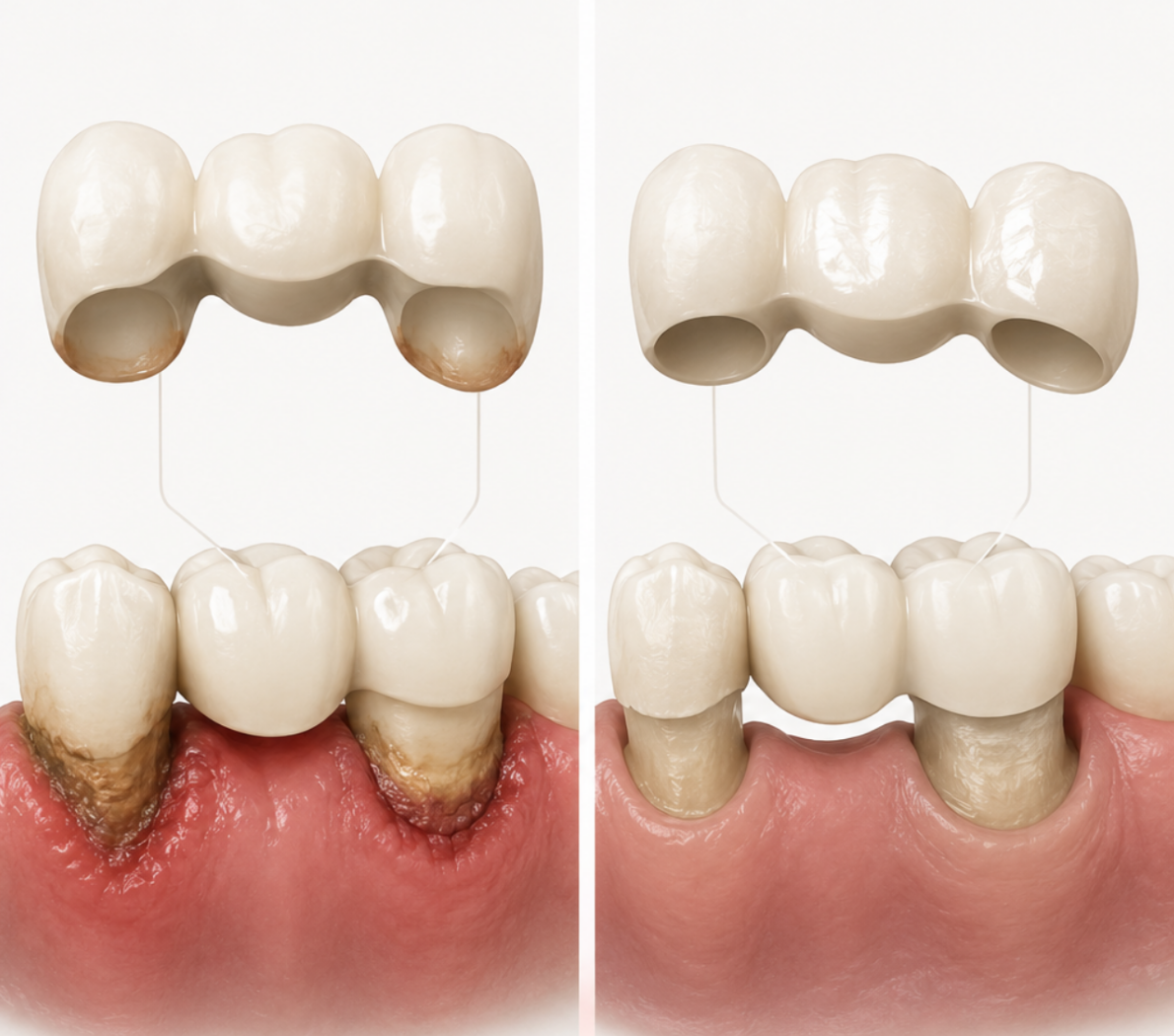
A bridge may need to be repaired or replaced because of:
- decay beneath a crown;
- fracture of an abutment tooth;
- gum disease;
- deterioration of the cement;
- wear or fracture of the bridge;
- changes in the bite;
- ongoing difficulty cleaning beneath the restoration.
When a problem affects an abutment tooth, it can compromise the entire bridge. This is one of the main differences compared with a single-tooth implant, which functions independently of the neighbouring teeth.
What Factors Influence the Lifespan of an Implant or Bridge?
Daily maintenance, overall health, and the forces placed on the restoration directly affect its longevity.
Oral Hygiene
Regular brushing and daily interdental cleaning help protect the gums and supporting tissues.
Around an implant, plaque buildup can cause inflammation. If it progresses, bone loss may occur around the implant.
Beneath a bridge, plaque and food debris may contribute to:
- decay in the abutment teeth;
- gum inflammation;
- bad breath;
- premature deterioration of the restoration.
Your dental team may recommend specialized floss, an interdental brush, or another cleaning aid suited to your restoration.
Follow-Up Visits
Regular examinations allow your dental team to assess:
- the stability of the implant or bridge;
- gum health;
- the condition of the abutment teeth;
- the bone level around an implant;
- crown wear;
- signs of excessive loading.
X-rays may also be taken when indicated to monitor structures that are not visible to the naked eye.
Smoking
Smoking can interfere with healing and increase the risk of complications around implants. It is therefore an important factor to discuss before surgery.
It does not automatically mean that an implant is impossible. However, a personalized assessment is necessary to estimate the risks and determine the best approach.
Certain Medical Conditions
Poorly controlled diabetes, active periodontal disease, or a condition that affects bone healing may influence treatment.
Certain medications should also be reported to the surgeon, especially those that affect bone metabolism.
Bruxism
Grinding or clenching your teeth exercises significant force on crowns, bridges, and implants.
If you show signs of bruxism, a night guard may be recommended to reduce mechanical stress and protect the restoration.
Do Dental Implants Preserve Bone More Effectively?
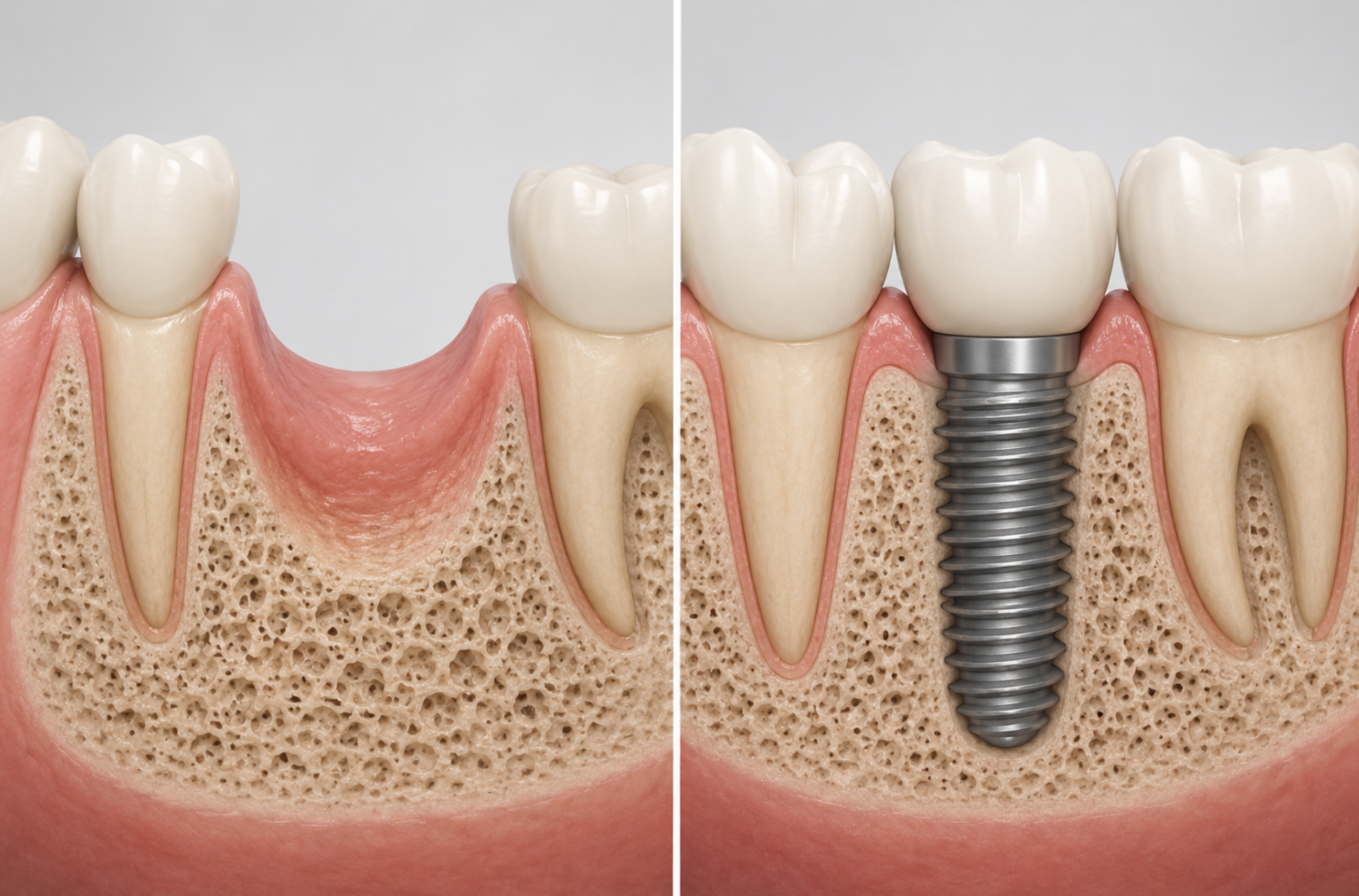
Yes. An implant helps preserve the jawbone around the site where it is placed, unlike a traditional bridge, which does not replace the root.
After a tooth is lost, the bone that once surrounded the root is no longer stimulated in the same way. Its volume may then gradually decrease.
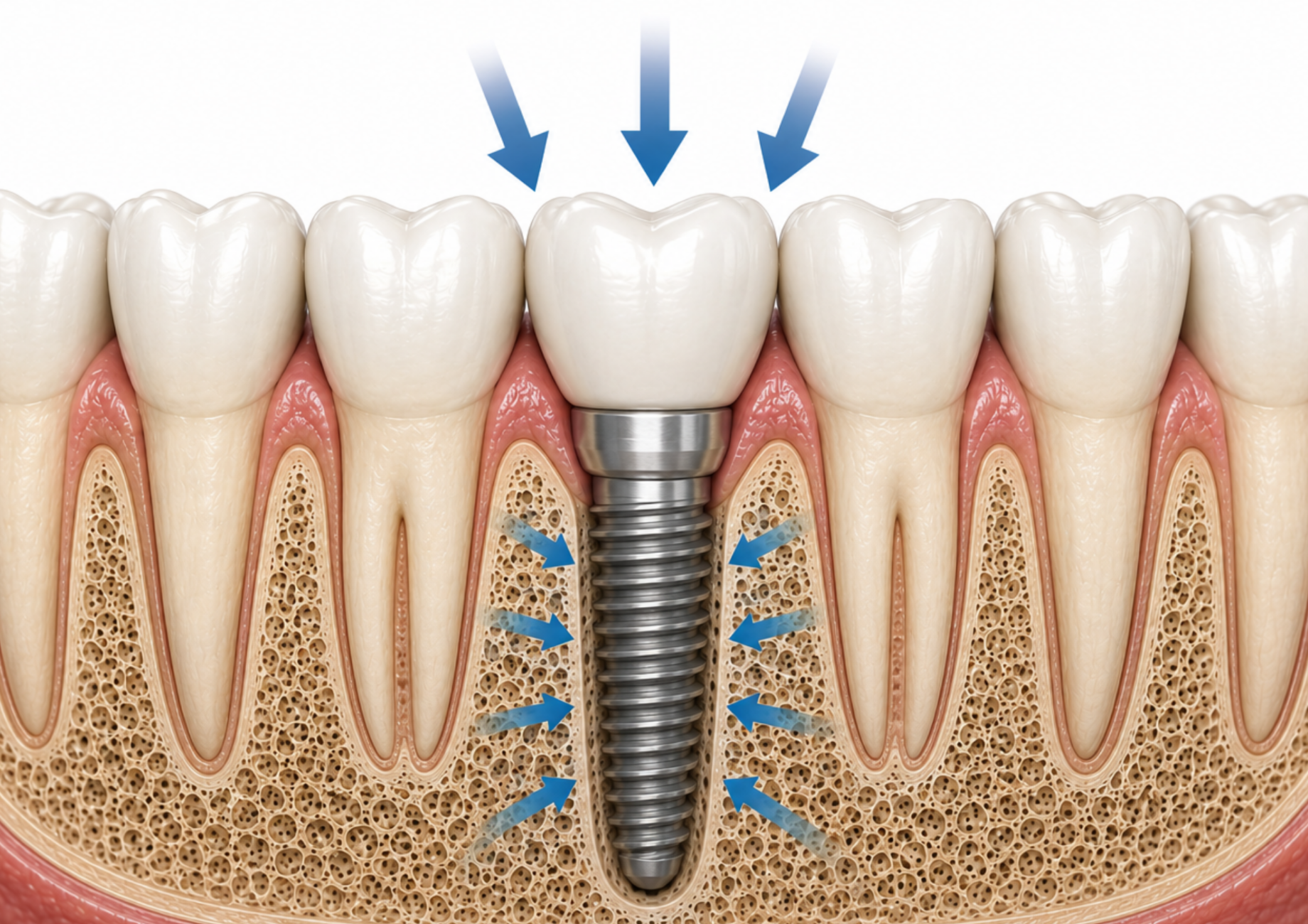
Because the implant integrates with the bone, it transfers some chewing forces to the treated area. This stimulation helps maintain the bone around the implant.
A traditional bridge fills the visible space but does not replace the root. It therefore does not directly stimulate the bone beneath the artificial tooth.
This distinction should still be understood in context: an implant does not prevent all bone loss in the jaw. Its effect is mainly concentrated around the area where it is placed.
Do Dental Bridges Have Advantages?
Yes. A dental bridge can be an excellent option when it is better suited to your oral health, the condition of your existing teeth, or your personal preferences. In some situations, an implant-supported bridge may even be the best solution, particularly when several adjacent teeth need to be replaced while preserving the surrounding natural teeth.
A dental bridge may be recommended if:
- you prefer to avoid surgery;
- a medical condition limits the possibility of receiving a dental implant;
- the neighbouring teeth already require crowns; or
- several consecutive teeth need to be replaced, making an implant-supported bridge the most stable and long-lasting option.
When Is a Dental Implant Often Preferred?
An implant is often preferred to replace a single tooth when the neighbouring teeth are healthy and the bone can support the implant.
This solution may be especially appealing if you are looking for:
- a fixed, independent restoration;
- better preservation of the adjacent teeth;
- a long-term solution;
- a replacement that closely replicates the structure of a natural tooth;
- an option that helps preserve bone.
An assessment with an oral and maxillofacial surgeon makes it possible to examine your bone quality, gum health, bite, and nearby anatomical structures.
At Seaforth Oral Surgery in Montreal, this personalized assessment helps determine whether an implant is appropriate or whether another solution would better meet your needs.
Can Several Teeth Be Replaced With Implants?
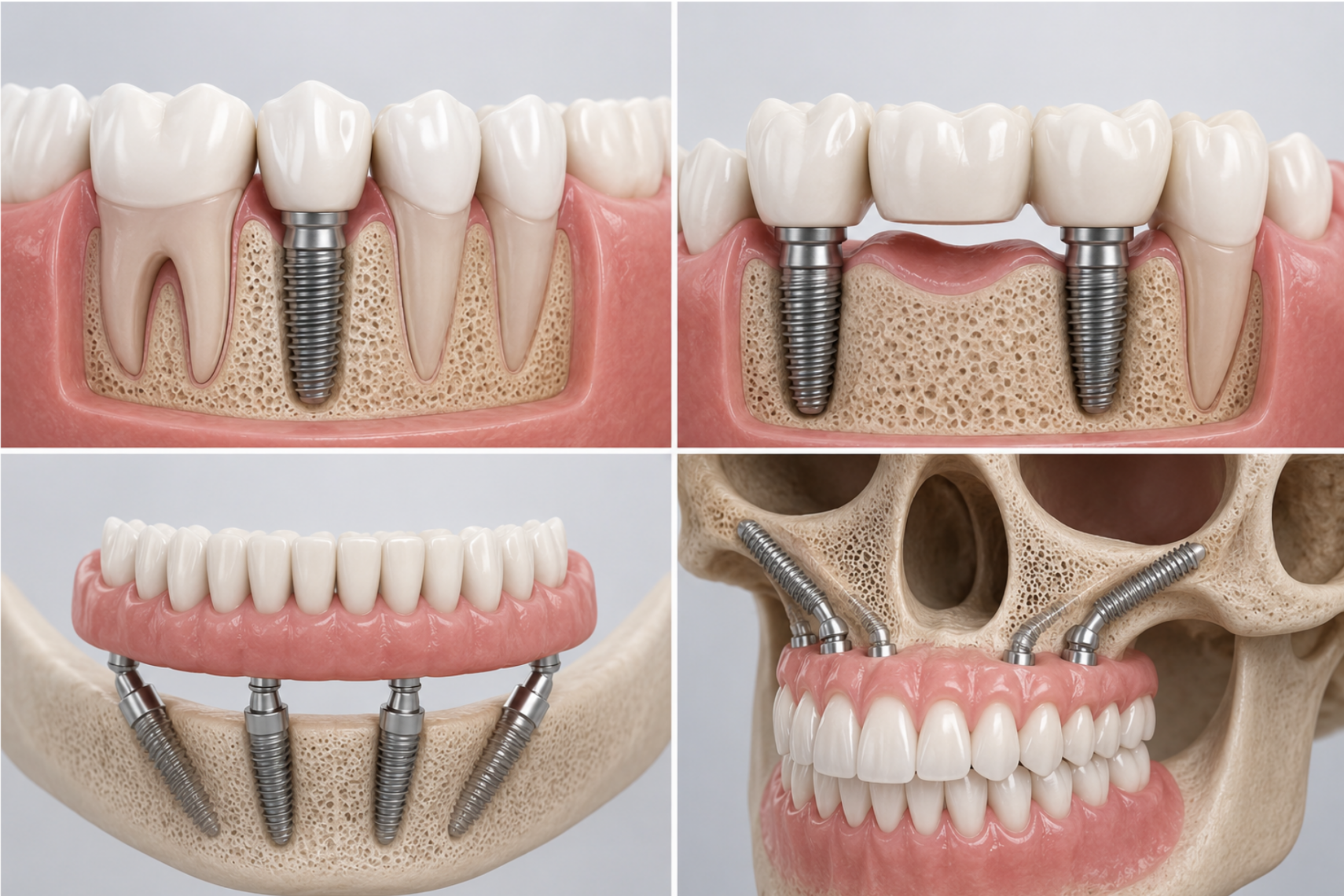
Yes. Implants can support a single crown, a bridge replacing several teeth, or a full-arch restoration.
Depending on the number of missing teeth and the amount of available bone, the options may include:
- several individual implants;
- an implant-supported bridge;
- a full-arch All-on-X restoration;
- zygomatic implants in certain cases of significant bone loss.
Implant-Supported Bridge
An implant-supported bridge replaces several consecutive teeth without requiring an implant beneath every artificial tooth. Strategically placed implants support the entire restoration.
All-on-X Treatment
The All-on-X concept supports a fixed full arch using several implants distributed throughout the jaw. The number and position of the implants are determined according to your anatomy and treatment plan.
Zygomatic Implants
Zygomatic implants may be considered in complex cases involving significant bone loss in the upper jaw. They are anchored in the zygomatic bone, or cheekbone, and require specialized surgical expertise.
Which Treatment Offers the Best Long-Term Value?
The best investment is not necessarily the treatment with the lowest initial cost.
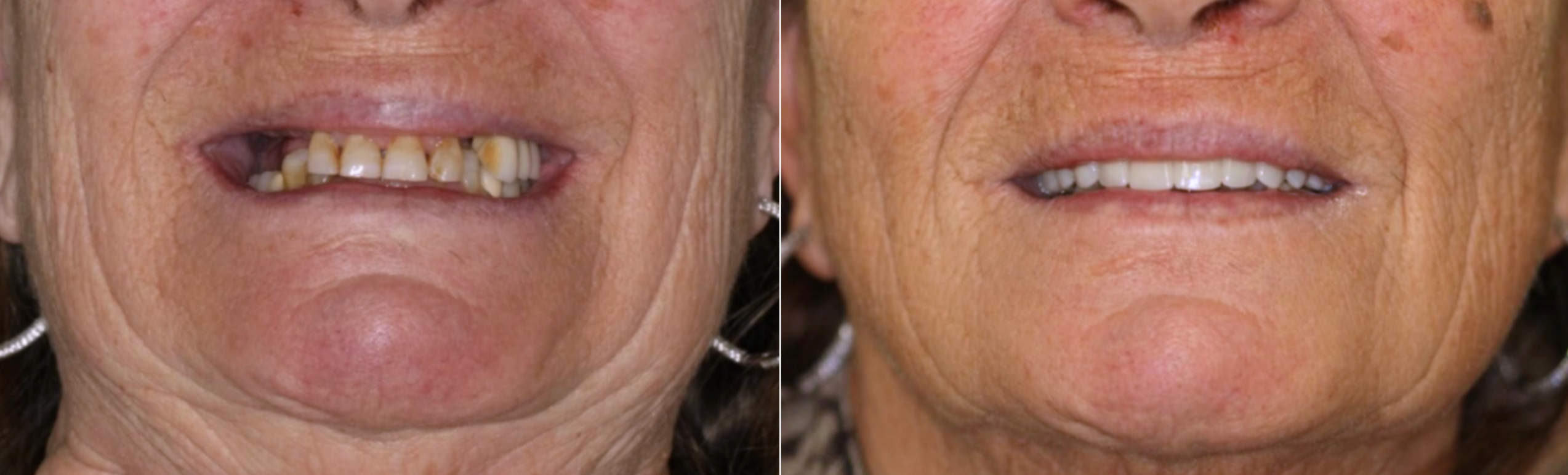
When comparing a dental implant and a bridge, it is helpful to consider:
- their potential lifespan;
- the maintenance required;
- the possibility of future repairs;
- the risk of replacing the restoration;
- the effects on neighbouring teeth;
- bone preservation;
- comfort and stability;
- chewing function;
- quality of life.
For many patients, an implant represents a worthwhile long-term investment because of its independence and potential longevity. For others, a bridge may offer a better balance between aesthetic needs, budget, and the treatment process.
FAQ – Frequently Asked Questions
Are Dental Implants Permanent?
Implants are designed to function over the very long term, but they cannot be guaranteed for life. Their longevity depends on tissue health, maintenance, lifestyle habits, and professional follow-up. The crown attached to the implant may also need to be replaced before the implant itself.
How Long Does a Dental Implant Last?
A well-integrated and well-maintained implant can remain functional for several decades in many cases. However, longevity varies from one person to another, and biological or mechanical complications remain possible.
How Long Does a Dental Bridge Last?
A bridge can last for many years. Its longevity depends in part on the health of the abutment teeth, hygiene beneath the restoration, and the forces placed on it during chewing.
Is an Implant Stronger Than a Bridge?
Yes. A dental implant is anchored directly into the jawbone, providing excellent stability and function that closely resembles a natural tooth. A dental bridge is also a durable solution, but it relies on the neighbouring teeth for support.
Can an Old Bridge Be Replaced With Implants?
Yes, in many cases. The bridge must first be removed or assessed, the abutment teeth examined, and the available bone volume measured. A bone graft may sometimes be recommended.
Can an Implant Be Placed Several Years After Tooth Loss?
Yes. Delayed implant placement is often possible, but the bone may have decreased since the tooth was lost. A radiographic assessment will determine whether there is enough bone or whether a graft is needed.
Are Dental Implants Painful?
The surgery is performed under sedation, so you should not feel pain during the procedure. Temporary tenderness, swelling, or discomfort may occur afterward and can be managed according to postoperative instructions.
Do Implants Require Special Maintenance?
Implants must be brushed and cleaned daily, just like natural teeth. They cannot develop cavities, but the gums and bone around them can be affected by inflammation or infection.
Can Dental Implants Fail?
Yes. An implant may fail to integrate properly or develop a complication later. Smoking, uncontrolled periodontal disease, poor oral hygiene, and excessive mechanical loading may increase the risks.
Who Can Receive a Dental Implant?
Many adults can be assessed for an implant, including older adults. Jaw growth must usually be complete, and oral and overall health must support proper healing.
Conclusion
As a general rule, a dental implant is the most durable solution for replacing a missing tooth. It provides excellent stability, usually preserves the neighbouring teeth, and helps maintain the jawbone around the treated area. However, a dental bridge remains an excellent option in certain situations, particularly when the adjacent teeth already require restoration, surgery is not recommended, or it is better suited to your preferences and clinical needs.
Beyond longevity, the best treatment depends on several factors, including your oral health, bone quality, the number of teeth that need to be replaced, and your long-term goals.
If you’re deciding between a dental implant and a dental bridge, the team at Seaforth Oral Surgery in Montreal is here to help. During a consultation, we will evaluate your oral health, assess your available bone volume, and discuss your treatment needs to recommend a personalized solution.
Contact our clinic today to schedule a dental implant consultation.
When you need to replace a missing tooth, treatment durability is often one of your main concerns. Does a dental implant really last longer than a conventional dental bridge? And which option is the better investment long-term?
Both dental implants and bridges replace missing teeth, but they differ significantly in lifespan, maintenance, and impact on long-term oral health.
The best choice depends on several factors, including your oral health, bone quality, the number of teeth that need to be replaced, and your long-term goals.
At a Glance
With proper care, dental implants typically outlast dental bridges. By replacing the root of the missing tooth, an implant functions independently while preserving the underlying jawbone.
A traditional dental bridge remains a reliable, non-surgical option—especially if the adjacent teeth already need crowns or fillings. Because placing a bridge requires trimming down those neighboring teeth to support it, you wouldn’t want to sacrifice otherwise healthy enamel if you don’t have to.
No option can be guaranteed for life. Treatment longevity depends on factors such as:
- your oral hygiene;
- the health of your teeth and gums;
- the quality and volume of your bone;
- your lifestyle habits;
- your dental cleaning visits;
- the forces placed on the restoration.
Dental Implant or Dental Bridge: Quick Comparison
How Does a Dental Implant Work?
A dental implant is an artificial tooth root placed in the jawbone to support a crown, bridge, or full-arch restoration.
The implant is usually made of titanium. After placement, it gradually integrates with the jaw bone through a process called osseointegration. A crown is then attached to the implant to replace the visible portion of the tooth.
This independent restoration generally helps to:
- restore chewing function;
- preserve the adjacent teeth;
- fill the space left by the missing tooth;
- restore a natural appearance;
- transfer chewing forces to the bone.
How Does a Dental Bridge Work?
A traditional dental bridge replaces one or more missing teeth by relying on the neighbouring teeth for support.
The bridge usually includes an artificial tooth secured between two crowns. These crowns are placed on the teeth located on either side of the space, known as abutment teeth.
To receive the bridge, the abutment teeth usually need to be prepared. Part of their structure is removed so the crowns can fit properly.
Other types of bridges are also available, including resin-bonded bridges and implant-supported bridges. The choice depends on the location of the missing teeth, the health of the neighbouring teeth, and the treatment plan.
Which Option Lasts Longer?
In general, a well-maintained dental implant lasts longer than a traditional dental bridge.
The implant integrates with the bone and does not depend on natural teeth to remain in place. In many cases, it can remain functional for several decades. However, the crown or prosthesis attached to the implant may wear down and require repair or replacement before the implant itself.
A dental bridge can also provide many years of service. However, its lifespan depends on several factors at the same time:
- the condition of the restoration;
- the health of the abutment teeth;
- the absence of decay beneath the crowns;
- gum health;
- the quality of cleaning beneath the bridge.
It is therefore important to distinguish between implant survival, the lifespan of the implant crown, and the lifespan of a complete bridge. Even when an implant remains firmly integrated, its prosthetic components may require maintenance or replacement.
Why Do Dental Implants Often Last Longer?
Implants often last longer because they are anchored in the bone and do not depend on the health of neighbouring teeth.
Their design offers several advantages:
- they do not require healthy teeth to be reshaped;
- they distribute chewing forces into the bone;
- they cannot develop cavities;
- they help maintain the bone around the treated site;
- they provide a stable foundation for the crown.
This does not mean an implant is free from potential problems. The tissues around it can become inflamed or infected, and certain components may wear down or fracture. Excellent oral hygiene and professional follow-up remain essential.
Why Might a Dental Bridge Need to Be Replaced?
The lifespan of a bridge depends as much on the restoration itself as on the health of the teeth supporting it.
A bridge may need to be repaired or replaced because of:
- decay beneath a crown;
- fracture of an abutment tooth;
- gum disease;
- deterioration of the cement;
- wear or fracture of the bridge;
- changes in the bite;
- ongoing difficulty cleaning beneath the restoration.
When a problem affects an abutment tooth, it can compromise the entire bridge. This is one of the main differences compared with a single-tooth implant, which functions independently of the neighbouring teeth.
What Factors Influence the Lifespan of an Implant or Bridge?
Daily maintenance, overall health, and the forces placed on the restoration directly affect its longevity.
Oral Hygiene
Regular brushing and daily interdental cleaning help protect the gums and supporting tissues.
Around an implant, plaque buildup can cause inflammation. If it progresses, bone loss may occur around the implant.
Beneath a bridge, plaque and food debris may contribute to:
- decay in the abutment teeth;
- gum inflammation;
- bad breath;
- premature deterioration of the restoration.
Your dental team may recommend specialized floss, an interdental brush, or another cleaning aid suited to your restoration.
Follow-Up Visits
Regular examinations allow your dental team to assess:
- the stability of the implant or bridge;
- gum health;
- the condition of the abutment teeth;
- the bone level around an implant;
- crown wear;
- signs of excessive loading.
X-rays may also be taken when indicated to monitor structures that are not visible to the naked eye.
Smoking
Smoking can interfere with healing and increase the risk of complications around implants. It is therefore an important factor to discuss before surgery.
It does not automatically mean that an implant is impossible. However, a personalized assessment is necessary to estimate the risks and determine the best approach.
Certain Medical Conditions
Poorly controlled diabetes, active periodontal disease, or a condition that affects bone healing may influence treatment.
Certain medications should also be reported to the surgeon, especially those that affect bone metabolism.
Bruxism
Grinding or clenching your teeth exercises significant force on crowns, bridges, and implants.
If you show signs of bruxism, a night guard may be recommended to reduce mechanical stress and protect the restoration.
Do Dental Implants Preserve Bone More Effectively?
Yes. An implant helps preserve the jawbone around the site where it is placed, unlike a traditional bridge, which does not replace the root.
After a tooth is lost, the bone that once surrounded the root is no longer stimulated in the same way. Its volume may then gradually decrease.
Because the implant integrates with the bone, it transfers some chewing forces to the treated area. This stimulation helps maintain the bone around the implant.
A traditional bridge fills the visible space but does not replace the root. It therefore does not directly stimulate the bone beneath the artificial tooth.
This distinction should still be understood in context: an implant does not prevent all bone loss in the jaw. Its effect is mainly concentrated around the area where it is placed.
Do Dental Bridges Have Advantages?
Yes. A dental bridge can be an excellent option when it is better suited to your oral health, the condition of your existing teeth, or your personal preferences. In some situations, an implant-supported bridge may even be the best solution, particularly when several adjacent teeth need to be replaced while preserving the surrounding natural teeth.
A dental bridge may be recommended if:
- you prefer to avoid surgery;
- a medical condition limits the possibility of receiving a dental implant;
- the neighbouring teeth already require crowns; or
- several consecutive teeth need to be replaced, making an implant-supported bridge the most stable and long-lasting option.
When Is a Dental Implant Often Preferred?
An implant is often preferred to replace a single tooth when the neighbouring teeth are healthy and the bone can support the implant.
This solution may be especially appealing if you are looking for:
- a fixed, independent restoration;
- better preservation of the adjacent teeth;
- a long-term solution;
- a replacement that closely replicates the structure of a natural tooth;
- an option that helps preserve bone.
An assessment with an oral and maxillofacial surgeon makes it possible to examine your bone quality, gum health, bite, and nearby anatomical structures.
At Seaforth Oral Surgery in Montreal, this personalized assessment helps determine whether an implant is appropriate or whether another solution would better meet your needs.
Can Several Teeth Be Replaced With Implants?
Yes. Implants can support a single crown, a bridge replacing several teeth, or a full-arch restoration.
Depending on the number of missing teeth and the amount of available bone, the options may include:
- several individual implants;
- an implant-supported bridge;
- a full-arch All-on-X restoration;
- zygomatic implants in certain cases of significant bone loss.
Implant-Supported Bridge
An implant-supported bridge replaces several consecutive teeth without requiring an implant beneath every artificial tooth. Strategically placed implants support the entire restoration.
All-on-X Treatment
The All-on-X concept supports a fixed full arch using several implants distributed throughout the jaw. The number and position of the implants are determined according to your anatomy and treatment plan.
Zygomatic Implants
Zygomatic implants may be considered in complex cases involving significant bone loss in the upper jaw. They are anchored in the zygomatic bone, or cheekbone, and require specialized surgical expertise.
Which Treatment Offers the Best Long-Term Value?
The best investment is not necessarily the treatment with the lowest initial cost.
When comparing a dental implant and a bridge, it is helpful to consider:
- their potential lifespan;
- the maintenance required;
- the possibility of future repairs;
- the risk of replacing the restoration;
- the effects on neighbouring teeth;
- bone preservation;
- comfort and stability;
- chewing function;
- quality of life.
For many patients, an implant represents a worthwhile long-term investment because of its independence and potential longevity. For others, a bridge may offer a better balance between aesthetic needs, budget, and the treatment process.
FAQ – Frequently Asked Questions
Are Dental Implants Permanent?
Implants are designed to function over the very long term, but they cannot be guaranteed for life. Their longevity depends on tissue health, maintenance, lifestyle habits, and professional follow-up. The crown attached to the implant may also need to be replaced before the implant itself.
How Long Does a Dental Implant Last?
A well-integrated and well-maintained implant can remain functional for several decades in many cases. However, longevity varies from one person to another, and biological or mechanical complications remain possible.
How Long Does a Dental Bridge Last?
A bridge can last for many years. Its longevity depends in part on the health of the abutment teeth, hygiene beneath the restoration, and the forces placed on it during chewing.
Is an Implant Stronger Than a Bridge?
Yes. A dental implant is anchored directly into the jawbone, providing excellent stability and function that closely resembles a natural tooth. A dental bridge is also a durable solution, but it relies on the neighbouring teeth for support.
Can an Old Bridge Be Replaced With Implants?
Yes, in many cases. The bridge must first be removed or assessed, the abutment teeth examined, and the available bone volume measured. A bone graft may sometimes be recommended.
Can an Implant Be Placed Several Years After Tooth Loss?
Yes. Delayed implant placement is often possible, but the bone may have decreased since the tooth was lost. A radiographic assessment will determine whether there is enough bone or whether a graft is needed.
Are Dental Implants Painful?
The surgery is performed under sedation, so you should not feel pain during the procedure. Temporary tenderness, swelling, or discomfort may occur afterward and can be managed according to postoperative instructions.
Do Implants Require Special Maintenance?
Implants must be brushed and cleaned daily, just like natural teeth. They cannot develop cavities, but the gums and bone around them can be affected by inflammation or infection.
Can Dental Implants Fail?
Yes. An implant may fail to integrate properly or develop a complication later. Smoking, uncontrolled periodontal disease, poor oral hygiene, and excessive mechanical loading may increase the risks.
Who Can Receive a Dental Implant?
Many adults can be assessed for an implant, including older adults. Jaw growth must usually be complete, and oral and overall health must support proper healing.
Conclusion
As a general rule, a dental implant is the most durable solution for replacing a missing tooth. It provides excellent stability, usually preserves the neighbouring teeth, and helps maintain the jawbone around the treated area. However, a dental bridge remains an excellent option in certain situations, particularly when the adjacent teeth already require restoration, surgery is not recommended, or it is better suited to your preferences and clinical needs.
Beyond longevity, the best treatment depends on several factors, including your oral health, bone quality, the number of teeth that need to be replaced, and your long-term goals.
If you’re deciding between a dental implant and a dental bridge, the team at Seaforth Oral Surgery in Montreal is here to help. During a consultation, we will evaluate your oral health, assess your available bone volume, and discuss your treatment needs to recommend a personalized solution.
Contact our clinic today to schedule a dental implant consultation.