Are you avoiding certain foods because of missing teeth or an unstable denture? Eating should be enjoyable — not a source of stress or discomfort.
Dental implants in Montreal offer far more than a cosmetic solution for missing teeth. They can help restore more natural chewing ability, better stability, and greater day-to-day comfort.
When one or more teeth are missing, it often becomes harder to eat crunchy, fibrous, or firmer foods. Some people eat more slowly, change their diet, or lose confidence in public because of an unstable removable denture. Thanks to their strength and integration with the jawbone, dental implants allow many patients to enjoy a more varied diet and an improved quality of life.
Why Do Missing Teeth Affect Chewing?
Teeth play an important role in chewing and keeping the jaw functioning properly. When one or more teeth are missing, certain foods can become harder to eat and meals may feel less comfortable.
Uneven Pressure During Chewing
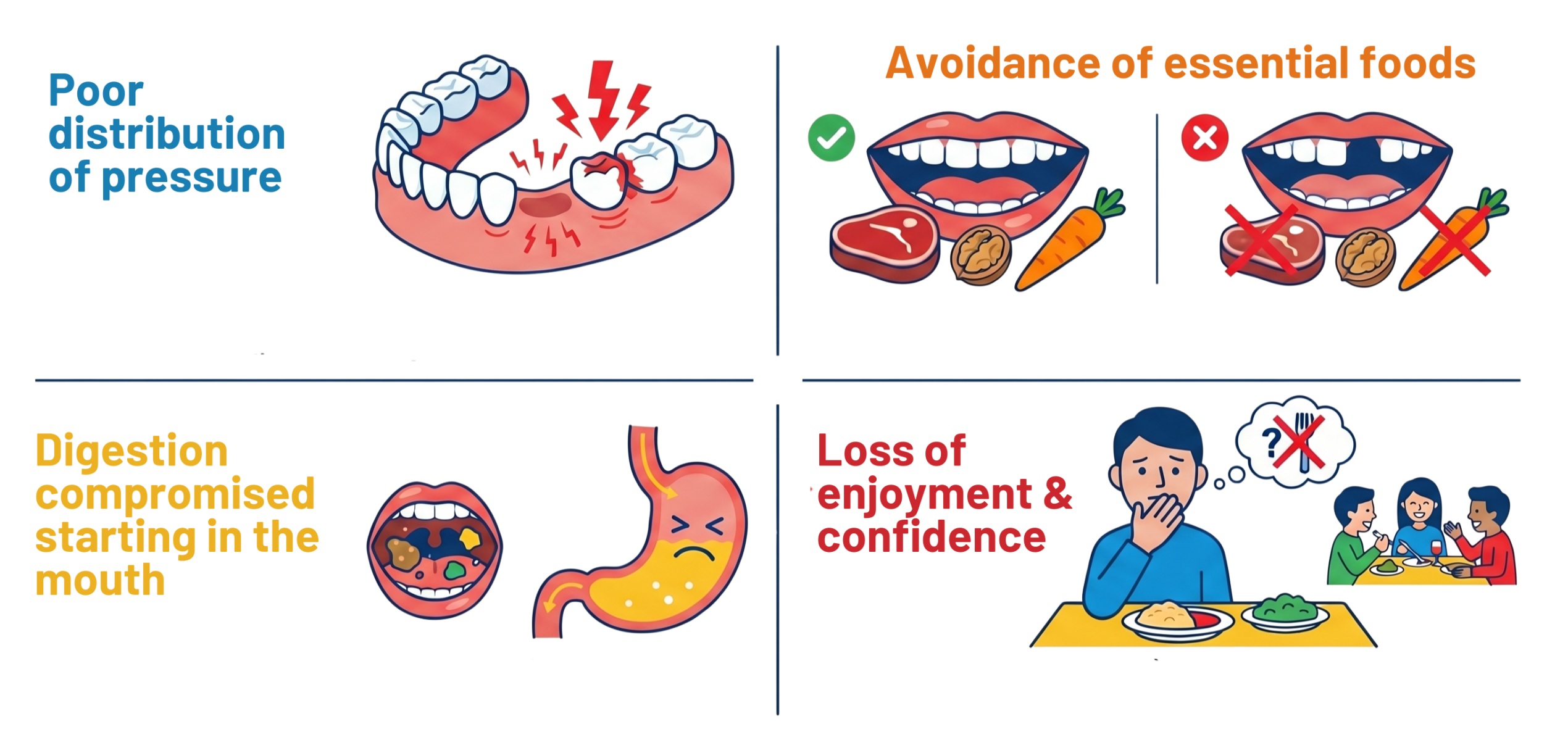
Each tooth helps distribute the pressure created when you chew. When a tooth is missing, the neighbouring teeth often need to compensate for the extra force. Over time, this can lead to:
- muscle fatigue;
- tooth sensitivity;
- faster wear on certain teeth.
Some Foods Become Harder to Eat
Missing teeth can make chewing less effective, especially when eating firmer or crunchier foods.
Many people begin avoiding:
- fibrous meats;
- nuts;
- raw vegetables;
- crunchy foods.
This is often when patients begin looking for a long-term solution to replace missing teeth in Montreal.
The Impact on Everyday Eating
Chewing is the first step of digestion. When food is not broken down properly, some people gradually change their diet by choosing softer and less varied foods.
Over time, missing teeth can also affect comfort, enjoyment while eating, and confidence during meals in public.
Can You Eat Normally with Dental Implants?
Yes. Dental implants often allow patients to regain more natural chewing ability along with greater day-to-day comfort.
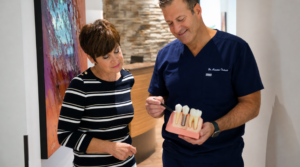
A dental implant acts as an artificial tooth root placed in the jawbone. Once healing is complete, it supports a stable dental crown that stays securely in place while eating.
Unlike some removable dentures, dental implants do not shift when you eat or speak. This added stability helps many patients feel more comfortable and confident in everyday situations, including:
- eating at restaurants;
- sharing meals with family and friends;
- enjoying foods they previously avoided;
- speaking more confidently in public.
Beyond aesthetics, dental implants can improve chewing function, comfort, and overall quality of life.
What Foods Can You Eat with Dental Implants?
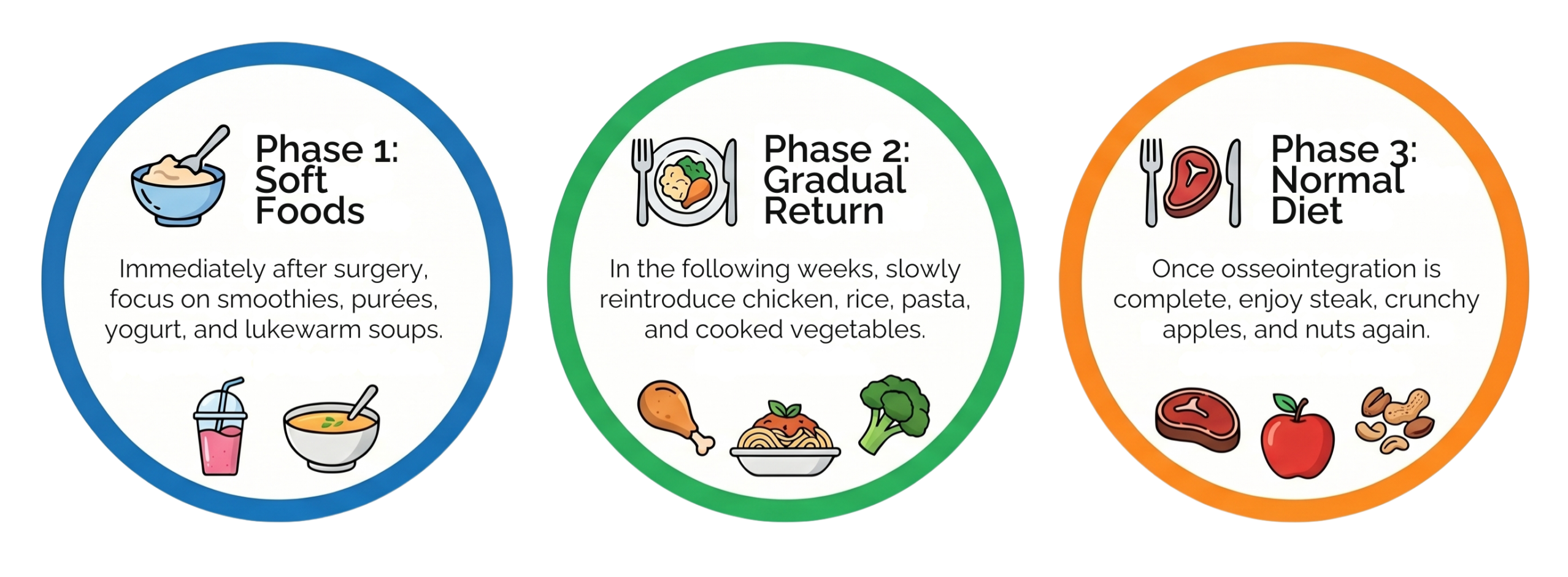
Eating after dental implant surgery is usually a gradual process. During healing, certain foods are recommended to help protect the treated area. Once healing is complete, many patients are able to return to a much more varied diet.
After Surgery: Choose Soft Foods
During the first few days after dental implant surgery, patients are generally advised to eat soft, easy-to-chew foods, such as:
- yogurt;
- warm soups;
- mashed foods;
- smoothies;
- eggs;
- soft pasta.
These foods can help reduce discomfort and support proper healing after surgery.
Gradual Return to Firmer Foods
Over the following weeks, many patients gradually begin eating more solid foods again, including:
- chicken;
- rice;
- soft fruits;
- bread;
- cooked vegetables.
Long-Term: A More Natural Diet
Once dental implants have fully integrated with the jawbone, patients can typically eat a wide variety of foods, including:
- steak;
- apples;
- nuts;
- raw vegetables;
- crunchy foods.
Dental implants provide a chewing ability that is much closer to natural teeth than a traditional removable denture.
Although dental implants are strong and durable, it is still recommended to avoid habits such as chewing ice or using your teeth to open objects.
Denture vs. Dental Implant: What’s the Difference When Eating?
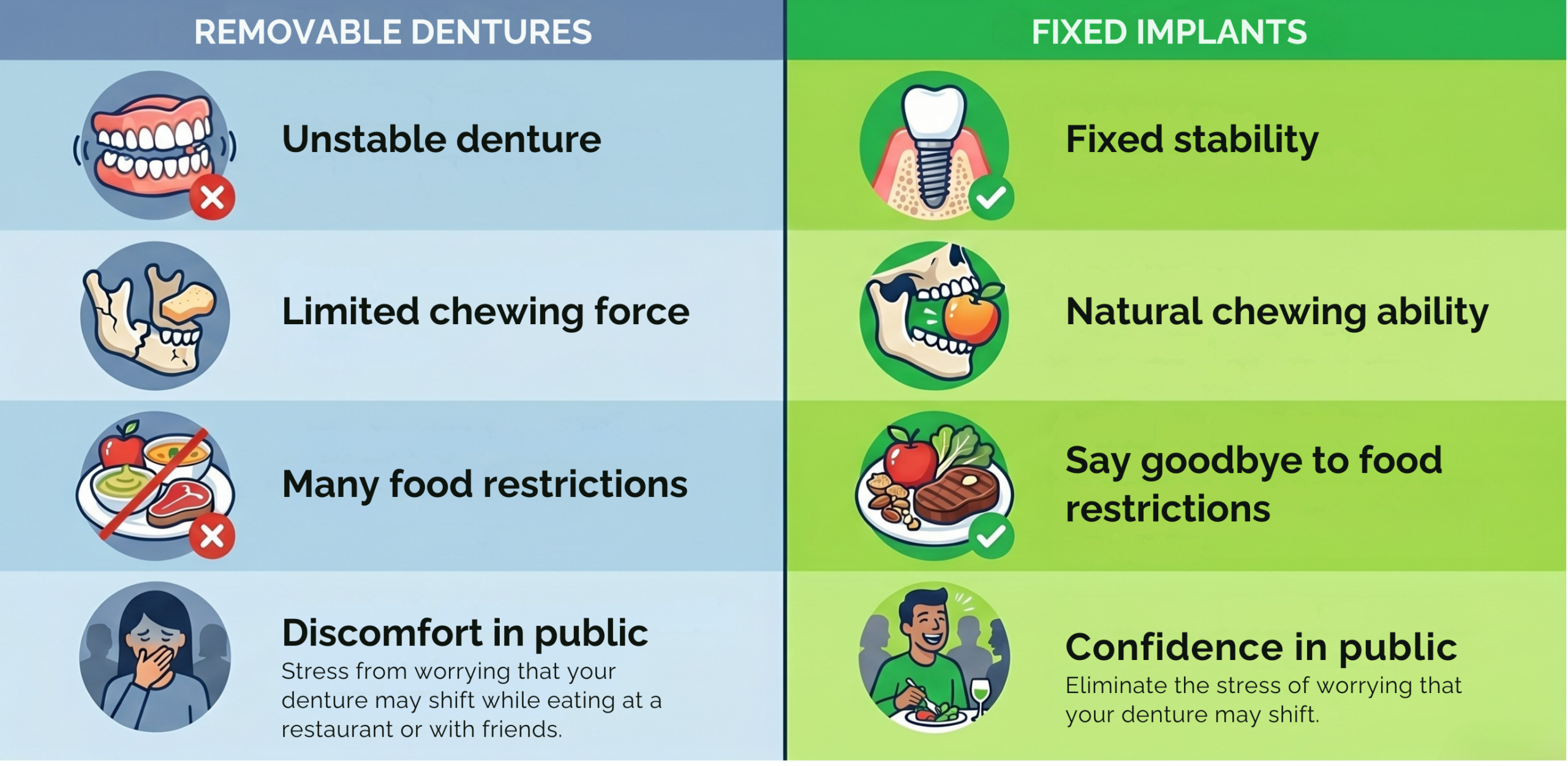
The difference between a denture and a dental implant often becomes most noticeable during meals. Although both options replace missing teeth, they do not provide the same level of stability, comfort, or ease when eating day to day.
Better Stability
A denture rests directly on the gums and can sometimes shift while eating or speaking. Dental implants, on the other hand, are anchored directly into the jawbone, providing a much more stable and natural feel.
More Comfortable Chewing
Dental implants make it easier to eat and chew firmer or crunchier foods more comfortably. With dentures, many people continue to avoid certain foods because of discomfort or difficulty chewing.
Greater Confidence During Meals
Some people who wear dentures worry that they may shift or become uncomfortable while eating in public. Because of their stability, dental implants often provide a more secure feeling and help many patients feel more confident in their everyday lives.
How Long Does It Take Before You Can Eat Normally with Dental Implants?
Returning to a normal diet after dental implant surgery happens gradually.
After the procedure, patients are usually advised to eat soft foods for several days or weeks to support healing and reduce pressure on the treated area.
The implant must then fuse with the jawbone in a process called osseointegration. This stage can take between 3 and 6 months, depending on the patient and the type of treatment performed.
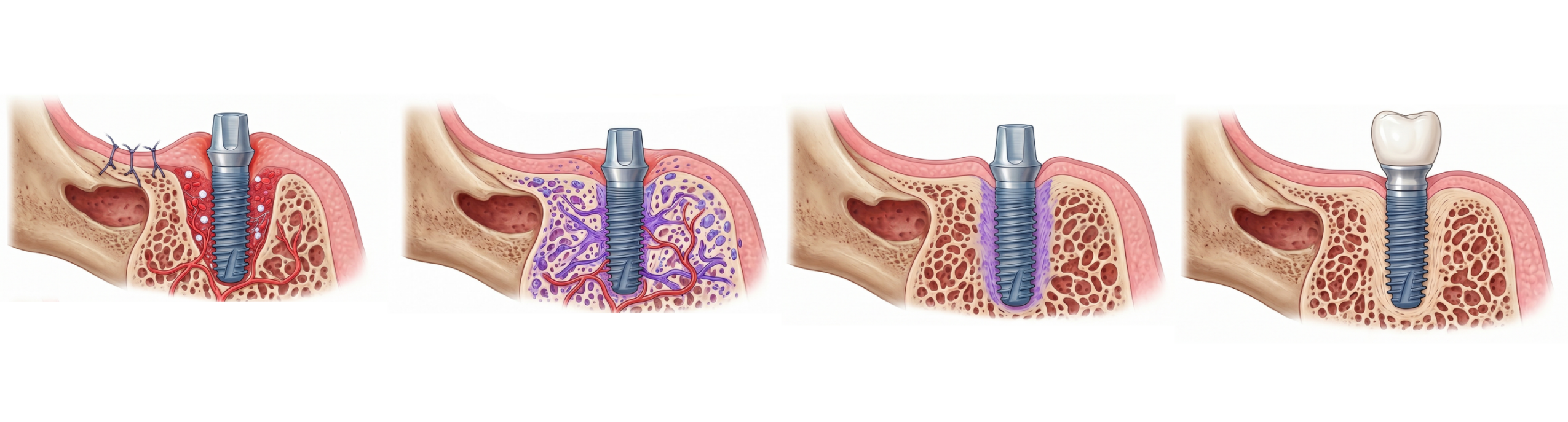
Once healing is complete, patients typically regain a stable, comfortable, and more natural chewing ability.
Recovery time can vary based on several factors, including:
- the number of dental implants placed;
- the quality of the jawbone;
- whether bone grafting is needed;
- overall health condition.
Your oral and maxillofacial surgeon can recommend the healing stages and foods that are best suited to your situation.
Tips for Eating After Dental Implant Surgery
Adopting healthy habits after dental implant surgery can support better healing, reduce the risk of complications, and help maintain the long-term stability of your dental implants.
Recommended Foods After a Dental Implant
After the procedure, it is generally recommended to choose:
- soft, easy-to-chew foods;
- lukewarm meals instead of very hot foods;
- plenty of hydration;
- protein-rich foods to support healing.
Habits to Follow During Healing
Certain habits can help protect your dental implants during the healing process:
- eat slowly;
- avoid chewing on the treated side at first;
- avoid tobacco use, which can interfere with healing;
- limit alcohol consumption during recovery.
The Importance of Good Oral Hygiene
Good oral hygiene is essential for maintaining the long-term health of dental implants and helping prevent complications such as infections or peri-implantitis.
It is important to:
- brush your teeth regularly;
- use dental floss or cleaning tools recommended by your dentist;
- attend regular dental cleanings and follow-up appointments.
Do Dental Implants Improve Digestion?
Dental implants can help improve digestion by making it easier to chew food properly. When eating becomes more comfortable, many patients are able to enjoy a more varied diet and reintroduce foods they may have previously avoided, such as:
- fresh fruits;
- raw vegetables;
- lean meats;
- nuts and other firmer foods.
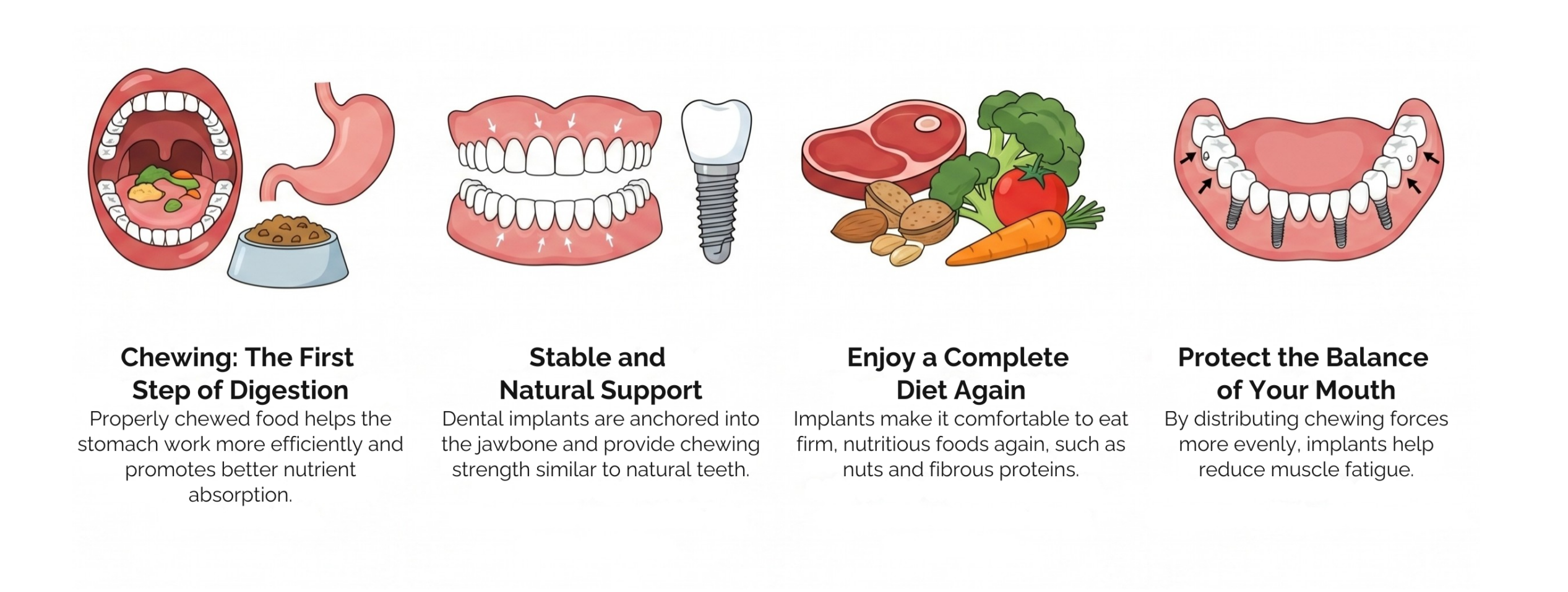 By improving chewing ability, dental implants can make meals more enjoyable and contribute to a better overall quality of life.
Frequently Asked Questions About Dental Implants and Eating
Can You Really Eat Normally with Dental Implants?
Yes. Once healing is complete, dental implants can restore stable and effective chewing ability that closely resembles natural teeth.
Can You Eat Hard Foods with Dental Implants?
Yes. Dental implants allow many patients to eat firmer or crunchier foods, such as apples, nuts, or certain meats. However, habits like chewing ice or very hard objects are still not recommended.
Are Dental Implants as Strong as Natural Teeth?
Dental implants are designed to withstand normal chewing forces and can provide stability equal to — or even greater than — natural teeth.
Does Eating with Dental Implants Feel Natural?
After healing, many patients describe the sensation of eating and speaking with dental implants as comfortable, stable, and natural.
Can Dental Implants Improve Chewing Ability?
Yes. Dental implants can improve the ability to chew foods that may be more difficult to eat with missing teeth or an unstable removable denture.
Can a Dental Implant Move?
No. A dental implant that is properly integrated with the jawbone should not move. If any movement develops, it is important to consult a dental professional promptly.
Can Multiple Teeth Be Replaced with Dental Implants?
Yes. Dental implants can replace a single tooth, several teeth, or even support a full denture.
Are There Foods to Avoid After Dental Implant Surgery?
During the healing period, very hard, sticky, or crunchy foods may need to be avoided. Your oral surgeon will explain which foods are recommended during recovery.
Regain the Enjoyment of Eating with Dental Implants in Montreal
Dental implants can help restore more natural chewing ability, better stability, and greater day-to-day comfort. Compared to traditional dentures, they often provide a more secure solution for eating, speaking, and smiling with confidence.
Although healing after dental implant surgery takes time, the results can be long-lasting and significantly improve quality of life for many patients.
If you are looking to replace one or more missing teeth and enjoy eating more comfortably again, Seaforth Oral Surgery in Montreal can help.
Are you avoiding certain foods because of missing teeth or an unstable denture? Eating should be enjoyable — not a source of stress or discomfort.
Dental implants in Montreal offer far more than a cosmetic solution for missing teeth. They can help restore more natural chewing ability, better stability, and greater day-to-day comfort.
When one or more teeth are missing, it often becomes harder to eat crunchy, fibrous, or firmer foods. Some people eat more slowly, change their diet, or lose confidence in public because of an unstable removable denture. Thanks to their strength and integration with the jawbone, dental implants allow many patients to enjoy a more varied diet and an improved quality of life.
Why Do Missing Teeth Affect Chewing?
Teeth play an important role in chewing and keeping the jaw functioning properly. When one or more teeth are missing, certain foods can become harder to eat and meals may feel less comfortable.
Uneven Pressure During Chewing
Each tooth helps distribute the pressure created when you chew. When a tooth is missing, the neighbouring teeth often need to compensate for the extra force. Over time, this can lead to:
- muscle fatigue;
- tooth sensitivity;
- faster wear on certain teeth.
Some Foods Become Harder to Eat
Missing teeth can make chewing less effective, especially when eating firmer or crunchier foods.
Many people begin avoiding:
- fibrous meats;
- nuts;
- raw vegetables;
- crunchy foods.
This is often when patients begin looking for a long-term solution to replace missing teeth in Montreal.
The Impact on Everyday Eating
Chewing is the first step of digestion. When food is not broken down properly, some people gradually change their diet by choosing softer and less varied foods.
Over time, missing teeth can also affect comfort, enjoyment while eating, and confidence during meals in public.
Can You Eat Normally with Dental Implants?
Yes. Dental implants often allow patients to regain more natural chewing ability along with greater day-to-day comfort.
A dental implant acts as an artificial tooth root placed in the jawbone. Once healing is complete, it supports a stable dental crown that stays securely in place while eating.
Unlike some removable dentures, dental implants do not shift when you eat or speak. This added stability helps many patients feel more comfortable and confident in everyday situations, including:
- eating at restaurants;
- sharing meals with family and friends;
- enjoying foods they previously avoided;
- speaking more confidently in public.
Beyond aesthetics, dental implants can improve chewing function, comfort, and overall quality of life.
What Foods Can You Eat with Dental Implants?
Eating after dental implant surgery is usually a gradual process. During healing, certain foods are recommended to help protect the treated area. Once healing is complete, many patients are able to return to a much more varied diet.
After Surgery: Choose Soft Foods
During the first few days after dental implant surgery, patients are generally advised to eat soft, easy-to-chew foods, such as:
- yogurt;
- warm soups;
- mashed foods;
- smoothies;
- eggs;
- soft pasta.
These foods can help reduce discomfort and support proper healing after surgery.
Gradual Return to Firmer Foods
Over the following weeks, many patients gradually begin eating more solid foods again, including:
- chicken;
- rice;
- soft fruits;
- bread;
- cooked vegetables.
Long-Term: A More Natural Diet
Once dental implants have fully integrated with the jawbone, patients can typically eat a wide variety of foods, including:
- steak;
- apples;
- nuts;
- raw vegetables;
- crunchy foods.
Dental implants provide a chewing ability that is much closer to natural teeth than a traditional removable denture.
Although dental implants are strong and durable, it is still recommended to avoid habits such as chewing ice or using your teeth to open objects.
Denture vs. Dental Implant: What’s the Difference When Eating?
The difference between a denture and a dental implant often becomes most noticeable during meals. Although both options replace missing teeth, they do not provide the same level of stability, comfort, or ease when eating day to day.
Better Stability
A denture rests directly on the gums and can sometimes shift while eating or speaking. Dental implants, on the other hand, are anchored directly into the jawbone, providing a much more stable and natural feel.
More Comfortable Chewing
Dental implants make it easier to eat and chew firmer or crunchier foods more comfortably. With dentures, many people continue to avoid certain foods because of discomfort or difficulty chewing.
Greater Confidence During Meals
Some people who wear dentures worry that they may shift or become uncomfortable while eating in public. Because of their stability, dental implants often provide a more secure feeling and help many patients feel more confident in their everyday lives.
How Long Does It Take Before You Can Eat Normally with Dental Implants?
Returning to a normal diet after dental implant surgery happens gradually.
After the procedure, patients are usually advised to eat soft foods for several days or weeks to support healing and reduce pressure on the treated area.
The implant must then fuse with the jawbone in a process called osseointegration. This stage can take between 3 and 6 months, depending on the patient and the type of treatment performed.
Once healing is complete, patients typically regain a stable, comfortable, and more natural chewing ability.
Recovery time can vary based on several factors, including:
- the number of dental implants placed;
- the quality of the jawbone;
- whether bone grafting is needed;
- overall health condition.
Your oral and maxillofacial surgeon can recommend the healing stages and foods that are best suited to your situation.
Tips for Eating After Dental Implant Surgery
Adopting healthy habits after dental implant surgery can support better healing, reduce the risk of complications, and help maintain the long-term stability of your dental implants.
Recommended Foods After a Dental Implant
After the procedure, it is generally recommended to choose:
- soft, easy-to-chew foods;
- lukewarm meals instead of very hot foods;
- plenty of hydration;
- protein-rich foods to support healing.
Habits to Follow During Healing
Certain habits can help protect your dental implants during the healing process:
- eat slowly;
- avoid chewing on the treated side at first;
- avoid tobacco use, which can interfere with healing;
- limit alcohol consumption during recovery.
The Importance of Good Oral Hygiene
Good oral hygiene is essential for maintaining the long-term health of dental implants and helping prevent complications such as infections or peri-implantitis.
It is important to:
- brush your teeth regularly;
- use dental floss or cleaning tools recommended by your dentist;
- attend regular dental cleanings and follow-up appointments.
Do Dental Implants Improve Digestion?
Dental implants can help improve digestion by making it easier to chew food properly. When eating becomes more comfortable, many patients are able to enjoy a more varied diet and reintroduce foods they may have previously avoided, such as:
- fresh fruits;
- raw vegetables;
- lean meats;
- nuts and other firmer foods.
By improving chewing ability, dental implants can make meals more enjoyable and contribute to a better overall quality of life.
Frequently Asked Questions About Dental Implants and Eating
Can You Really Eat Normally with Dental Implants?
Yes. Once healing is complete, dental implants can restore stable and effective chewing ability that closely resembles natural teeth.
Can You Eat Hard Foods with Dental Implants?
Yes. Dental implants allow many patients to eat firmer or crunchier foods, such as apples, nuts, or certain meats. However, habits like chewing ice or very hard objects are still not recommended.
Are Dental Implants as Strong as Natural Teeth?
Dental implants are designed to withstand normal chewing forces and can provide stability equal to — or even greater than — natural teeth.
Does Eating with Dental Implants Feel Natural?
After healing, many patients describe the sensation of eating and speaking with dental implants as comfortable, stable, and natural.
Can Dental Implants Improve Chewing Ability?
Yes. Dental implants can improve the ability to chew foods that may be more difficult to eat with missing teeth or an unstable removable denture.
Can a Dental Implant Move?
No. A dental implant that is properly integrated with the jawbone should not move. If any movement develops, it is important to consult a dental professional promptly.
Can Multiple Teeth Be Replaced with Dental Implants?
Yes. Dental implants can replace a single tooth, several teeth, or even support a full denture.
Are There Foods to Avoid After Dental Implant Surgery?
During the healing period, very hard, sticky, or crunchy foods may need to be avoided. Your oral surgeon will explain which foods are recommended during recovery.
Regain the Enjoyment of Eating with Dental Implants in Montreal
Dental implants can help restore more natural chewing ability, better stability, and greater day-to-day comfort. Compared to traditional dentures, they often provide a more secure solution for eating, speaking, and smiling with confidence.
Although healing after dental implant surgery takes time, the results can be long-lasting and significantly improve quality of life for many patients.
If you are looking to replace one or more missing teeth and enjoy eating more comfortably again, Seaforth Oral Surgery in Montreal can help.